A Detailed Guide to Periwinkle Planting Methods and Key Techniques
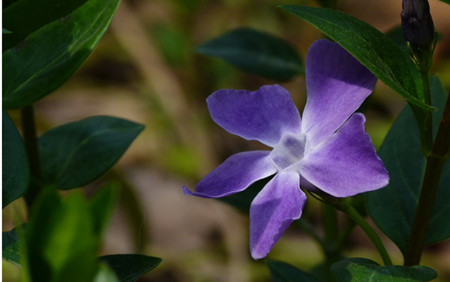
Periwinkle, also known as trailing periwinkle or Madagascar periwinkle. Family and genus: Apocynaceae, Vinca. Native to the Mediterranean coast, India and tropical America. It is cultivated in Jiangsu, Zhejiang and Taiwan, China. An evergreen trailing subshrub, growing in clumps. The vegetative stems lie prostrate or flat on the ground. The flowering stems are upright, 30-40 cm tall. Leaves are opposite, oval, with an acute tip, green and glossy; the leaf stalks on flowering stems are short. The whole plant is hairless except for hairs on the leaf margins, leaf stalks, calyx and the throat of the corolla. Flowers are borne singly in the leaf axils of flowering stems, with a salverform corolla, blue, 5-lobed. The fruit is paired and upright. The flowering period is April-May. The cultivar Variegata has slightly smaller leaves with yellow markings.
Sowing Methods
1. You can sow outdoors or in pots. Mix fine sand, potting soil and leaf mold to make a sowing medium, and sterilize it before putting it into the pot.
2. For the container, a sowing tray is recommended. Put the above sowing medium into it and place the seeds on top. Water by spraying with a spray bottle until the medium is moist. Avoid overwatering.
3. Place the sowing tray in an environment at about 20°C, and wait two to three weeks for the seeds to germinate.

Later Care
1. Repotting
After the seeds sprout and grow into seedlings, they can be transplanted once they have six leaves. When transplanting, choose a flower pot with a diameter of 10 cm, make sure the pot has good drainage, and place at most three plants in one pot.
2. Pinching
After transplanting, let the seedlings rest for a while. Once they have adapted to the new environment and grown to 8 cm, you can pinch them back. This encourages new branches to grow, so there will be more flowering branches and better ornamental value.
3. Care
After the plant grows steadily in the later stage, fertilizer can be applied, about once every two weeks, to ensure the soil has nutrients. The flowers bloom in late May and continue until November, with a flowering period of more than five months. During this time, pay attention to the growth of the flowering branches and remove spent flowers promptly so they do not affect the growth of other flowering branches.
4. Light
To prevent the leaves from turning yellow, place the plant outside to receive light at the appropriate time, and ensure the soil is breathable and drains well. In winter, move it indoors or build an insulating shed so the temperature stays above 5°C. Do not water too much; keep it just slightly moist while mostly dry.