Controlling water for succulents in summer can lower their metabolic rate and prevent black rot
The deadly hot summer is coming again soon! Summer is one of the toughest seasons for succulents, and also the most headache-inducing time for plant lovers. Water control for succulents has always been a hot topic among plant lovers, and summer water control is even more of a hot topic among hot topics. Plant lovers also have different views on water control. This article is compiled from some plant lovers' views on summer water control for succulents. These experiences are well worth learning from for those who struggle with water control for succulents.
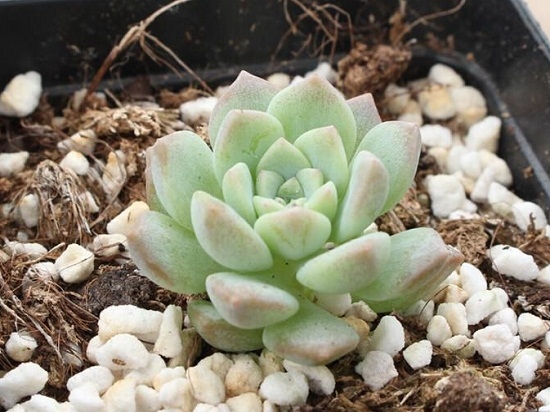
Water Control for Succulents (Summer Edition)
First, regarding water——succulents are drought-tolerant, not drought-loving. Sufficient water (though of course not too much~) is good for any living thing. Drought tolerance is merely a last resort, a forced habit.
Second, regarding temperature——whether high or low, temperature inhibits the activity of biological enzymes and various other proteins, slowing down growth rate, but only slowing it down, not stopping it. Any living thing, as long as it is not dead, has metabolism, even seeds still respire.
Therefore, at any time, succulents need water, and once they are deprived of water for too long, the root hairs will dry up and die. So even for succulents that have gone dormant in summer, we still need to water them appropriately... Of course, this also raises a series of questions. Please read on patiently:
I.Why do we need to control water in summer??
For one thing, the biological activity of plants decreases, so their water demand does indeed decrease; secondly, or most importantly, it is to prevent black rot.
High temperatures not only reduce plant activity, but also provide the optimal breeding temperature for fungi and the like. Especially when water is sufficient, the potting soil is simply a paradise for fungi, so plants are very prone to black rot in summer. To prevent black rot, some people came up with the method of controlling water, or even cutting it off entirely, because no living thing can survive without water, and fungi are no exception. Without water, they cannot reproduce, and naturally there will be no black rot.
However, this is a lose-lose move that harms the enemy a thousand and costs yourself eight hundred——ultimately causing leaves to shrink from lack of water, or even drop off, and root hairs to dry up and die. Just like the following situations:
1. Healthy root hairs will not rot just because they encounter fungi, because the cell walls and such are themselves a protective layer that can block fungal infection (this is also why after root pruning, roots need to be dried so the wounds heal before repotting). But when water is insufficient, root hairs that have dried out from excessive drought are damaged and die, which is equivalent to our skin having a wound. When exposed to water (which contains bacteria), they rot. So when you water next time, because the root hairs are injured, fungi immediately seize the opportunity and black rot quickly follows.——This is why some people clearly controlled water, yet after watering just once occasionally, black rot occurred. Then they curse the heavens while blaming themselves, thinking they failed to control water properly. Actually, it is not that they failed to control it well, but that there was no need to control it. If they had not controlled it from the beginning, the root hairs would not have been injured, and subsequent watering would not have led to black rot.