It's the perfect time to plant summer jasmine - grasp the key points and don't miss the farming season
Yingxia (Jasminum floridum, commonly known as showy jasmine) and Yingchun (Jasminum nudiflorum, winter jasmine) are both semi-evergreen small shrubs of the Oleaceae family, plants of the genus Jasminum, and endemic to China. Yingxia is also known as Tanchun.
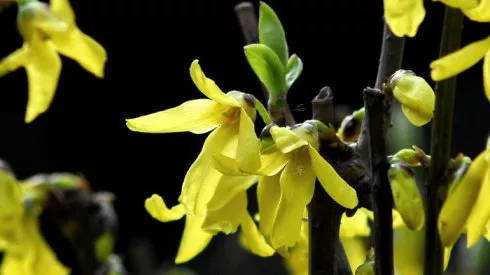
Mainly by cuttings, but also by layering and division. For cuttings, spring, summer and autumn are all suitable; cut semi-lignified branches 12-15 cm long, insert them into sandy soil, keep moist, and they will root in about 15 days. For layering, bury longer branches shallowly in sandy soil without wounding them; they will root after 40-50 days, and can be separated from the mother plant and transplanted the following spring. When transplanting in spring, cut off part of the above-ground branches and keep the original soil around the roots. During growth, make sure the soil neither waterlogs nor becomes too dry, and apply fertilizer 2-3 times appropriately before and after flowering. In autumn and winter, prune and shape the plant to keep it vigorous and floriferous. For pests and diseases, leaf spot and branch blight commonly occur, and can be sprayed with 50% Tuzet wettable powder at 1500 times dilution. Pests include aphids and bagworms, which can be killed by spraying with 50% phoxim emulsifiable concentrate at 1000 times dilution.
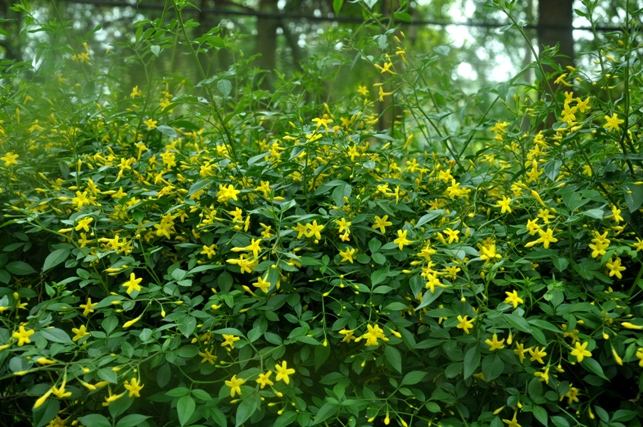
Yingxia is highly adaptable and relatively easy to cultivate; it prefers warm, humid, sunny locations, and also grows well in partial shade, with dense branches and abundant flowers, suitable for both pot and ground planting. Propagation by cuttings or layering is fine, with the same methods as for winter jasmine. Apply dried manure or compound fertilizer once each year after flowering and at the start of winter as a base fertilizer, and during the growing season apply liquid fertilizer several more times according to growth conditions; after flowering, prune off spent flower stalks, and appropriately shorten vigorously growing shoots to promote fuller, sturdier branch development.
Ground-planted specimens should be in a spot with higher elevation and good drainage and ventilation; for potted plants, prevent water accumulation in the pot during the rainy season, and water alternately dry and wet, never letting the soil become too dry. In midsummer, place it in tree shade or partial shade to avoid direct strong light, otherwise, subjected to high temperature and dryness, the leaf tips will dry out. In winter, place it in a sheltered, sunny spot, and just make sure the potting soil does not dry out too much.