A Detailed Guide to the Planting Methods and Key Technical Points for Coral Ardisia
Coral ardisia, also known as Ardisia crenata, Ardisia crenata var. bicolor, and Ardisia crispa, grows naturally on valley floors beneath forest or in shaded, moist thickets on hills. It prefers cool, humid, neutral sandy soil, favors light but frequent feeding, dislikes concentrated fertilizer, and tolerates high temperatures. It is a plant of the Myrsinaceae family and is a shrub.
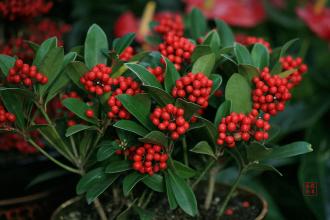
How to grow coral ardisia:
Best growing soil: For coral ardisia, use 70% to 80% fairly fertile soil (pond silt, humus soil, old garden soil, field soil), 10% to 15% coarse sand, and 10% to 15% decomposed oil-free wood shavings or unburned rice-hull ash, mixed into a potting compost; other mixing methods may also be used. In short, the potting compost should be fertile, loose, and well drained.Growing humidity requirements: Coral ardisia needs the potting soil kept moist, neither dry nor waterlogged.
Best growing temperature: The best growing temperature for coral ardisia is 25-30°C.
Best growing light: Coral ardisia likes a semi-shaded environment. It requires 60% to 90% shading. For home growing, it can be placed on the north side of a balcony, and moved to the south side of the balcony at intervals.
Fertilizer application: Coral ardisia has different needs for fertilizer and water at each growth stage. During the vigorous growth period in summer and autumn it needs more fertilizer, while in winter it can be given little or none, but concentrated fertilizer must not be applied; follow the principle of light but frequent feeding. Coral ardisia has a particular liking for phosphorus and potassium fertilizers.
Key watering points: Watering coral ardisia should vary with the time, as its water needs differ by season. In summer, water generally once every three to four days; in autumn, water in the morning and evening; in winter, it is best to water at noon. Water at the right time and in the right amount, without overdoing it, so that the potting soil simply stays not dry.
Pruning essentials: Coral ardisia should be pruned appropriately before repotting. In winter, when the plant enters dormancy or semi-dormancy, cut off weak, pest-damaged, dead, and overly dense branches.
Potting soil replacement: As long as it is cared for properly, coral ardisia will grow very fast. When it reaches a certain size, consider moving it to a slightly larger pot so it can continue growing vigorously. For the potting soil and component ratios used in repotting, one of the following may be chosen: vegetable garden soil : furnace slag = 3:1; or garden soil : medium-coarse river sand : sawdust (mushroom residue) = 4:1:2; or one of paddy soil, pond silt, or leaf mold.