Sharing Lithops Sowing Methods and Seedling-Growing Tips
Succulent plants have taken the world by storm in a short time with their adorable looks, and Lithops are one member of the great succulent army. Many flower lovers try sowing Lithops, searching online for tutorials and methods, hoping to follow in the footsteps of those who came before and find a shortcut to sowing Lithops. But this editor suggests that flower lovers refer to multiple methods and experiences, and combine them with their own conditions to sum up a method that suits them. This article is compiled from one flower lover's thoughts on sowing Lithops, and these insights offer great reference value for flower lovers.
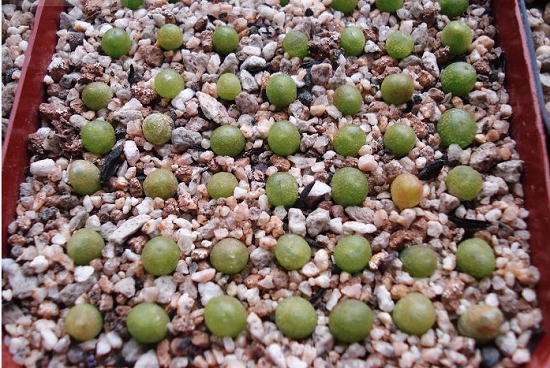
How to Sow Lithops
Once autumn arrives, many flower lovers start rubbing their hands in anticipation, because autumn is exactly the best sowing period for succulents. I believe you have already stockpiled a lot of seeds before this, and I think at this time, maybe we can properly organize our previous sowing experience and share it with everyone, so that when flower lovers encounter the same problems, they won't need to worry. Those who are interested can patiently read through what I have organized, and I believe it will definitely help everyone.
One,Weather: Once August passes, the temperature difference in the weather starts to grow larger, and the amount of rain also decreases. Many flower lovers start sowing impatiently. In my view, choosing good weather is very important. Why do I dislike rainy and cloudy days? Because in such weather the temperature difference becomes smaller. So before sowing, I choose a stretch of 4 or 5 consecutive cloudy days to do it. Of course, weather forecasts are sometimes inaccurate. A maximum temperature below 28°C is about good enough. Many people ask, isn't it best to sow Lithops between 15°C and 25°C? Come on, when is it ever that coincidental? Even if it were, could you really wait? In the city where I live, I generally choose to start around September 15th. At this time the temperature is generally around 18-28°C. Patient people can wait until the end of September or the beginning of October, when the temperature is more suitable for sowing.
Two,Soil Mix: Ten people might have ten different sowing soil recipes. If you ask me which one is best, sorry, I really can't answer that. I can only tell you the recipe I have always used, which works quite well: peat moss, Fafard No. 1, perlite, vermiculite, rice husk ash (rice hull charcoal). Nothing else needs to be added. I generally add relatively little vermiculite, because it easily turns to powder. I don't add much perlite either, because it floats up when watered. Roughly 50 percent of the mix will be peat moss, 20 percent rice husk ash, and vermiculite and perlite at 15 percent each. There is one issue here, which is the source of the sowing soil. Most flower lovers, to save effort, will just go to the market or buy directly online. There are indeed a few sellers whose sowing soil is really quite good. Of course, there are also many who pass off inferior goods as good. Everyone knows that peat moss is relatively expensive, while perlite and rice husk ash are very cheap, so what you get may be sowing soil with a lot of rice husk ash or perlite added, or with other random things mixed in. I don't know whether such soil is really very good to use, but personally I don't much like it. For friends who mix their own soil, I suggest you buy some sieves. Generally they are distinguished by how fine or coarse the mesh is. A 30-mesh sieve is generally for removing powder, and this must be run through once. Removing the powder is very important. Why? Because powder easily causes stunted seedlings and easily clumps. So when buying sieves, you can buy a set; the granules can be sifted by size, and the powder can also be removed.