Detailed Explanation of the Planting Methods and Techniques for Qingxiangmu
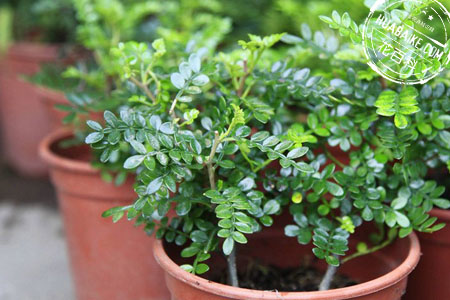
Qingxiangmu (Pistacia weinmannifolia) is a shrub or small tree of the Anacardiaceae family, 2-8 m tall, rarely reaching 10-15 m; the bark is gray, the branchlets have brown lenticels, and the young branches are covered with grayish-yellow fine pubescence. The petioles of the leaflets are covered with fine pubescence; leathery, oblong or obovate-oblong, relatively small; the petiolules are extremely short. The inflorescence is axillary, emerging together with the leaves, covered with yellow-brown pubescence and red glandular hairs; the flowers are small, purplish-red, sessile, the bracts ovate, covered with brown pubescence on the outside; the male flowers are oblong or oblong-lanceolate, membranous, semi-transparent, the filaments extremely short, the anthers oblong; the female flowers are hairless, the style extremely short, the stigma curved outward. The drupe is spherical, red when ripe, with a slender pointed tip.

Cultivation Methods
Choosing the Right Plant
Qingxiangmu is very popular among flower enthusiasts and is an ideal potted plant. Placed indoors, a Qingxiangmu bonsai can create the feeling of wild mountain-and-water trees being brought into the home, natural and fresh. Therefore, potting a Qingxiangmu is the first important step.
Choose Qingxiangmu seedlings with curved trunks and slightly malformed shapes, or old trunks with a slightly aged appearance and a simple, antique, beautiful tree form, both are good; wild tree stumps are the best, but to protect the environment it is not recommended that flower enthusiasts do this!
Pruning
After the Qingxiangmu plant is selected, the next step is pruning and shaping.
After planning the shape and placement, prune according to the indoor space and actual environment, removing diseased and pest-damaged branches, leggy growth, and crossing or overlapping branches by means of heading back and thinning out.
Potting and Shaping
Choosing a purple clay pot with good permeability as the home for a potted Qingxiangmu or bonsai is most suitable; after potting, press the soil firm and water to keep the soil moist.
Qingxiangmu is a sun-loving plant, and it will grow very well when placed on a balcony or windowsill in these ventilated and well-lit places. During daily care, also pay attention to adjusting and correcting the plant's growth and shaping it as needed.
Usually after several years of care and management, you can have a great Qingxiangmu bonsai/potted plant!
Points to Note
Transplanting and Repotting
The transplanting issue. When first brought home, because the original flower pot was ugly, it was transplanted. Here comes the problem: after transplanting, Qingxiangmu will show leaf drop, but this is a normal reaction, so do not worry too much.
Soil and Water
Qingxiangmu does not need very frequent watering; generally once every 3-5 days is fine, and you must water thoroughly (wet the bottom), because too much water easily leads to root rot (what is commonly called burning out), so the soil also needs to be a soil with good drainage and permeability.

Outdoor Environment
The main things are wind and sunlight. As for sunlight, it can be done daily, because Qingxiangmu likes light, but avoid exposure to intense sun; usually a balcony or an indoor spot with sunlight is best. It does not matter even if it does not get sun, as Qingxiangmu has a certain ability to tolerate shade.
As for wind, Qingxiangmu has little resistance, so when keeping it at home try to avoid letting your beloved plant be ravaged by the wind! The connection points of the tiny leaves can easily turn your Qingxiangmu into a Mediterranean style...
Sunlight
Qingxiangmu likes light and can be sunned every day, but do not expose it to strong sun for long periods. Generally, placing it on a balcony or in an indoor spot with sunlight is fine. Qingxiangmu is also somewhat shade-tolerant, and it is fine not to sun it for a few days.
Temperature and Placement
Usually there is no problem placing it indoors, but considering that green plants release carbon dioxide and absorb oxygen at night, it is better not to put it in the bedroom; in winter, as long as the room temperature is around ten-plus degrees, there is no problem.
In addition, when the plant is relatively weak, do not place Qingxiangmu in front of a computer to catch heat radiation.