-

How do the trunks of potted green plants become hollow? A detailed explanation of the production method
Eucalyptus stumps are full of charm, and bonsai suits them perfectly. Teach you three techniques so you can easily become a master. Eucalyptus stumps are full of charm, and bonsai suits them perfectly. Teach you three techniques so you can easily become a master. Improve the stump; it is inconspicuous, so find some very ordinary, inconspicuous stumps to plant. At most
-
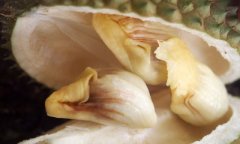
What are the flavor characteristics of the Turtle Durian, a durian variety that grows on the trunk and roots?
I was lucky enough to find the Turtle Durian twice in Borneo, because it is one of the rarest durian species. Many people do not consider it edible because it has a strong musky smell when ripe. The flavor is sweet and juicy, in stark contrast to the usually heavy durian
-
Pruning and Shaping the Branches of an Old Trunk Plum Blossom Bonsai and Pictures of a Freshly Pruned Red Plum Bonsai
Plum blossom bonsai pruning: After a plum blossom bonsai has been shaped and has bloomed for several years, carry out reasonable pruning immediately each early spring, after 80% of the flowers have faded and lost their ornamental value and before the buds sprout, to encourage new branches to bloom and to keep the plum blossom bonsai maintaining and developing its original form, so that its spirit and charm become even better
-
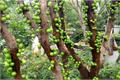
Jabuticaba grows on the tree trunk, with purple fruit resembling grapes
Purple grape-like jabuticaba growing on the tree trunk
-
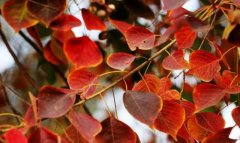
What season does the Chinese tallow tree bloom? Reasons for its curved trunk shape and wood characteristics
The leaves of the Chinese tallow tree change color with the seasons and climate, just like the poinsettia. When the climate gradually turns cool and autumn and winter slowly arrive, the leaves change from emerald green to yellow and orange-red, and then to red or reddish-brown, which is
-
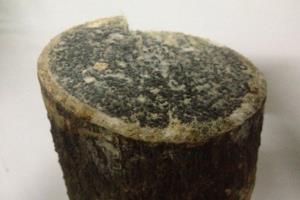
Is a Money Tree with Mold Spots on Its Trunk Diseased and How Should It Be Resolved
Is a Money Tree with Mold Spots on Its Trunk Diseased and How Should It Be Resolved
-
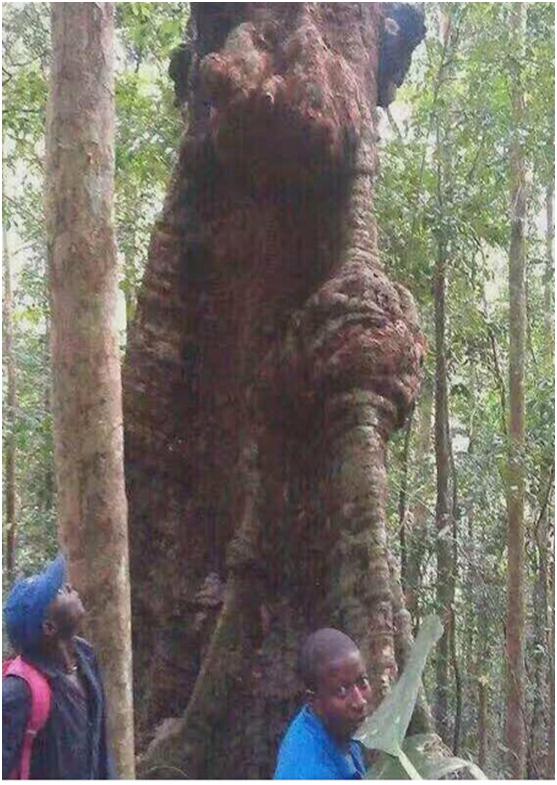
Primeval forest millennial ancient trees cannot escape being felled, the thick trunks are shocking
The millennial tree monster of the primeval forest ultimately cannot escape the fate of being cut down, its thick trunk is truly astonishing
-
What are the control methods for trunk-boring pests of cherry blossoms?
The longhorn beetles that harm cherry blossoms usually include the star longhorn beetle, the glossy-shouldered star longhorn beetle, and the peach red-necked longhorn beetle. 1. The star longhorn beetle has 1 generation per year. When adults emerge from late May to early June, capture the adults: before the star longhorn beetle adult lays eggs, it first bites a notch about 2 mm deep and about 8 mm long in the bark in the shape of a "" or "", and then lays eggs inside it. During the peak egg-laying period in mid-to-late July, search for the notches on the trunk and destroy the eggs. During the stage when newly hatched larvae are active in the cortex, use a grafting knife to pick the larvae out. For larvae that have bored into the xylem, it is necessary to
-
Detailed Explanation of the Winter Trunk-Cutting Planting Method for Black Locust
Planting black locust by trunk cutting in late autumn and early winter has several major advantages: First, it avoids the spring tree-planting peak and the busy farming season, making full use of the winter slack period, so that planting time and quality are fully guaranteed. Second, according to the physiological characteristics of black locust, the average daily temperature required for root growth is relatively low; after leaf fall in autumn the above-ground part stops growing while the underground part continues to grow for a period, and when the leaves fall the mobile nutrients in the branches and leaves return to the trunk and roots, at which time the roots are rich in stored nutrients, which precisely gives the root system a stage for growth. Third, the plots where black locust is planted are generally
-
Companion Stones and Accessories for Bonsai Trunk Specimens and Methods for Collecting Them in the Wild
1. Companion Stones and Accessories for Bonsai Trunk Specimens Under the trees of a trunk specimen, place mountain stones, figures, animals, and pavilions, terraces, and towers to make the scene in the pot rich and varied, more poetic and picturesque and full of garden charm, and more imbued with the breath of life. When placing stones with a tree trunk, one may imitate the conception of a painting and arrange them ingeniously, placing one, three, or five stones beside the roots, generally with odd numbers being best. Pine fossil stone, axe-cleaved stone, sea-mother stone, sandstone concretion stone, and Ying stone are all acceptable. According to the posture of each kind of tree, configure either massive and sturdy or delicate and exquisite stones. In the pot, part of the mountain stone is buried in the soil and part is exposed,
条件筛选