-

How to carve and strip trunk bonsai? Three practical techniques
The trunks of trunk bonsai mostly use the image of being ancient, old, diseased, and disabled to show their "vigorous and sturdy character" that has endured the vicissitudes of time, while some bonsai trees show the characteristics of being young, tender, smooth, and sleek. The carving and stripping technique for trunk bonsai is precisely based on the conditions of the trunk itself, through artificial artistic reconstruction, to make the trunk image conform to the requirements of bonsai artistic modeling and achieve the purpose of enriching the varied texture layers of the trunk. Now let us introduce three techniques of the carving and stripping method. Spiral trunk stripping. Make partial diagonal rotational carving and stripping modeling on the main trunk from bottom to top
-
What are the key points for shaping a double-trunk bonsai?
The so-called double trunk refers to a tree with two trunks, as opposed to the single trunk, such as the straight trunk or curved trunk, which has only one trunk. Secondly, the trunks can also be distinguished by thickness and length: the thicker one is the main trunk, and the thinner one is the secondary trunk. If the secondary trunk is especially thin and short, the situation resembles that of a parent and child, and it is called a parent-child double trunk. (1) Selecting the planting material The primary consideration for the double-trunk tree style is harmony. This includes balanced factors such as the branching, length and thickness of the trunks, so special attention should be paid when selecting the planting material. At the same time, the following three points should also be grasped
-
Detailed Explanation of Artificial Aging and Ancient-Styling Techniques for Bonsai Trunks
Everyone knows that creating a highly artistic trunk bonsai often takes years or even decades to accomplish. How can one create a trunk bonsai with both excellent form and spirit in a relatively short time? Practice has proven that this goal can be achieved through artificial aging and ancient-styling techniques. The technical measures are as follows: 1. Material selection: Every winter and early spring, one can go to barren mountain ridges, cliff tops and wind gaps, precipitous cliffs, and other places to select plant materials suitable for bonsai. Due to poor growing conditions in these places, trees are mostly low and deformed. They easily form
-
Symptom Identification and Control Methods for Black Locust Trunk Rot
Symptoms: The disease affects the branches and trunks of young trees to large trees, causing branch dieback or death of the entire tree. In large trees, it mainly occurs at the base of the trunk, and in a few cases at the forks of upper branches and tips. When the base of a large tree is affected, there are no obvious external symptoms; when the bark is peeled back, the interior has already discolored and rotted, with a foul odor, and irregular brown to dark brown patches appear on the surface of the xylem. The lesions continuously expand, encircling the trunk for 1 full turn, causing the branches and trunk above the lesion to die, and the leaves immediately turn yellow and wilt. When the branch tips or the main stem of young trees are affected, the diseased tissue shows water-soaked rot, producing obvious canker lesions that are slightly sunken with purplish-brown edges
-
Detailed Explanation of the Trunk-Tiered Training and Pruning Method for Goji Berry
Goji berry, also known as West goji, mountain goji, white thorn needle, and goji thorn, is a plant of the Solanaceae family. In Ningxia, the goji fruit is used as medicine and called "goji berry," while the root bark is called "digupi" in traditional Chinese medicine. Goji berry has the function of nourishing the liver and kidneys and improving eyesight, while digupi has the function of removing dampness and cooling the blood. Goji berry is mainly produced in Ningxia, and is also produced in Hebei, Gansu, Qinghai, Inner Mongolia, Shaanxi and other places. It is a precious medicinal material famous at home and abroad. Goji berry has strong branching ability and vigorous growth, with a habit of flowering and fruiting twice a year, and grows quickly. After 5a it can enter the full
-
Methods and Technical Key Points for Trunk-Cutting Planting of Black Locust in Autumn and Winter
Late autumn and early winter is the best time for trunk-cutting planting of black locust (Robinia pseudoacacia). Its characteristics are as follows: First, it avoids the spring tree-planting peak period and the busy farming season, makes full use of the winter slack period, and fully guarantees the timing and quality of planting. Second, according to the physiological characteristics of black locust, the daily average temperature required for root growth is relatively low; after leaf fall in autumn the aboveground part stops growing while the underground part still grows for a period, and when the leaves fall the mobile nutrients in the branches and leaves return to the trunk and roots, so the roots are rich in stored nutrients at that time, which exactly gives the root system a growth stage. Third, the planting
-
How do you thicken the roots of a honeysuckle bonsai? Prune the thin branches, keep the main trunk, apply extra fertilizer and water less
Honeysuckle is a common potted plant in daily life. Honeysuckle is very easy to grow, but if you want honeysuckle to bloom all over the branches, you must find a way to thicken the roots. How do you thicken the roots of a honeysuckle bonsai? This is related to the usual cultivation methods and pruning. Before the honeysuckle grows tall, you can prune the thin branches of the honeysuckle
-
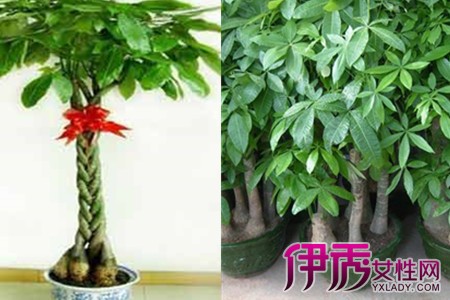
What to Do When a Money Tree Trunk Turns Soft? Find the Cause and Care for It More Easily
The money tree (Pachira aquatica) is a relatively easy plant to grow, but even so, people can encounter soft trunks when caring for it. Many gardening enthusiasts feel frustrated when this happens. This article explains the causes of these symptoms, and you can read about the solutions.
-
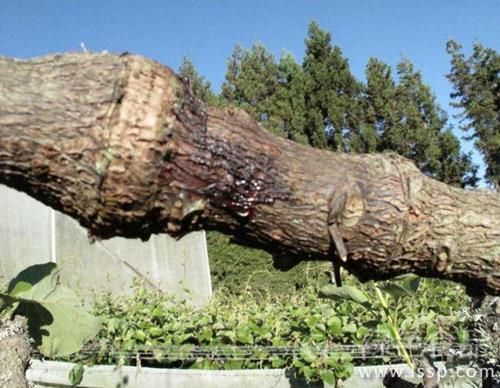
Kiwifruit canker causes red spots on leaves and spots on trunks leading to dieback: how to prevent and control it
Red spots on leaves, spots on trunks and dieback: control measures for kiwifruit canker
-
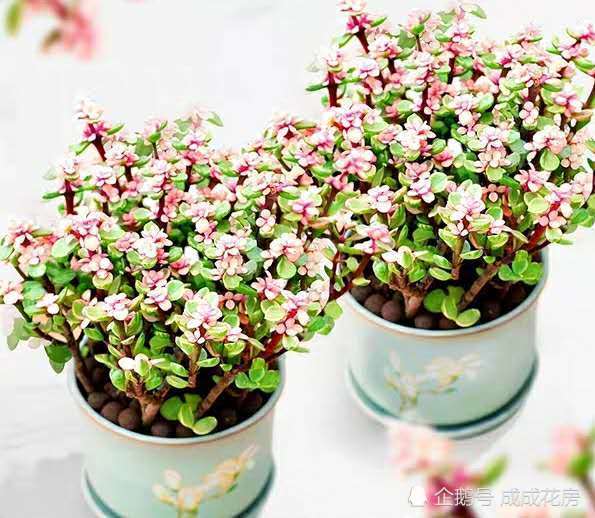
Grow a Jade Plant into a Big Old Trunk in One Year, and the Secret Is in the Flower Pot
Yesterday a flower-growing friend left a message for Chengcheng, saying that they had bought a small jade plant (Portulacaria afra) and asking how to grow it into a big old trunk. First of all, if you want to grow a jade plant into a big old trunk, you have to lay the foundation right from the moment you pot it...
条件筛选