-
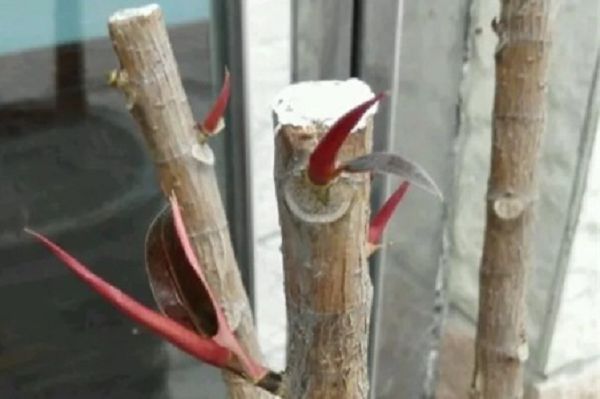
How to make a rubber plant grow more side branches, and can you notch the main trunk to force buds
How to make a rubber plant grow more side branches, and can you notch the main trunk to force buds
-
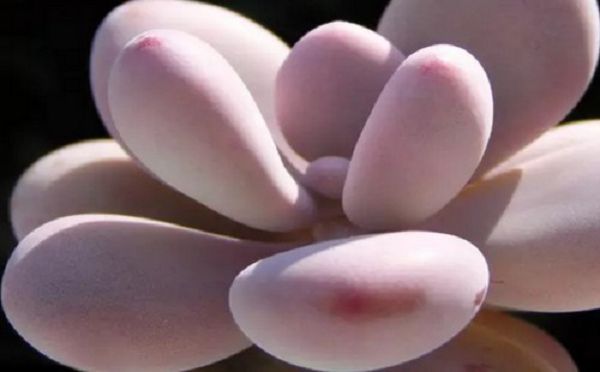
Can a leggy Pachyphytum 'Peach Beauty' still be grown into an old trunk?
Can a leggy Pachyphytum 'Peach Beauty' be made into an old trunk?
-
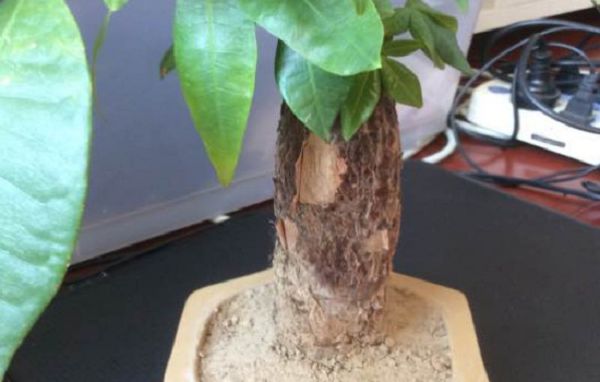
What to do when a money tree's trunk dries out and peels? Treat it like this right away
When a money tree's trunk dries out and peels, treat it like this right away
-
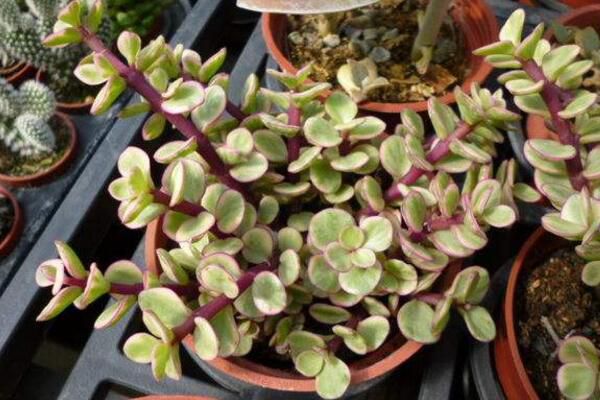
How do you grow a Portulacaria afra 'Medio-picta' into an old trunk? Master these key points
How do you grow a Portulacaria afra 'Medio-picta' into an old trunk? You must grasp the following key points
-

What are the control methods for trunk-boring pests of cherry blossoms?
The longhorn beetles that harm cherry blossoms usually include the star longhorn beetle, the glossy-shouldered star longhorn beetle, and the peach red-necked longhorn beetle. 1. The star longhorn beetle has 1 generation per year. When adults emerge from late May to early June, capture the adults: before the star longhorn beetle adult lays eggs, it first bites a notch about 2 mm deep and about 8 mm long in the bark in the shape of a "" or "", and then lays eggs inside it. During the peak egg-laying period in mid-to-late July, search for the notches on the trunk and destroy the eggs. During the stage when newly hatched larvae are active in the cortex, use a grafting knife to pick the larvae out. For larvae that have bored into the xylem, it is necessary to
-
Detailed Explanation of the Winter Trunk-Cutting Planting Method for Black Locust
Planting black locust by trunk cutting in late autumn and early winter has several major advantages: First, it avoids the spring tree-planting peak and the busy farming season, making full use of the winter slack period, so that planting time and quality are fully guaranteed. Second, according to the physiological characteristics of black locust, the average daily temperature required for root growth is relatively low; after leaf fall in autumn the above-ground part stops growing while the underground part continues to grow for a period, and when the leaves fall the mobile nutrients in the branches and leaves return to the trunk and roots, at which time the roots are rich in stored nutrients, which precisely gives the root system a stage for growth. Third, the plots where black locust is planted are generally
-
Companion Stones and Accessories for Bonsai Trunk Specimens and Methods for Collecting Them in the Wild
1. Companion Stones and Accessories for Bonsai Trunk Specimens Under the trees of a trunk specimen, place mountain stones, figures, animals, and pavilions, terraces, and towers to make the scene in the pot rich and varied, more poetic and picturesque and full of garden charm, and more imbued with the breath of life. When placing stones with a tree trunk, one may imitate the conception of a painting and arrange them ingeniously, placing one, three, or five stones beside the roots, generally with odd numbers being best. Pine fossil stone, axe-cleaved stone, sea-mother stone, sandstone concretion stone, and Ying stone are all acceptable. According to the posture of each kind of tree, configure either massive and sturdy or delicate and exquisite stones. In the pot, part of the mountain stone is buried in the soil and part is exposed,
-
How to carve and strip trunk bonsai? Three practical techniques
The trunks of trunk bonsai mostly use the image of being ancient, old, diseased, and disabled to show their "vigorous and sturdy character" that has endured the vicissitudes of time, while some bonsai trees show the characteristics of being young, tender, smooth, and sleek. The carving and stripping technique for trunk bonsai is precisely based on the conditions of the trunk itself, through artificial artistic reconstruction, to make the trunk image conform to the requirements of bonsai artistic modeling and achieve the purpose of enriching the varied texture layers of the trunk. Now let us introduce three techniques of the carving and stripping method. Spiral trunk stripping. Make partial diagonal rotational carving and stripping modeling on the main trunk from bottom to top
-
What are the key points for shaping a double-trunk bonsai?
The so-called double trunk refers to a tree with two trunks, as opposed to the single trunk, such as the straight trunk or curved trunk, which has only one trunk. Secondly, the trunks can also be distinguished by thickness and length: the thicker one is the main trunk, and the thinner one is the secondary trunk. If the secondary trunk is especially thin and short, the situation resembles that of a parent and child, and it is called a parent-child double trunk. (1) Selecting the planting material The primary consideration for the double-trunk tree style is harmony. This includes balanced factors such as the branching, length and thickness of the trunks, so special attention should be paid when selecting the planting material. At the same time, the following three points should also be grasped
-
Detailed Explanation of Artificial Aging and Ancient-Styling Techniques for Bonsai Trunks
Everyone knows that creating a highly artistic trunk bonsai often takes years or even decades to accomplish. How can one create a trunk bonsai with both excellent form and spirit in a relatively short time? Practice has proven that this goal can be achieved through artificial aging and ancient-styling techniques. The technical measures are as follows: 1. Material selection: Every winter and early spring, one can go to barren mountain ridges, cliff tops and wind gaps, precipitous cliffs, and other places to select plant materials suitable for bonsai. Due to poor growing conditions in these places, trees are mostly low and deformed. They easily form
条件筛选