-
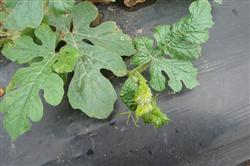
How do you remedy phytotoxicity after propiconazole application?
What are the symptoms of propiconazole phytotoxicity? What are the characteristics of propiconazole phytotoxicity? What causes phytotoxicity when propiconazole is applied? Below, Zhongdiwang gives a brief introduction for netizens' reference. 1. Symptoms of propiconazole phytotoxicity. The common symptoms of phytotoxicity from foliar spraying of propiconazole are hardening, brittleness and easy breakage of young tissues...
-
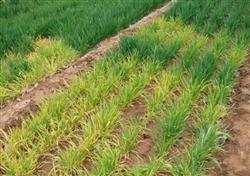
The Meaning of Pesticide Phytotoxicity and Remedial Methods
What is pesticide phytotoxicity? What methods are there to remedy it? I hope experienced netizens can help explain. What is commonly called crop phytotoxicity refers to various morbid reactions shown by crops due to improper use of pesticides. Therefore, Zhongdi Network has compiled the manifestations of pesticide phytotoxicity and some remedial methods, listed below for netizens' reference....
-
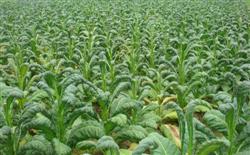
How to remedy herbicide phytotoxicity? A detailed guide to practical methods
How to remedy herbicide phytotoxicity when it occurs? Are there simple and practical ways to remedy it? We also ask knowledgeable readers to help share methods. During agricultural planting, herbicide phytotoxicity caused by operational errors occurs from time to time. Zhongdi Net has compiled four remedial methods after herbicide phytotoxicity occurs, listed below...
-
How can non-toxic disinfestation be achieved during grain storage?
How do you carry out non-toxic disinfestation when storing grain? Please explain the methods. When storing grain, the high-temperature disinfestation method can be used. Generally, stored-grain pests can tolerate high temperatures of 35-40°C; under conditions of 46-48°C, sustained over a longer period, the pests can be killed, while above 50°C, the vast majority of pests will die within a short time...
-
What are the correct methods for using low-toxicity fungicides?
How are low-toxicity fungicides used? Please provide an introduction to the methods. The following introduces the methods for using several low-toxicity fungicides: Antimycin 120 (Nongkang 120, 120 agricultural antibiotic) is suitable for controlling powdery mildew, anthracnose and Fusarium wilt. To control soil-borne diseases such as Fusarium wilt of cucurbits and eggplant, a 2% aqueous solution at 130 to 200 times dilution can be used...
-
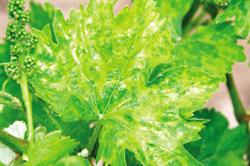
How to determine pesticide phytotoxicity? These judgment methods are worth knowing
How to determine pesticide phytotoxicity? Please provide an introduction to the methods. For phytotoxicity caused to crops, the existence of factors such as disease, nutrient deficiency, and crop physiological disorders increases the difficulty of identification. When phytotoxicity occurs and crop growth is abnormal, the following points should be noted in diagnosis: First, the abnormal...
-
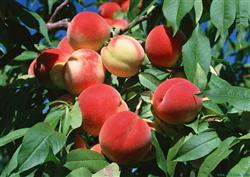
Which pesticides are prone to causing phytotoxicity when sprayed on fruit trees
Which pesticides can cause phytotoxicity in fruit trees? Please give an introduction. Pesticides that can cause phytotoxicity in fruit trees include: Omethoate: Apricot, pear, peach, fig and other fruit trees are sensitive to this pesticide solution at dilution concentrations below 1500 times, and phytotoxicity is very likely to occur when sprayed. In addition, during high-temperature seasons (above 30°C), use it as little as possible...
-
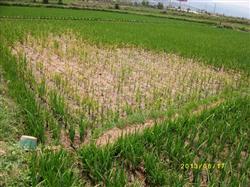
Which crops are prone to phytotoxicity from common pesticides?
Which crops will common pesticides cause phytotoxicity to? Please give an introduction. Common pesticides cause the following phytotoxicity to crops: Lime sulfur mixture: It is phytotoxic to plants such as peach, plum, apricot, and pear. If used on these plants, it is best to spray during the leaf-drop season, and it must never be used during the growing season or the flowering and fruiting period. Fenitrothion: In...
-
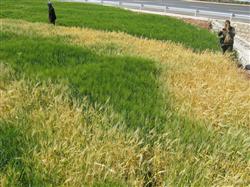
How to avoid pesticide phytotoxicity? A detailed guide to practical prevention methods
How to avoid pesticide phytotoxicity? Please provide guidance methods. To avoid pesticide phytotoxicity, you can refer to the following methods: 1. Fully understand the basic nature of phytotoxicity, strictly control the dosage and concentration used, choose the correct time and method of application, and do not arbitrarily increase the amount or frequency. 2. Understand the quality of the pesticide....
-
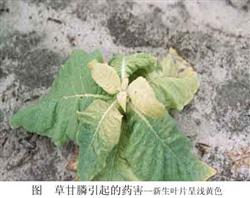
What are the remedial measures for herbicide phytotoxicity in tobacco leaves?
What should be done when herbicides cause phytotoxicity to tobacco leaves? What methods can be used to treat it? Some herbicides are widely used for weed control in rice fields or tobacco fields, especially in rice fields, where some farmers often apply high concentrations of herbicides. If tobacco is planted the following season, residual herbicides often cause phytotoxicity to tobacco leaves. In addition, the selectivity of herbicides...
条件筛选