Which crops are prone to phytotoxicity from common pesticides?
Which crops will common pesticides cause phytotoxicity to? Please give an introduction. Common pesticides cause the following phytotoxicity to crops: Lime sulfur mixture: It is phytotoxic to plants such as peach, plum, apricot, and pear. If used on these plants, it is best to spray during the leaf-drop season, and it must never be used during the growing season or the flowering and fruiting period. Fenitrothion: In...
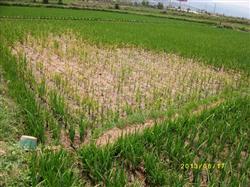
Which crops will common pesticides cause phytotoxicity to? Please give an introduction.
Common pesticides cause the following phytotoxicity to crops:
Lime sulfur mixture: It is phytotoxic to plants such as peach, plum, apricot, and pear. If used on these plants, it is best to spray during the leaf-drop season, and it must never be used during the growing season or the flowering and fruiting period.
Fenitrothion: Using fenitrothion to kill insects during high-temperature seasons causes severe phytotoxicity to pomegranate and some damage to cruciferous ornamental flowers.
Bordeaux mixture: Peach and plum are sensitive during the growing season; at less than the standard dilution multiple, pear, apricot, and persimmon are prone to phytotoxicity, and at more than the standard dilution multiple, grape is prone to phytotoxicity. [Qc_PaageBreak] Dimethoate and omethoate: Kiwifruit is especially sensitive and must not be used; they can cause obvious phytotoxicity to Rosaceae ornamental plants such as plum blossom, cherry blossom, dwarf flowering almond, and flowering quince, as well as to apricot and pear; dimethoate is also very harmful to shrimp plant and coral plant. If omethoate is sprayed from June to October, it often causes petals to wither and curl, causing them to lose their ornamental value.
Dichlorvos: Dichlorvos causes obvious phytotoxicity to ornamental plants such as plum blossom and cherry blossom, as well as to peach, apricot, Nijisseiki pear, and Jingbai pear. Under normal circumstances, other types of insecticides should be used instead. Dichlorvos also causes varying degrees of phytotoxicity to rhododendron, twisted willow, kiwifruit, pagoda tree, and walnut. When using pesticides to control pests on these plants, great care should be taken to avoid unnecessary losses.
Trichlorfon: It is phytotoxic to cherry blossom, plum blossom, and others.
Click to get more insecticide application techniques
Click to get more pesticide application techniques