How to remedy herbicide phytotoxicity? A detailed guide to practical methods
How to remedy herbicide phytotoxicity when it occurs? Are there simple and practical ways to remedy it? We also ask knowledgeable readers to help share methods. During agricultural planting, herbicide phytotoxicity caused by operational errors occurs from time to time. Zhongdi Net has compiled four remedial methods after herbicide phytotoxicity occurs, listed below...
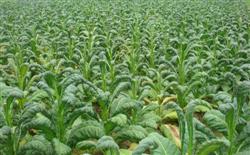 How to remedy herbicide phytotoxicity when it occurs? Are there simple and practical ways to remedy it? We also ask knowledgeable readers to help share methods
During agricultural planting, herbicide phytotoxicity caused by operational errors occurs from time to time. Zhongdi Net has compiled four remedial methods after herbicide phytotoxicity occurs, listed below for readers' reference.
Remedial method one: promptly rinse the plants with clean water:
When crops are sprayed with an excessive amount of herbicide or when sensitive leaves of nearby crops suffer phytotoxicity, a clean sprayer can be filled with clean water and sprayed continuously several times directly at the affected plants to remove or reduce the residual amount of herbicide on the crops. For some herbicide phytotoxicity that is easily dispersed and deactivated by alkaline substances, a diluted solution of 0.2% quicklime and 0.2% sodium carbonate in clean water can be used to spray and wash the crops, which has a very good effect on eliminating phytotoxicity.
For fields where phytotoxicity occurs in continuous patches, in addition to spraying water on the leaves to wash them, sufficient irrigation should also be carried out to prompt the root system to absorb a large amount of water, reduce the concentration of the agent in the crop, and provide a good alleviating effect. For fields where the soil application of the agent was excessive, the method of irrigation and drainage to wash the field should be adopted to remove a large amount of the agent out of the field, which can effectively reduce phytotoxicity.
Remedial method two: apply quick-acting fertilizer to the crops:
You can refer to the general topdressing amount for the crop's growing season, and combine watering with topdressing quick-acting chemical fertilizer. In addition to applying ammonium nitrate and ammonium sulfate to the soil, also spray the leaves with 1% urea or 0.3% potassium dihydrogen sulfate solution, which can promote crop growth, improve resistance to phytotoxicity, and reduce the losses caused by phytotoxicity.
Remedial method three: carry out intertillage and soil loosening for the crops:
According to the crop's growing season, the number of intertillage and soil loosening operations can be appropriately increased. Intertillage should go from shallow to deep, break up soil compaction, enhance soil aeration, raise ground temperature, promote the activity of beneficial microorganisms, accelerate the decomposition of soil nutrients, enhance the root system's ability to absorb nutrients and water, and help the plants resume growth and development as soon as possible. Through comparison, in cotton fields where cotton seedlings suffered acetochlor phytotoxicity after emergence, those subjected to continuous intertillage 4 times had a 0-10 cm ground temperature at the seedling stage that was 1.8°C higher than those without intertillage, 1.7 more true leaves per plant, and 3.3 cm more plant height.
Remedial method four: spray plant growth regulators:
After discovering the occurrence of phytotoxicity, promptly use a brassin-type plant growth regulator on the crops, and use a sprayer to evenly spray the diluted solution on the front and back of the crop leaves, preferably so that the leaves are covered with droplets. After spraying, a reviving effect can be achieved, allowing the crops to quickly resume growth. According to the nature of the phytotoxicity, apply a substance with the opposite nature to neutralize and alleviate it.
If wheat is sprayed with an excessive amount of 2,4-D butyl ester, 20 ppm gibberellin can be sprayed. Seven days after spraying, stem and leaf growth returns to normal, and the yield increases by more than 10% compared with those not sprayed with gibberellin.
Click to get more herbicide application techniques
Click to get more pesticide application techniques