-
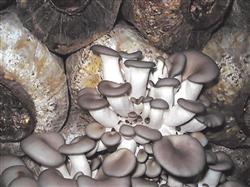
How to grow oyster mushrooms (Pleurotus pulmonarius)? Detailed explanation of cultivation techniques
How are oyster mushrooms (Pleurotus pulmonarius) grown? Please give a detailed introduction. Oyster mushrooms (Pleurotus pulmonarius) can be grown by referring to the following methods: 1. Cultivation season. Based on the characteristics of oyster mushrooms (Pleurotus pulmonarius) fruiting at moderate temperatures and forming fruit bodies under fluctuating temperatures, the cultivation season is generally arranged so that the local temperature during the spawn bag inoculation stage does not exceed 28°C, and after inoculation they are cultured for about 35 days, then enter the fruiting stage when...
-
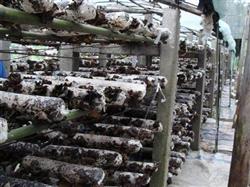
How to grow black fungus (wood ear mushroom) using vertical/three-dimensional cultivation? Detailed growing techniques
How to grow black fungus using vertical/three-dimensional cultivation? Please explain the method. For vertical/three-dimensional cultivation of black fungus, you can refer to the following methods: 1. Spawn preparation: The spawn production technique for wood ear mushroom is the same as for conventional edible fungi. 2. Spawn-running management: For the culture medium for cultivating wood ear mushroom, you can adapt to local conditions and use local materials, using cottonseed hulls or mixed wood sawdust as the culture medium. April-May...
-
Detailed Explanation of Kiwi Seedling Cultivation Methods and Techniques
How are kiwi seedlings cultivated? What should be noted? We also ask netizens to help guide. Zhongdi Network has compiled the seed seedling method, cutting seedling method and root cutting seedling method for kiwi, listed below for netizens' reference. Seed seedling method and management methods for kiwi seedlings 1. Kiwi seed collection...
-
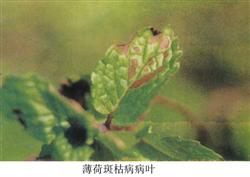
What Is Mint Leaf Spot Disease? A Detailed Guide to Mint Cultivation Techniques
What is mint leaf spot disease? Please give an introduction. Mint leaf spot disease occurs commonly in our area; this disease is a fungal disease. Symptoms: It mainly harms the leaves. Round to irregular dark green spots, 2-3mm in size, appear on the leaf surface, later turning brown, with the center fading to gray and a faded margin around them; black...
-
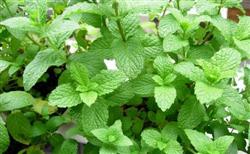
Common Pests and Diseases in Mint Cultivation and Their Control Techniques
What pests and diseases of mint need to be controlled? Please provide guidance. Common pests and diseases of mint include rust, leaf spot, cutworm, silver Y moth, and tobacco cutworm. For agricultural control, choose disease-resistant and disease-tolerant varieties, and in particular implement measures such as rational crop rotation. In pest and disease control, pay attention to early detection and early control...
-
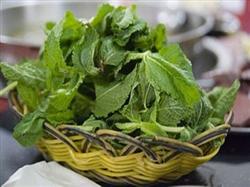
How to harvest mint? Detailed explanation of key cultivation techniques
How to harvest mint? A detailed introduction: mint is harvested twice a year. The first harvest is from late June to early July, but no later than mid-July, otherwise the second yield will be affected. The second harvest takes place in early October during the flowering period. When harvesting, choose a sunny day between 10 a.m. and 4 p.m., with the period from 12 noon to 2 p.m. being the best...
-
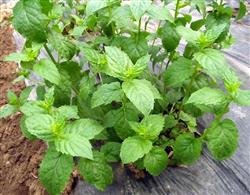
What are the key points and precautions for mint cultivation techniques
What should be noted when planting mint? Please give guidance. When planting mint, note the following two points: 1. Mint should not be planted continuously on the same land. Before sowing, plow deep and harrow fine, open furrows and make beds. In production, rhizome propagation is mainly used, and cuttings propagation and division propagation can also be used. Choose rhizomes with short internodes, white color, thick and strong growth, and no pests or diseases as seed...
-
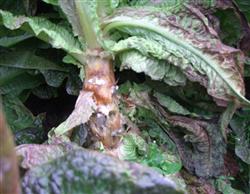
Lettuce Sclerotinia Rot: Control Methods and Key Planting Techniques
What harm does lettuce Sclerotinia rot cause? How do you control lettuce Sclerotinia rot? Here is an introduction to the harm caused by lettuce Sclerotinia rot: after the plant is infected, the leaf stalks near the ground first rot and turn cream-yellow, then the leaves wither, and then the whole plant rots. When humidity is high, white cottony growth appears on the diseased parts, and later black mouse-dropping-shaped sclerotia form inside and outside the stem...
-
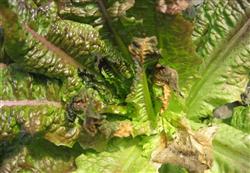
What is lettuce gray mold? A detailed guide to lettuce cultivation techniques
What is lettuce gray mold? What harm does lettuce gray mold cause? How do you prevent and control lettuce gray mold? Please provide guidance. Lettuce gray mold is a common and highly destructive major disease of lettuce. In addition to harming lettuce, the disease can also harm more than 20 kinds of vegetables and other crops, including tomato, eggplant, pepper, cucumber and watermelon...
-
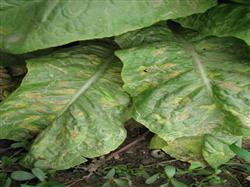
Control Methods for Lettuce Downy Mildew and Key Planting Techniques
How to control lettuce downy mildew? Here are the methods. Lettuce downy mildew is a common disease of lettuce and occurs in all regions. Lettuce downy mildew is a disease mainly caused by infection with fungi of the genus Peronospora in the subdivision Mastigomycotina. It generally damages crop leaves. On lettuce leaves affected by downy mildew, the lesions initially appear as small yellow nearly round spots...
条件筛选