How to grow oyster mushrooms (Pleurotus pulmonarius)? Detailed explanation of cultivation techniques
How are oyster mushrooms (Pleurotus pulmonarius) grown? Please give a detailed introduction. Oyster mushrooms (Pleurotus pulmonarius) can be grown by referring to the following methods: 1. Cultivation season. Based on the characteristics of oyster mushrooms (Pleurotus pulmonarius) fruiting at moderate temperatures and forming fruit bodies under fluctuating temperatures, the cultivation season is generally arranged so that the local temperature during the spawn bag inoculation stage does not exceed 28°C, and after inoculation they are cultured for about 35 days, then enter the fruiting stage when...
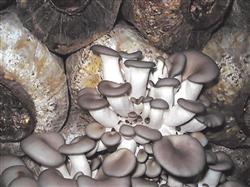
How are oyster mushrooms (Pleurotus pulmonarius) grown? Please give a detailed introduction
Oyster mushrooms (Pleurotus pulmonarius) can be grown by referring to the following methods:
1. Cultivation season. Based on the characteristics of oyster mushrooms (Pleurotus pulmonarius) fruiting at moderate temperatures and forming fruit bodies under fluctuating temperatures, the cultivation season is generally arranged so that the local temperature during the spawn bag inoculation stage does not exceed 28°C, and after inoculation they are cultured for about 35 days, then enter the fruiting stage when the local temperature is not lower than the threshold of 12°C. Specifically, in the southern provinces, spawn bags are inoculated in early September, cultured for mycelial growth for about 35 days, and by mid-November the bags are opened for fruiting; in low-altitude areas, autumn temperatures are relatively high, so inoculation of spawn bags can be extended by 26-30 days, while in the north, spawn bag production can be carried out 10-20 days earlier as appropriate.
2. Substrate preparation. Commonly used substrate formulas are as follows. Formula 1: cottonseed hulls 74%, bean stalks 15%, wheat bran 8%, lime 1.5%, gypsum powder 1.5%; Formula 2: mixed hardwood sawdust 80%, wheat bran 7%, sucrose 1%, calcium carbonate 1.5%, gypsum powder 1.5%; Formula 3: corncobs 50%, bean stalks 28%, wheat bran 17%, calcium carbonate 2%, gypsum powder 2%, sucrose 1%; Formula 4: sugarcane bagasse 40%, mixed hardwood sawdust 25%, bean stalks 15%, wheat bran 18%, calcium carbonate 1.5%. For the above formulas, the ratio of material to water is 1:1-1.2, with a moisture content of 60-65% being suitable, and the pH value before sterilization is 7.
3. Bag filling and sterilization. Using bag substrate sterilization can cause physical changes in the structure of lignin and cellulose, which is beneficial for the mycelium to decompose, absorb and utilize, and can shorten the flush interval. The cultivation bag specifications are plastic bags of 17 cm x 33 cm or 18 cm x 35 cm, with a film thickness of 4-5 silk (0.04-0.05 mm) being preferable. Each bag is filled with 250-350 g of dry material or 500-600 g wet weight. The bag opening can be fitted with a plastic ring and cotton plug or tied with yarn. After bag filling, promptly place on the stove for sterilization. High-pressure sterilization requires 0.103 MPa, steam temperature 121°C, maintained for 1.5-2 hours. For atmospheric pressure sterilization, in new mushroom-growing areas, after reaching 100°C, maintain for 10-12 hours; in old mushroom-growing areas, 16-20 hours; after meeting the standard, unload the bags to cool.
4. Inoculation and mycelial growth. When the substrate temperature in the bag drops below 28°C, choose nighttime or early morning to inoculate in a sterile room or inoculation box. For those with a ring and cotton plug, pull out the cotton plug, insert the spawn, then reinsert the bag opening; for those tied with string, punch a 2 cm wide inoculation hole on the side of the bag head, then insert the spawn, and seal the hole with adhesive tape. Each bottle of oyster mushroom (Pleurotus pulmonarius) spawn can inoculate 40-50 bags. After inoculation, move the spawn bags indoors for mycelial culture. For the first 3 days, maintain the temperature at 24-26°C to promote spawn germination and colonization; after the 4th day, as mycelial metabolism accelerates, the temperature inside the bag rises, so it should be adjusted to 22-23°C. In the early stage, the spawn bags should be kept away from light for mycelial growth; in the later stage, provide a little light and maintain air circulation. Check regularly and promptly remove any contaminated bags. Alternatively, when the mycelium has run 50% through the bag, loosen the bag opening to let oxygen enter the bag and accelerate mycelial growth and development. Generally, after inoculation, the mycelium fills the bag in 35 days.
5. Fruiting management. After the spawn bags are physiologically mature, move them into the mushroom shed, place them on shelves or stack them in a wall style on the ground. Then remove the plug or untie the string, open the bag opening to let oxygen enter the bag. At the same time, cover with film during the day and uncover at midnight to artificially create a temperature difference stimulation of 8-12°C. Units with cold storage facilities can move the spawn bags into a 2-4°C cold storage for stimulation for 10-12 hours, then move them into the mushroom shed to stack bags for fruiting. During the fruiting stage, the mushroom shed should provide 300-500 lux light intensity to promote primordium differentiation and fruit body formation. During the mushroom-growing period, the temperature is best controlled between 18-22°C. If the winter temperature is below 15°C, mushroom buds are difficult to form, so heating should be applied to promote budding; for spring cultivation with fruiting in early summer, when the temperature exceeds 25°C, measures such as adding shade cover above the mushroom shed and irrigating the furrows should be taken to lower the temperature. Control the amount of water sprayed according to the growth rate of the mushrooms and whether the weather is sunny or cloudy. After harvesting mushrooms each day, spray a mist of water once into the space and onto the substrate surface of the bags. At the same time, ensure ventilation and air exchange in the mushroom house, and keep the relative humidity of the space between 85-95%. Prevent excessive humidity and oxygen deficiency, which can cause miscellaneous bacteria to grow and rot the mushrooms.
6. Timely harvesting. The maturity standard for oyster mushrooms (Pleurotus pulmonarius) is when the edge of the cap is flat and extended, the cap does not exceed 2 cm, and before entering rapid growth, when the color gradually changes from dark to light, they can be harvested. For clustered mushrooms, they should be picked all at once, keeping the fruit bodies intact when picking. After picking, promptly sort, trim the mushroom base and debris, grade by quality, then load into baskets, place in cold storage, and promptly ship to cities for fresh sale; they can also be salted or processed into tourism leisure foods. Oyster mushrooms (Pleurotus pulmonarius) can generally produce 5-6 flushes of mushrooms. After each flush is harvested, clean the substrate surface, stop spraying water for 3-4 days to let the mycelium rest, then manage as usual for the next flush of fruiting. With proper management, the biological conversion rate is 100%, and high yields can reach 120%.
Click to get more oyster mushroom (Pleurotus pulmonarius) cultivation techniques
Click to get more edible mushroom cultivation techniques