Key management techniques for bitter melon in the mid-to-late cultivation period
How should bitter melon be managed in the mid-to-late cultivation period? Please explain the management methods. The following methods can be used for managing bitter melon in the mid-to-late cultivation period: 1. Intertillage, weed control and hilling. From the seedling stage onward, bitter melon should be intertilled, weeded and hilled in a timely manner to prevent the soil around the vines from crusting. Generally, after transplanting and watering to help the seedlings establish, ...
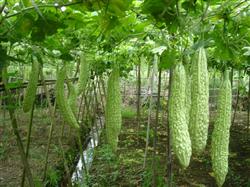
How should bitter melon be managed in the mid-to-late cultivation period? Please explain the management methods.
The following methods can be used for managing bitter melon in the mid-to-late cultivation period:
1. Intertillage, weed control and hilling
From the seedling stage onward, bitter melon should be intertilled, weeded and hilled in a timely manner to prevent the soil around the vines from crusting. Generally, after transplanting and watering to help the seedlings establish, wait until the surface soil is slightly dry and no longer sticky before carrying out the first intertillage. If there are strong winds or the soil is too dry, water thoroughly once more before intertilling. The second intertillage can be carried out 10-15 days after the first. During this intertillage, take care to protect new roots, and it is better to till shallowly rather than deeply. Each intertillage can be combined with the application of some high-quality farmyard manure, such as cake fertilizer, various types of poultry feathers, and decomposed chicken manure and pig manure. After trellising, when the vines have extended to more than 50 cm, the root system has basically spread throughout the rows, and generally it is no longer suitable to intertill. However, take care to pull weeds promptly to prevent wild grasses from growing rampant, so as to improve field ventilation and light penetration and reduce pest and disease damage. During the first intertillage, if missing plants or weak, diseased seedlings are found, replant them promptly to ensure a full stand.
2. Trellising and pruning
When bitter melon seedlings grow to about 20 cm, they need to be trellised and the vines trained. There are two trellising methods: the flat overhead trellis and the A-frame trellis. The flat overhead trellis has good ventilation and airflow, produces many fruits and gives high yields. Flat overhead trellises are further divided into connected-row flat overhead trellises and separate-row flat overhead trellises. For a connected-row flat overhead trellis, generally within the melon rows, a wooden stake is set every 3-4 m, and small bamboo poles, small wooden sticks or nylon netting are used on top to connect the stakes of the whole field into one continuous surface, with the top of the trellis about 2 m above the ground; for a separate-row flat overhead trellis, generally every two rows of melons form one trellis, with a trellis height of 1.5-2 m. The separate-row flat overhead trellis gives plants a larger light-receiving surface, good ventilation and air movement, and is convenient to manage, making it better than the connected-row flat overhead trellis. Whether it is a connected-row flat overhead trellis, a separate-row flat overhead trellis, or an A-frame trellis, the trellis must be built as firmly as possible to avoid collapse from wind, which would damage the melon seedlings and affect yield.
Bitter melon has very strong branching ability, and both the main vine and side vines can bear fruit. Under normal circumstances, pruning is not necessary. However, because winter-spring bitter melon has strong growth and more side vines, side vines below 50 cm from the ground and overly dense and aged branches and leaves should be removed promptly to facilitate ventilation and light penetration and improve light energy utilization. In the mid-growth period, if the vines grow too rampant, promptly pinch out the growing tips and top the plants to inhibit their growth and promote fruit setting. For training bitter melon vines, before the seedlings reach the trellis, this should be done frequently, tying and guiding once every 2-3 days. The method of training vines is generally to guide the main vine straight up along the bamboo and guide the side vines horizontally to the left and right along the support. It is best to train vines on sunny afternoons to avoid breaking them.
3. Topdressing and irrigation
Bitter melon has many fruiting cycles and a long harvest period, and consumes large amounts of water and fertilizer over its life. Therefore, strengthening fertilizer and water management is an important guarantee for achieving high yields. In addition to applying sufficient base fertilizer, generally heavy topdressing is applied at the vine-extending, flowering and fruiting stages, while less topdressing is needed at the seedling stage. The first topdressing is about 7 days after transplanting, and 10% concentration decomposed human urine or 0.5% compound fertilizer water can be applied. After that, apply once every 5-7 days, gradually increasing the concentration. By the time of flowering and fruiting, the concentration of human urine can be increased to about 30%. During the flowering and fruiting period, apply heavy fertilizer 2-3 times to extend the harvest period. Generally, at the beginning of flowering, apply 25-30 kg of cake fertilizer, 15-20 kg of compound fertilizer and 10 kg of urea per mu, combined with hilling for one topdressing; after the first harvest, continue with 20-25 kg of cake fertilizer and 20 kg of compound fertilizer for another topdressing; after that, for every 1-2 harvests, apply 30%-40% human urine or 10-15 kg of compound fertilizer. Topdressing should also depend on the weather and leaf color, and be adjusted flexibly as appropriate.
Although bitter melon likes moisture, it also dislikes waterlogging. If the roots are submerged, the leaves will turn yellow and wither, the fruits will rot, and root rot may also occur, leading to wilting. In the early growth stage of winter-spring bitter melon, temperatures are relatively low, so water should be appropriately controlled to enhance cold resistance. On sunny days from flowering to before harvest, water appropriately, generally once every 2-3 days. During the harvest period, water demand is relatively high, so water 1-2 times per day. Watering should be done after sunrise or before sunset, and watering must not make the soil too wet.
Summer-autumn bitter melon is in an environment with high temperatures and high evaporation, so watering or irrigation should be strengthened to regulate temperature and humidity. In the early stage, watering should be the main method, that is, use clean water and water thoroughly. After the vines cover the trellis, the furrow irrigation method can be adopted to keep the soil moist, but furrow irrigation should be with half a furrow of water, so that it is moist but not waterlogged. In the rainy season, drainage work should be done promptly to avoid water accumulation making the bed surface too wet and causing root rot and disease.
Click to get more bitter melon cultivation techniques
Click to get more vegetable cultivation techniques