Key Management Techniques for Bitter Gourd at the Mid-Season Stage
How should bitter gourd be managed at the mid-season stage? Please explain the management methods. The mid-season stage of bitter gourd is the peak fruiting period, and how to obtain the largest harvest in a limited time is the issue vegetable growers care about most. You can refer to the following methods for management: 1. Topdressing is similar to that for cucumber; bitter gourd likes potassium fertilizer. Now that the weather is getting colder, ...
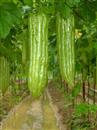
How should bitter gourd be managed at the mid-season stage? Please explain the management methods.
The mid-season stage of bitter gourd is the peak fruiting period, and how to obtain the largest harvest in a limited time is the issue vegetable growers care about most. You can refer to the following methods for management:
1. Topdressing is similar to that for cucumber; bitter gourd likes potassium fertilizer. Now that the weather is getting colder and the soil temperature keeps dropping, it is no longer suitable to apply compound fertilizer by flushing, so as not to affect the root system's absorption capacity. At this time, it is advisable to choose water-soluble fertilizers with high potassium, containing biological bacterial fertilizer and chitin, applied by flushing, which can nourish the roots, increase yield and improve coloring.
2. Light transmission and ventilation. Bitter gourd likes light. If light transmission is poor, it will affect coloring, flowering and pollination. If ventilation is poor, it will increase the chance of infection by pathogens.
3. Focus on controlling powdery mildew, while preventing anthracnose and downy mildew. When powdery mildew is severe, it causes leaves to turn yellow, seriously affecting photosynthesis and reducing the transport of photosynthetic products, which greatly lowers the yield and quality of bitter gourd. Timely and continuous application of pesticides is necessary for control. The following can be used: sulfur, Domark, Shengshi, azoxystrobin, difenoconazole, benalaxyl, etc.
4. For virus disease control, prevention should still be the main approach. Neglecting it will affect yield, and more importantly, it will cause a decline in appearance quality, greatly reducing the price of bitter gourd. Such drugs include: amino-oligosaccharin can inactivate viruses; ningnanmycin can prevent and control viruses, and mixing it with zinc fertilizer for spraying can help leaves spread out, increase the photosynthetic area and reduce the harm of viruses.
5. Remove old leaves and diseased leaves in time. First, this reduces hosts for pathogens; second, it helps ventilation and light transmission. It is even better than spraying pesticide once. Therefore, this work must be done well.
6. Control root-knot nematodes. Use 5% Jin'aiweiding at 5000 times dilution or 1.8% Baoyin at 1500 times dilution to drench the roots, while adding 4% alginic acid or 3% chitin at 800-1000 times dilution. This both kills nematodes and promotes rooting. Depending on the degree of nematode damage, apply once every 5-7 days, for three consecutive applications.
7. Pay attention to preventing and controlling physiological leaf blight. This is closely related to management. For example, excess potassium fertilizer will inhibit the plant's absorption of magnesium, causing leaf decline. Since bitter gourd likes potassium, timely supplementation of magnesium fertilizer has a good effect on delaying leaf senescence.
8. Supplement boron fertilizer. Boron is a very good element for preventing "flowers but no fruit, fruit but no seed." Many vegetable growers still have prejudice against micronutrients. In fact, nutrient deficiency in plants is like nutrient deficiency in people. If a person is severely deficient in vitamin E, they will get night blindness; plants also get sick when deficient in nutrients.
9. Foliar fertilizer is very important. It should be sprayed once every 7-10 days. Better foliar fertilizers include: Huide nutrient solution, which can supplement physiological yellow leaves caused by nutrient deficiency and protect flowers and fruits; phosphorus-potassium power (monopotassium phosphate), which can strengthen the plant and increase the weight of individual gourds; seaweed green (alginic acid), which can promote flowering and fruit retention, enhance resistance, resist cold and freezing, and improve coloring; chitin, which can promote and nourish roots, increase the number of capillary roots and extend the harvest period.
10. Pollination and flower pairing. Because the weather is getting colder, heat preservation becomes key. If the temperature inside the shed at night is below 15°C, flowering will be delayed or will not occur, affecting yield.
In summary, bitter gourd management is a relatively complicated process. The management policy of "prevention first" must always be carried through in order to continuously improve the yield and quality of bitter gourd and obtain a better harvest.
Click to get more bitter gourd planting techniques
Click to get more vegetable planting techniques