Detailed Explanation of the Techniques and Methods for Establishing Fast-Growing Goji (Wolfberry) Plantations
Goji has strong adaptability and can tolerate cold, drought, and salinity-alkalinity. It can grow in sandy loam, loam, loess, and sandy wasteland saline-alkali soils alike. Goji prefers a cool climate; it loves light and loves fertilizer. II. Propagation Methods. Goji flowers are solitary or several clustered in the leaf axils, with a pink or pale purple-red corolla bearing dark purple vein patterns; the pedicels are slender...
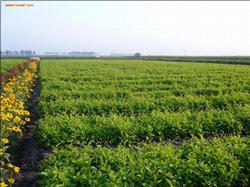
Goji has strong adaptability and can tolerate cold, drought, and salinity-alkalinity. It can grow in sandy loam, loam, loess, and sandy wasteland saline-alkali soils alike. Goji prefers a cool climate; it loves light and loves fertilizer.
II. Propagation Methods
Goji flowers are solitary or several clustered in the leaf axils, with a pink or pale purple-red corolla bearing dark purple vein patterns; the pedicels are slender; the calyx is bell-shaped. The berry is elliptical or ovate, turning red or orange-red when ripe. The seeds are numerous (20-50 per fruit), flat kidney-shaped, and yellowish-white. The flowering period is from May to October, and the fruiting period is from September to November. Its suckering capacity is extremely strong, and new shoots can sprout every month from April to August; the flower buds are mixed buds. They are axillary, and goji mostly bears fruit on 1-2 year old branches. The main propagation method for goji is seed propagation, though cuttings and sucker division can also be used.
1. Seed Propagation
(1) Selection of the nursery site: The best choice is a sandy loam with deep, fertile soil, good drainage, flat terrain, ample sunlight, and neutral or slightly alkaline conditions. Before sowing, the soil must be finely prepared. Deeply plow the nursery site twice, level and harrow it fine, and make raised beds 1.3 m wide for sowing, with drainage ditches around the perimeter. When preparing the soil, apply plenty of base fertilizer, spreading 2500-3000 kg of barnyard manure per mu.
(2) Seed collection and seed treatment: Select superior varieties that are 6 years old or older, growing vigorously, with large red fruit and free of pests and diseases, as mother plants for seed collection. Pick the fruit promptly from September to November when it turns from green to red. After collecting the seed, first soak it in warm water at 30-50°C for 24 hours, then scoop it out and rub it, rinse it in clean water to remove the skin and flesh, and take the seeds, dry them, and sow them immediately. If sowing is temporarily postponed, mix the seeds with 3 times their volume of moist sand, place them in a wooden box, and stratify them indoors at 20°C to promote germination. In the following spring, when 30%-50% of the seeds have cracked and shown white, take them out and sow.
(3) Sowing: Sowing can be done in spring, summer, or autumn, but late March in spring is the best time. On the prepared seedbed, open shallow furrows crosswise at a row spacing of 20-30 cm, with a furrow depth of 2-3 cm and a sowing width of 5 cm. Then evenly sow the germinated seeds into the furrows. If using dry seeds, first soak the seeds for 12 days, then scoop them out, air-dry them, and mix them with fine sand or plant ash before sowing. After sowing, cover with fine soil, press down lightly, and then cover the bed surface with grass to keep it warm and moist. Use 150-200 g of seed per mu.
(4) Nursery management: After the seeds germinate, remove the covering grass, irrigate in good time to prevent drought, and after the water seeps in, cultivate and weed promptly, generally 4-5 times a year. Thin the seedlings in combination with cultivation: the first thinning when the seedlings are about 5 cm tall, pulling out weak seedlings and leaving plants at a spacing of 5-6 cm; the second in early to mid-July, removing the weak and keeping the strong, setting the final spacing at 10-15 cm, and topdressing with urea or farmyard manure to promote robust seedling growth. When the seedlings are over 60 cm tall, pinch off the tops to accelerate the thickening and vigorous growth of the main trunk and main lateral branches. Seedlings raised in spring can be lifted from the nursery and planted out after autumn of the same year; seedlings raised in summer and autumn should be given one irrigation of freezing water in winter and left in the bed to be lifted and planted out after autumn of the following year.
2. Cutting propagation: After the sap begins to flow in spring and before the buds sprout and leaves emerge, cut vigorous water shoots or "seven-inch branches" from superior mother trees into cuttings 38-20 cm long. Dip the lower cut end in 500 ppm rooting powder or 500-1000 ppm indolebutyric acid solution for 10-15 seconds, take them out and let them dry, then insert them obliquely into the seedbed at a row spacing of 15 x 7 cm. After insertion, keep the bed soil moist at all times and set up a low shade shelter. The seedling survival rate can reach over 80%. When the seedlings are about 80 cm tall, they can be lifted and planted out. They can also be planted directly as cuttings; after the seedlings are established, strengthen fertilizer and water management, and they can flower and bear fruit in the same year.
3. Sucker Division Propagation
Goji has an extremely strong suckering capacity, and many root suckers are often produced around the root system. In autumn and winter, the young plants can be dug up with their roots and planted elsewhere.
III. Seedling Planting and Plantation Establishment
Goji has strong adaptability. Before planting, the soil must be thoroughly deep-plowed once, then planting is carried out at a row spacing of 2 x 2 m, arranged in rectangles to facilitate cultivation. Planting can be done from after leaf fall in autumn and winter until before the seedlings sprout the following spring, but the survival rate is higher when planting from late March to early April in spring. When planting, dig holes 40 cm x 40 cm x 40 cm, apply 3-5 kg of decomposed barnyard manure or compost per hole, mix it with the subsoil, and cover with 10 cm of fine soil. When planting, make sure the root system is spread out, fill the center with topsoil, and put the subsoil from the bottom of the pit on top, which helps soil maturation. Use the method of three burials, one tread, and one lift when planting.
IV. Management After Planting
1. Cultivation and weeding: In the early stage, intercropping with crops such as melons, beans, and vegetables is possible. In the first 2-3 years after planting, carry out field management measures such as loosening the soil, weeding, irrigation, and fertilizing in combination with the intercrops to promote the growth of young plants. After 2-3 years, intercropping stops. Generally, from mid-March to early April, turn and sun-dry the orchard soil once to a depth of 10-15 cm; and in mid-to-late August, turn and sun-dry the orchard soil again to a depth of 20 cm. This can preserve soil moisture and raise soil temperature, favoring robust root growth.
2. Scientific and rational fertilization: During the growing period, topdress 3 times with decomposed human and livestock manure water or quick-acting fertilizers such as urea and ammonium sulfate, in early May, early June, and late September respectively. Each time, dig a hole beside the plant and apply 100 g of urea, then irrigate and cover with soil. In addition, in May, June, and July, apply one foliar topdressing each of 0.5% urea and 0.3% potassium dihydrogen phosphate. Each year in early November, before irrigating with freezing water, dig holes or open furrows around the root zone, and apply 20 kg of human and livestock manure, 50 kg of soil and miscellaneous fertilizer, and 2 kg of cake fertilizer per plant, then cover with soil and earth up around the root zone to aid overwintering.
3. Irrigation: During the period from new branch and leaf growth to flowering and fruiting, irrigate 3-4 times, the first from late April to early May, and thereafter once every half month. In summer, when high temperatures coincide with the fruit ripening period, the water demand is even greater, and the plants should be watered once after each fruit harvest. During the autumn shoot growth period, water once each in early August, early September, and early November, and before the soil freezes, water 1-2 times with winter water.
4. Rational pruning and training: In order to cultivate a high-yielding tree form with a stable framework, a rounded crown, good ventilation and light penetration, and three-dimensional fruiting, according to the experience of the main production areas, the "trunk-layered form" is the best tree form. The tree height is about 2 m, with main branches extending from the trunk and distributed in three layers along the central trunk, with a certain spacing between the layers. The main branches form a certain angle with the central trunk, opening outward for ventilation and light penetration.