-
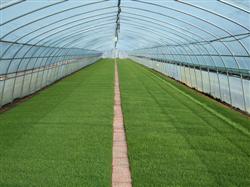
Key Technical Points for Dry Seedbed Raising of Rice Seedlings in Plug Trays under Large and Medium-Sized Plastic Tunnels
(1) Seed selection. Choose varieties of superior quality, high yield, disease resistance and medium-to-upper tillering capacity that tend toward the heavy-panicle type. In the first accumulated temperature zone, represented by Wuchang and Tailai, suitable main varieties include Wuyoudao No. 1, Songjing No. 2, Tengxi 140, Wudao No. 3 and Mudanjiang 19; in the second accumulated temperature zone, represented by Ning'an, Fangzheng, Yanshou, Huachuan and Suihua...
-

Lily Growing Period Management Methods and Technical Key Points
Pre-emergence management: Do a good job of clearing ditches and draining water, ensuring the lily field is neither drought-stricken nor waterlogged, and is also free from low-temperature freeze damage. Seedling stage management: From late April to early May, when the seedlings are about 10 cm tall, apply 25-50 kg of decomposed rapeseed cake fertilizer per mu, or 30 loads of decomposed pig manure and urine (do not apply chemical fertilizers containing fluorine or chlorine, and even more so do not apply un-composted...
-
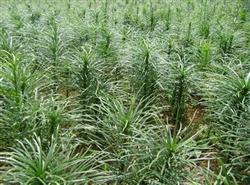
Technical key points for preventing waterlogging during the rapid growth period of lilies
Pre-emergence management: From sowing to around emergence, the main tasks are clearing ditches and draining water well, ensuring the lily field is neither too dry nor waterlogged, and that there is no low-temperature freeze damage, so as to ensure normal growth of the bulb roots. Seedling-stage management is generally during late April or early May; when the seedlings are about 10 cm tall, apply generally 25-50 kg of decomposed rapeseed cake fertilizer per mu, or 30 loads of decomposed pig manure and urine (do not apply chemical fertilizers containing fluorine or chlorine, and even more so do not apply pig manure and urine that has not been composted), applied in furrows or holes, 6-7 cm away from the lily seedlings. Applying too close can easily cause "seedling rot," while applying too far away makes the fertilizer prone to loss. At the same time, during the seedling stage, depending on labor availability, carry out timely cultivation 1-2 times; where conditions permit, cultivate after rain (be sure to cultivate shallowly), with a cultivation depth of 4-6 cm, deeper between rows and shallower between plants.
-
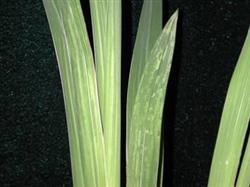
Control methods and technical key points for Lily symptomless virus
Lilies originate in China. They are distributed across the southeast and southwest, as well as Henan, Hebei, Shaanxi and Gansu, with wild and cultivated forms found in various places, mainly used as cut flowers and for garden planting as potted ornamentals. The bulbs are used for food and medicine, the fresh flowers contain aromatic oil used as a fragrance, and the fruits are eaten. A cold-hardy, autumn-planted scaly bulbous herbaceous flower. There are quite many cultivated varieties; besides white, the flowers also come in yellow, red, pale red, variegated and other colors.
-
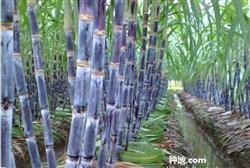
Key Technical Points for the Management of Black-Skinned Chewing Cane in the Mid-to-Late Growth Stage
How should black-skinned chewing cane be managed in the mid-to-late growth stage? Please provide an introduction. The management goal for black-skinned chewing cane in the mid-to-late growth stage is mainly to promote thickening and sugar accumulation, so as to increase yield and improve quality. The specific technical measures are as follows: Fertilization. In the mid-to-late growth stage, black-skinned chewing cane should be fertilized once every 15 days, mainly with complete nitrogen-phosphorus-potassium fertilizer and potassium fertilizer...
-
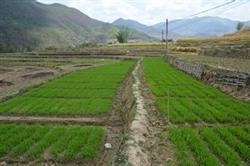
Rice seedling raising methods and key technical points for seedling-stage management
Seed treatment To improve the germination rate of rice, the seeds should be sun-dried before sowing, then 2 ml of Baike (25% prochloraz) or 15 g of Exianqing (16% prochloraz·cartap) is added to 5-6 kg of water to soak 5-6 kg of rice seed, and for every 5-6 kg of water, 10 g of 10% imidacloprid wettable powder is also added, soaking for 72 hours, soaking by day and airing by night, then accelerating...
-
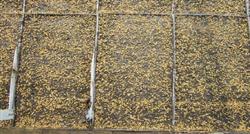
Detailed Explanation of Key Technical Points for Seedling Cultivation in High-Quality Rice Production
During the seedling cultivation period, in response to low-temperature cold wave weather, the Provincial Agricultural Technology General Station recommends the following measures: First, seize the time to sow and reseed. In areas where large-scale sowing has not yet been carried out, it is essential to seize the current favorable opportunity of rising temperatures and sow promptly; where seed rot, seedling rot, or seedling death has occurred, reseeding should be done promptly according to the degree of damage. Especially for machine transplanting...
-
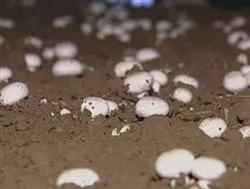
What are the key technical points for managing Agaricus bisporus during the fruiting period?
I. Watering to press down the mycelium should be done at the right time. When mycelium emerges on the bed surface, it indicates that the mycelium has grown to the bottom of the compost and has fully developed within the casing layer, and has already gained the ability to form mushrooms. At this point, water should be sprayed at the right time to press down the mycelium. Method: increase ventilation so that strong wind blows into the mushroom shed and causes the mycelium on the soil surface to lie flat; determine the amount of water sprayed according to the mycelial growth in the casing layer, generally every...
-
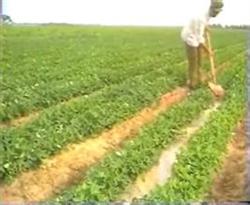
Key Technical Points and Fertilization Methods for Topdressing Peanuts and Soybeans
Carrying out topdressing of peanuts and soybeans at the mid-to-late growth stages according to different conditions is an important measure for raising the overall yield level. I. Peanuts: Peanut topdressing is mainly done at the pegging stage, when the nitrogen-fixing ability of peanut rhizobia has gradually declined, while the plants have entered the peak period of nutrient uptake. Topdressing can be carried out in two situations:...
-
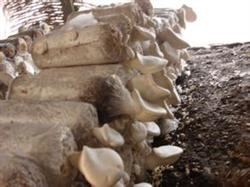
A Full Analysis of the Key Technical Points for Cultivating White King Oyster Mushroom (Pleurotus nebrodensis)
Making and Culturing the Fruiting Mushroom Logs. Formula for fruiting mushroom logs: (1) 92% cottonseed hulls, 3% cornmeal, 5% wheat bran, 65% moisture content. (2) 70% cottonseed hulls, 3% cornmeal, 20% sawdust, 7% wheat bran, 2% gypsum, 5% quicklime, 65% moisture content. Preparation before production: in Jixian County, bagging generally starts in mid-to-late August when the average temperature is 20°C...
条件筛选