Technical key points for preventing waterlogging during the rapid growth period of lilies
Pre-emergence management: From sowing to around emergence, the main tasks are clearing ditches and draining water well, ensuring the lily field is neither too dry nor waterlogged, and that there is no low-temperature freeze damage, so as to ensure normal growth of the bulb roots. Seedling-stage management is generally during late April or early May; when the seedlings are about 10 cm tall, apply generally 25-50 kg of decomposed rapeseed cake fertilizer per mu, or 30 loads of decomposed pig manure and urine (do not apply chemical fertilizers containing fluorine or chlorine, and even more so do not apply pig manure and urine that has not been composted), applied in furrows or holes, 6-7 cm away from the lily seedlings. Applying too close can easily cause "seedling rot," while applying too far away makes the fertilizer prone to loss. At the same time, during the seedling stage, depending on labor availability, carry out timely cultivation 1-2 times; where conditions permit, cultivate after rain (be sure to cultivate shallowly), with a cultivation depth of 4-6 cm, deeper between rows and shallower between plants.
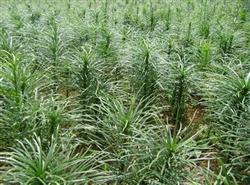
Pre-emergence management
From sowing to around emergence, the main tasks are clearing ditches and draining water well, ensuring the lily field is neither too dry nor waterlogged, and that there is no low-temperature freeze damage, so as to ensure normal growth of the bulb roots.
Seedling-stage management
Generally during late April or early May; when the seedlings are about 10 cm tall, apply generally 25-50 kg of decomposed rapeseed cake fertilizer per mu, or 30 loads of decomposed pig manure and urine (do not apply chemical fertilizers containing fluorine or chlorine, and even more so do not apply pig manure and urine that has not been composted), applied in furrows or holes, 6-7 cm away from the lily seedlings. Applying too close can easily cause "seedling rot," while applying too far away makes the fertilizer prone to loss. At the same time, during the seedling stage, depending on labor availability, carry out timely cultivation 1-2 times; where conditions permit, cultivate after rain (be sure to cultivate shallowly), with a cultivation depth of 4-6 cm, deeper between rows and shallower between plants.
Bud-stage management
Generally in late April or early June. The management during this period is mainly in early May: together with hilling, carry out one cultivation at a depth of 6-7 cm to promote a more numerous and deeper root system and to control the growth of the aboveground stems. For cultivation aimed at harvesting bulbs, promptly remove the flower buds when they change color but have not yet opened. At the same time, note that the removed buds must not be discarded in the fields or at the field edges; they should be collected and disposed of centrally to prevent leaving a source of pathogens. Fertilization during the bud stage is mainly skillful application; generally determine the time, amount, and method of topdressing according to the weather, soil quality, the amounts of base fertilizer and seedling fertilizer, and the plant's growth condition and appearance.
Management during the rapid bulb growth period
Generally from late May to mid-July, and in some places it may be extended to mid- and late August.
1. This is exactly the flood season, so prevent waterlogging in the lily field, clear ditches and drain water promptly, choose sunny days, remove diseased and residual plant material, and burn or deeply bury it centrally.
2. According to the field weeds and soil compaction, carry out one shallow cultivation after the flower buds are removed, at a depth of 3-5 cm.
3. At this stage, the absorptive capacity of the root system is relatively weakened. To supplement the insufficiency of nutrient uptake by the roots, foliar topdressing can be carried out, which has a certain effect on preventing premature aging and improving bulb yield and quality. Spray a 300-fold aqueous solution of urea or a 300-500-fold aqueous solution of monopotassium phosphate, or use 10-15 mL per mu of Le Wanjia aqueous solution diluted with water for spraying, alternating them, and spray again after ten days.