-
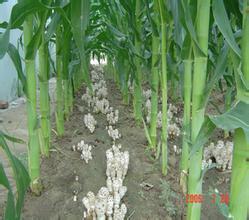
Key Technical Points for Intercropping Shaggy Mane Mushrooms in Pepper Fields
Intercropping shaggy mane mushrooms (Coprinus comatus) in pepper fields is a good way to cultivate them in a semi-wild manner. It can save the expense of building mushroom houses, does not take up extra space, and can greatly increase the economic benefit per unit of land area. Generally, after the peppers are planted, trenches are dug in the middle of the pepper rows, material is laid, and mushroom spawn is scattered. For the convenience of managing and harvesting the mushrooms...
-
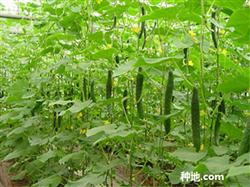
Scientific Fertilization Methods and Technical Points for Cucumbers
How to fertilize cucumbers scientifically? Here are some methods you can refer to for fertilizing cucumbers: 1. Transplanting period: Five days after transplanting, start using Purodan 15-30-15 high-phosphorus fertilizer at 500 times dilution combined with seaweed extract at 1000 times dilution for root drenching, once every 10 days, for two consecutive applications, to promote root development after planting and enhance disease resistance in the later stage. 2....
-
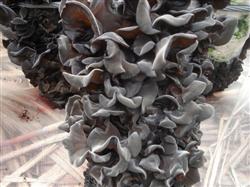
Key Technical Points for High-Quality, High-Yield Cultivation of Wood Ear Mushroom (Black Fungus) on Sawdust Bags
The wood ear mushroom (Auricularia auricula-judae) is a precious native specialty product and a traditional export product of China, and it is also one of the main artificially cultivated edible fungi in China, ranking first in the world in both yield and quality. China's wood ear-producing regions are widely distributed, and because of its low production cost, short cycle and quick returns, it is deeply welcomed by the vast number of mushroom growers. Taking bag cultivation as an example...
-
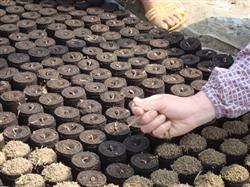
Key technical points for moving and hardening cotton seedling nutritional blocks
Moving and hardening the blocks is an important measure in the management of seedbeds for cotton nutritional block seedling raising. Its main benefits are: first, it can break off the tip of the cotton seedling's main root so that the upper part grows slowly, stimulate lateral root development, make the plant short with thick stems and many lateral roots, and improve cotton seedling quality; second, after the blocks are moved, air circulates around the roots and water dissipates quickly, which not only can enhance root activity...
-
Key Technical Points for Preventing Premature Senescence in Cotton at the Mid-to-Late Growth Stage
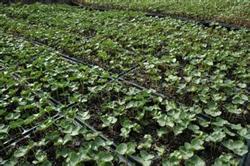
The Spring Equinox has passed, and cotton seedling raising is imminent. In order to seize the optimal period for cotton seedling raising and to raise sufficient and good-quality cotton seedlings at the right time, and in light of this year's climate characteristics, cadres at all levels and the broad community of cotton farmers are required to carry out seedling raising work in accordance with the following technical points. 1. Optimal seedling raising time: choose late March to before April 5, on clear and fine...
-
Lily Storage and Fresh-Keeping Methods and Key Technical Points
[Symptoms] Generally a latent infection. When co-infected with Lily symptomless virus, it produces chlorotic necrotic spot symptoms. [Pathogen] Cucumber mosaic virus (Cucumbermosaic Cucumovirus, CMV). The virus is an RNA virus belonging to the genus Cucumovirus. The virus particles are spherical, with a diameter of 30nm. The genome...
-
How to fertilize pomegranate trees without pollution? Detailed technical points
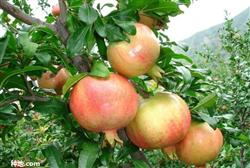
How to fertilize pomegranate trees without pollution? Please provide guidance. For pollution-free fertilization of pomegranate trees, you can refer to the following methods: 1. Fertilization timing. The key to whether the fertilization timing is scientific and reasonable lies in seizing the several critical periods of fertilizer demand during the growth and development of pomegranate trees. Pomegranate fertilization is divided into base fertilizer and topdressing. Base fertilizer generally...
-
How to fertilize sugarcane scientifically? Key technical points explained
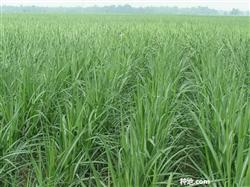
How to fertilize sugarcane scientifically? Please give guidance. Sugarcane has the nutritional characteristics of a high fertilizer requirement, a high potassium requirement, and high nutrient uptake in the middle and late growth stages. These characteristics must be grasped when fertilizing in order to achieve high yields. 1. Apply sufficient basal fertilizer. The basal fertilizer should be mainly organic fertilizer, used in combination with inorganic fertilizer. Generally, apply 1...
-
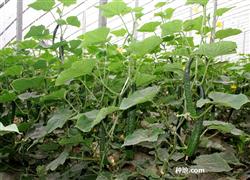
What are the key technical points for autumn cucumber planting and management?
How should cucumbers be managed when planted in autumn? The main aspects of autumn cucumber management that can be referenced are as follows: 1. Scientifically plan fertilizer and water application. After the root cucumber is harvested, apply a topdressing once in a timely manner along with watering. After autumn cucumbers enter the full fruiting stage, generally water once every 3 to 4 days. Use small amounts of water and water frequently, avoiding flood irrigation. In this way...
-
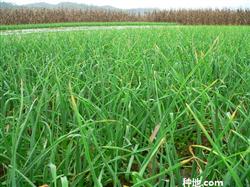
Detailed Explanation of Key Technical Points for Spring Field Management of Garlic
How to manage garlic in spring? Please introduce the water and fertilizer management of garlic after it turns green in spring, which is the key to a bumper garlic harvest. As the weather warms and the plants turn green, water and fertilizer uptake gradually increases, especially during the bolt-bearing stage and the bulb enlargement stage, which are the peak periods of water and fertilizer demand for garlic. Therefore, throughout the entire growth period of garlic, timely irrigation and topdressing should be carried out according to soil moisture, soil fertility and seedling conditions...
条件筛选