-
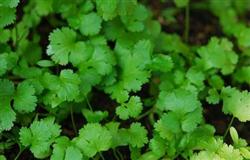
How to manage large-leaf cilantro for high yields? Detailed technical points
Select improved varieties: Japanese large-leaf cilantro, Thai large-leaf cilantro, Beijing large-leaf cilantro. Sow at the right time. For greenhouse cultivation, sow in staggered succession throughout the year, and in summer cover briefly with a shade net. For open-field cultivation, start sowing in late April and harvest in late June. For sowing in May, sow sweet corn as double plants in advance on both sides of the bed at 1 m intervals...
-

Detailed Explanation of the Planting Methods and Key Technical Points for Gnaphalium affine
Planting Methods for Gnaphalium affine
-
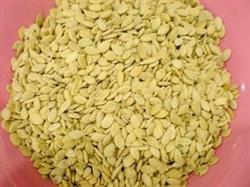
How to plant winter melon seeds for high yield? All the technical points are here
1. Sow at the right time and grow strong seedlings. The sowing period should be arranged according to local climate conditions, aiming to set fruit before the rainy season arrives. Generally sow from late February to mid-March, use a heat-retaining seedbed and nutritional pots for seedling raising, with about 100g of seed per mu. Before sowing, soak the seeds in hot water at about 70 degrees, let them cool naturally, soak for 1...
-
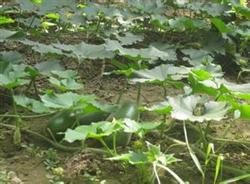
Key Technical Points for Spring Open-Field Cultivation of Ground-Trailing Winter Melon
Ground-trailing winter melon has the advantages of saving trellis materials, reducing labor for building trellises and tying vines, lower costs, being convenient for intercropping and relay cropping, and relatively extensive cultivation management. During spring open-field cultivation in the early spring low-temperature season, intercropping pak choi, small radish, garland chrysanthemum and other vegetables in the vine-running beds can improve land utilization and increase vegetable yield. Our local farmers...
-
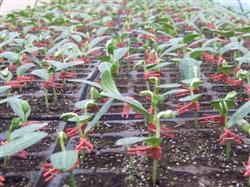
Key Technical Points for Pollution-Free High-Efficiency Cultivation of Bitter Melon in Greenhouses
I. Grafting Seedling Cultivation 1. Seedling Raising Methods The rootstock is raised in nutrient pots, and the scion is raised in sterile soil to strictly prevent soil-borne disease infection. Soak bitter melon seeds in a 75% thiophanate-methyl 800-fold solution for 12 hours, then soak in clean water for 16 hours, remove and air-dry, bury in sand for 2 days of warm germination; disinfect the nutrient soil with quintozene...
-
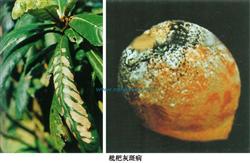
Comprehensive Control Methods and Key Technical Points for Loquat Gray Leaf Spot
Loquat gray leaf spot, also known as "ring spot." It is the most important disease of loquat. It attacks branches, leaves, flowers, and fruit. There are two types: acute and chronic: in the chronic type, leaf spots are initially light brown circular spots; later they join into irregular large spots, with small black dots scattered on them. On young shoots, the disease starts as small water-soaked brown...
-
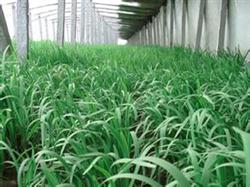
Key Technical Points for Early Spring Management of Greenhouse Chives
1. Temperature management. Chives prefer cool conditions, with an optimum growing temperature of 15-24°C, and should be ventilated appropriately during the day. To promote sprouting, after the greenhouse is covered, the daytime room temperature should be kept at 18-25°C, and after sprouting, the daytime room temperature should be controlled at 17-23°C. Before the first harvest of chives, the daytime temperature should be 15-22°C and the nighttime temperature 10-12°C. After each subsequent harvest...
-
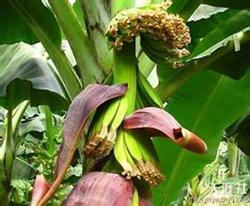
Detailed Explanation of Key Technical Points for Banana Production Mechanization
(1) Management of banana plants at flowering stage ① Bud adjustment: When the banana plant pushes out its flower bud, if any leaf or petiole is in the way of the bud emerging, it should be moved aside or cut away. If the bud happens to emerge right at the petiole and is blocked by the petiole so that it cannot gradually hang down, and if left as it is, the increasing weight of the bud will break the petiole, and the bud...
-

Key Technical Points and Cultivation Management Methods for Brazilian Banana Planting
I. Selection of Banana Orchard Site A Brazilian banana orchard requires loose soil, a deep and fertile soil layer, a low groundwater table, easy irrigation and drainage, abundant sunlight and air, and convenient transportation. II. Land Preparation 1. Opening the Orchard and Preparing the Land At present, banana planting in our city mostly uses paddy fields, and paddy fields generally have a high groundwater table,...
-
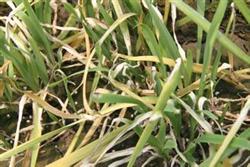
Control Methods and Technical Key Points for Chive Blight
Treat seeds with 25% metalaxyl at 0.3% of the seed weight. After disease onset, use 64% oxadixyl mancozeb at 600 times dilution, 69% dimethomorph mancozeb at 600 to 800 times dilution, 50% iprodione at 500 times dilution, and 77% copper hydroxide at 600 to 700 times dilution, applied alternately, once every 5 to 7 days, for 2 to 3 treatments.
条件筛选