Key Technical Points and Cultivation Management Methods for Brazilian Banana Planting
I. Selection of Banana Orchard Site A Brazilian banana orchard requires loose soil, a deep and fertile soil layer, a low groundwater table, easy irrigation and drainage, abundant sunlight and air, and convenient transportation. II. Land Preparation 1. Opening the Orchard and Preparing the Land At present, banana planting in our city mostly uses paddy fields, and paddy fields generally have a high groundwater table,...
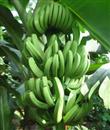
I. Selection of Banana Orchard Site
A Brazilian banana orchard requires loose soil, a deep and fertile soil layer, a low groundwater table, easy irrigation and drainage, abundant sunlight and air, and convenient transportation.
II. Land Preparation
1. Opening the Orchard and Preparing the Land Currently, banana planting in our city mostly uses paddy fields, where the groundwater table is generally high and irrigation and drainage are not timely enough. Lowering the groundwater table and ensuring timely irrigation and drainage are key; therefore, the land preparation method of deep furrows and high beds should be used. Clear away the stems and residues of the previous crop, then plow and sun-bleach the soil. The sun-bleaching time should preferably be half a month to two months. After sun-bleaching, open furrows and form beds. To facilitate air circulation, the bed direction should be parallel to the prevailing wind direction. The bed width including the furrow is 2.5-2.7 m, the furrow surface width is 50-60 cm, and the depth is about 50 cm. The depth and width between every two beds may be relatively slightly shallower and narrower, to be used as fertilization holes when the young panicle differentiates and the beds are joined.
2. Preparation of Base Fertilizer and Digging of Holes To achieve high yield in Brazilian bananas, sufficient base fertilizer must be prepared; base fertilizer accounts for 20% of the fertilizer requirement for the entire growth period. Base fertilizer should be mainly organic fertilizer, such as chicken manure, pig and cattle manure, latrine pit mud, etc. The base fertilizer should be piled and composted to maturity with phosphate fertilizer and a small amount of lime added. Prepare no less than 2500 kg of base fertilizer per mu. Under normal circumstances, holes must be dug 15 days before planting. The holes are dug in the center of the bed, and the hole spacing should preferably be 2.0 m, so 120-130 plants can be planted per mu. The hole specification should preferably be 60 x 60 x 60 cm, and the depth should also depend on the groundwater table: where it is low, the holes may be dug deeper; otherwise, they may be shallower.
III. Selection and Planting of Seedlings
1. Selection of Seedlings Brazilian banana seedlings should be tissue-culture plantlets cultivated by legally operating units. The designated Brazilian banana seedling-raising units in our city include the Municipal Agricultural Science Institute, Shuikou Agricultural Technology Station, Zhenlong Agricultural Technology Station, Dongzhen Agricultural Technology Station, and Dingbao Agricultural Technology Station. The first-grade seedlings from these units are provided by the Guangzhou Agricultural Science Base; seedling purity is guaranteed, and after strict quarantine they are disease-free and their subculture generation number meets the standard. At the same time, these departments have strong technical strength, the seedlings they raise are good, and after-sales service is complete. Select seedlings with 6-8 newly emerged leaves, a thick and strong pseudostem base, a stem height of 8-10 cm, and leaf color that is green without excessive vegetative growth, without variation, and without pests or diseases. Two to three days before planting the seedlings, spray once with 600 times omethoate and 800 times carbendazim, or apply a topdressing of 0.1-0.2% compound fertilizer solution (1:1:1).
2. Field Planting Banana planting in our city is mainly spring planting, and the best period is early March (around Awakening of Insects). At this time, the winter cold has passed, the weather is gradually warming, rainfall increases, the planting survival rate is high, and there are few pests and diseases. The first crop of bananas is harvested around the Spring Festival, and the second crop is harvested around the Mid-Autumn Festival. At this time, the temperature is not high, freshness-preserving transportation is easy, and the selling price is ideal. Before planting, apply sufficient base fertilizer, placing 20-25 kg of base fertilizer in each hole; fully decomposed poultry, pig, and cattle manure is best. Mix the base fertilizer with topsoil from the cultivated layer and place it in the lower part of the hole, then cover with 15 cm of soil. Because tissue-culture plantlets are delicate and tender, with fine young roots and poor penetrating ability, the planting soil must be broken up, loose, and not compacted. Plant shallowly at planting time, gently remove the nutritional cup without destroying the structure of the nutritional soil in the cup, and when backfilling, cover with no more than 1 cm of nutritional mud. Water thoroughly to settle the roots. Shallow planting gives a high survival rate and rapid early growth, but as the plant grows to a certain extent, the corm will be exposed above the ground, so some soil should be reserved during land preparation for earthing up.
IV. Fertilizer and Water Management
Tissue-culture banana plantlets are relatively tender and weak in the early stage and have poor absorption capacity, so the principle of frequent and light application should be followed. After planting, before two true leaves unfold, it is generally not suitable to apply fertilizer; mainly water the plants. Watering should be done every day before the sun comes out in the morning or after 4 to 5 p.m., and water should not be poured directly onto the crown; instead, water around the base of the banana plantlets. After the 1st-2nd new leaves unfold after planting and before the pseudostem reaches 50 cm, begin fertilizing. Use 2 liang of 1:1:1 compound fertilizer and 1 liang of urea dissolved in 100 jin of water, and pour 1-2 jin per plant; decomposed dilute manure water may also be used. Apply once a week. After the plant's pseudostem exceeds 50 cm, begin broadcasting fertilizer, mainly compound fertilizer, combined with earthing up. According to the plant's growth condition, spray foliar fertilizer to make growth uniform and consistent. About 6 months after planting, when 25 new leaves have emerged and the pseudostem is about 150 cm high, Brazilian bananas begin to enter the young panicle differentiation stage, and from differentiation to bunch emergence is about 30 days. This period is the key time determining yield level, and the leaves must be kept thick and green and disease-free, and the stem healthy and sturdy. Upon entering the young panicle differentiation stage, bananas have a very strong capacity to absorb fertilizer and water, so fertilizer should be applied heavily, accounting for about 30% of the whole growth period. Fertilization at this stage uses hole application. Two to three days before fertilization, open a hole 150 x 40 x 40 cm between two banana trees, then apply decomposed poultry, cattle, pig, and other manure mixed with 1.5 kg of 1:1:1 compound fertilizer, and cover with a 10 cm layer of soil. About eight months after field planting, Brazilian bananas enter the bunch emergence stage. During this period, meticulous management is necessary, frequently checking the bunch emergence condition, and strictly preventing the leaf tip from pressing the rachis and causing rachis breakage, so as to avoid the phenomenon of long painstaking effort being ruined in an instant. From bunch emergence to the cutting off of the male bud is about one month. During this period, mainly apply foliar fertilizer, spraying appropriately according to the banana tree's growth vigor, in order to reduce the fruit weight difference between the first and last hands. The number of hands retained need not be forced to be many; 9-11 hands per bunch is better. At the same time, attention should be paid to thinning out the "bao" banana and the "three-layer banana." Fertilization from bunch emergence to cutting off the male bud accounts for about 10% of the fertilizer amount for the whole growth period. Fertilizer and water management after cutting off the male bud and before harvest is the key period for ensuring excellent fruit shape. More green leaves should be maintained, and nutrients should be sufficient (fertilization accounts for about 20% of the whole growth period), and hole application should be carried out according to growth condition. Brazilian bananas have huge stems and leaves and transpire a great deal of water. Most roots are distributed in the surface soil layer and need sufficient water, but they are also very sensitive to waterlogging damage. Therefore, scientific irrigation and drainage must be carried out. Banana orchard irrigation methods include flooding irrigation, furrow irrigation, and sprinkling irrigation, among which sprinkling irrigation is more suitable in our city. Sprinkling irrigation means leading water into the bed furrows and then using manual labor or machinery to sprinkle the bed surface or hole surface wet, bringing the soil moisture content to about 65%, and then draining the water away. Do not store water in the banana orchard for a long time, otherwise root rot will be caused. The irrigation interval depends on the soil moisture content. A simple method is to take soil from above 25 cm of the soil layer: if it cannot be formed into a ball in the hand and feels dry when handled, irrigation for drought relief must be carried out immediately; but if it feels wet and sticks to the hand, and the mud ball is not easily broken even when pressed hard, it indicates that the soil moisture content is too high, and the furrows need to be cleared for drainage to lower the groundwater table.