-
Autumn management of Welsh onions is timely, and key technical points must be mastered
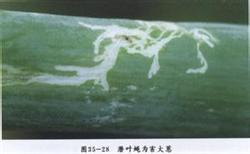
Affected plants show larvae boring into the heart leaves and leaf sheaths of the onion, feeding on the leaf mesophyll and epidermis, and forming grayish-white irregular winding mines. The larvae tunnel through the mines in various parts of the onion leaves, damaging the leaf veins, and in severe cases causing the aboveground part of the Welsh onion to dry up and die. Generally, in areas with severe leafminer damage, agricultural control requires...
-
Detailed Explanation of Key Technical Points for Organic Vegetable Greenhouse Cultivation
Greenhouse Organic Vegetable Cultivation Techniques 1 Analysis of Influencing Factors in Greenhouse Vegetable Cultivation 1.1 Influence of Harmful Gases Greenhouse vegetables differ most fundamentally from ordinary vegetables in that they incorporate artificial management. Greenhouse vegetables remain in a sealed...
-
Detailed Explanation of Key Technical Points for Dragon Fruit Cultivation and Management
Depending on the specific variety, dragon fruit belongs to the Cactaceae family, either the genus Hylocereus (Hylocereus undatus) or the genus Selenicereus (Selenicereus megalanthus). It originated in Central and South America, including Costa Rica, Panama, Ecuador, Cuba, and Colombia, as well as Vietnam in Southeast Asia...
-
How to manage green onions in early summer? Detailed explanation of key technical points
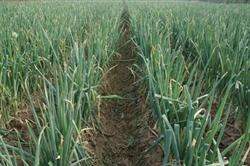
Green onions prefer a cool and humid environment. The optimum temperature for growth is 15-25°C. Above 26°C, growth becomes thin and slow, and above 30°C they enter a semi-dormant state. The first stage generally runs from planting to the start of the dog days, a period when the temperature rises from 15°C to 25°C, which is relatively suitable for green onion growth. Therefore, after planting and recovering from transplanting, they quickly enter...
-
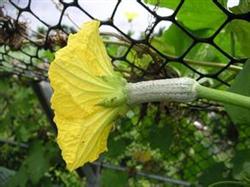
What are the technical key points for thinning male flowers and removing tendrils in loofah?
Reasonable thinning of male flowers and removal of tendrils in loofah can reduce unnecessary consumption of nutrients in the soil and within the plant, allowing nutrients to be concentrated for fruit growth and development, thereby increasing yield per unit area. Trials have shown that under otherwise identical cultivation and management conditions, compared with loofah without male flower thinning and tendril removal, loofah with male flower thinning and tendril removal increased the fruit-setting rate per plant by...
-
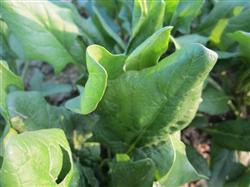
How to overwinter and preserve autumn spinach seedlings? A full analysis of the key technical points
Autumn spinach is an overwintering vegetable sown in autumn and harvested in spring. It begins overwintering at the end of November and turns green again in early March of the following year, a period lasting more than 100 days. Therefore, under long-term low-temperature and dry conditions, how to ensure safe overwintering is the key to achieving a bumper harvest. 1. Water the freezing water well. Watering the freezing water must achieve "one determination" and "two suitability...
-

How to Plant Hovenia dulcis (Japanese Raisin Tree)? Detailed Methods and Technical Key Points
How to Plant Hovenia dulcis
-
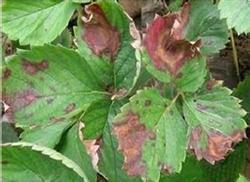
Disease Prevention and Control Measures and Technical Key Points for Greenhouse Strawberries
Strawberry leaf blight mainly affects leaves, petioles, fruit stalks and calyxes. 1. Symptoms. In the early stage of the disease, small dull dark purplish-brown spots appear on the leaves, which then expand into irregular lesions; the color of the lesion edges and centers changes little, and the symptoms of this disease are difficult to distinguish from those of brown spot disease in its early stage. Brown spot disease and leaf blight...
-
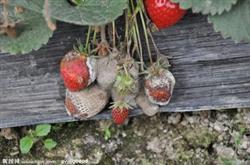
Key Technical Points for Pollution-Free Pest and Disease Control in Strawberries
Symptoms: Strawberry black mold mainly affects nearly ripe fruit. If harvested fruit is not promptly handled and packaged, it is even more susceptible to infection, causing large-scale fruit rot. When the disease first appears, the fruit surface shows light brown water-soaked lesions, which then rapidly soften and rot, producing a gray cotton-like growth, on which granular black mold develops, namely the mycelium and conidia...
-
How to overwinter and protect spinach seedlings in the north? Key technical points explained in detail
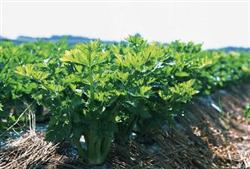
Celery, also known as Western celery, foreign celery, or American celery, is planted in autumn in the Shuyang area. The average yield per mu is 3000-4000 kg, and high-yielding fields can reach 5000 kg per mu. Its high-yield autumn cultivation techniques are briefly described as follows: 1. Select good varieties for sowing. Choose varieties that bolt late, have strong stress resistance, are not prone to softening, and have thick, solid stalks...
条件筛选