Detailed Explanation of Key Technical Points for Banana Production Mechanization
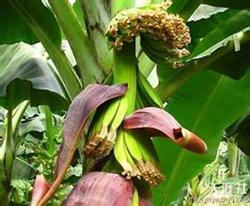
(1) Management of banana plants at flowering stage ① Bud adjustment: When the banana plant pushes out its flower bud, if any leaf or petiole is in the way of the bud emerging, it should be moved aside or cut away. If the bud happens to emerge right at the petiole and is blocked by the petiole so that it cannot gradually hang down, and if left as it is, the increasing weight of the bud will break the petiole, and the bud...
 1. Banana seedling tissue culture: Banana planting all uses test-tube plantlets. Test-tube plantlets are generally provided by plant breeding centers after virus elimination, tissue culture propagation, and factory-scale seedling production.
2. Banana field cultivation: Banana field cultivation includes pre-production and in-production cultivation. Because banana fields are generally sloping land, before production, large and medium-sized rotary tillers and double-furrow plows need to be used for cultivation, which can bury the crushed banana stems. During production, micro-tillers equipped with small plows, rotary tillers, fertilizer applicators, and other related implements should be selected to complete intertillage, hilling, fertilization, weeding, and other operations.
3. Planting: At present, bananas are generally planted manually, using a planting pattern of wide rows and narrow plants with rational close planting. The usual row spacing and plant spacing is 2.0 x 2.0 m, and the planting density in banana fields is generally 2250-2700 plants/hm2, and must not exceed 3000 plants, so as to avoid poor ventilation and light penetration and a high incidence of pests and diseases. Domestic banana planting mechanization is still immature and remains to be developed.
4. Irrigation and fertilization: Banana is a plant that likes warmth and moisture. Applying sufficient base fertilizer and potassium fertilizer and ensuring a reasonable water supply are the foundation for obtaining high yield, high quality, and fewer diseases in bananas. Therefore, water-saving sprinkler irrigation technology should be promoted, and water-saving irrigation facilities such as sprinkler irrigation and micro-irrigation should be laid out in banana orchards. Sprinkler irrigation facilities generally adopt a semi-fixed pipeline sprinkler irrigation system, drawing water from a reservoir. When laying fixed water pipes, factors such as mechanical cultivation, sprinkler radius, and wind direction must be taken into account.
Banana fertilization generally uses two methods: one is fertilization with a fertilizer applicator. The other is spraying fertilizer together with water, that is, according to the banana's demand for fertilizer and water, dissolving the fertilizer in water and spraying it onto the banana roots using sprinkler irrigation facilities. This method can control fertilization and irrigation by computer, achieve a scientific combination of fertilizer and water, save more than 20% of fertilizer and water, and increase banana yield by 22%.
5. Plant protection: Because banana planting now uses test-tube plantlets, during the seedling stage, work must be done well to control bunchy top disease and other pests and diseases. During the fruiting stage, in addition to bagging the banana fruit to protect it and cutting off the flower stalk at the right time, high-efficiency low-toxicity pesticides or biological pesticides should also be sprayed to kill fungi and insects. Plant protection machinery generally uses ultra-low-volume motorized sprayers or long-range movable motorized spray pumps.
6. Harvesting and packaging: Harvesting is an important part of banana production. In order not to affect the appearance quality of banana fruit and the rate of marketable fruit, advanced and suitable cableway transport harvesting equipment and cleaning and packaging equipment need to be promoted and applied, ensuring that banana fruit does not touch the ground from harvesting to packaging and other stages, achieving bruise-free harvesting, storage, and transport, and improving the appearance color and quality of banana fruit. The operation process is as follows: after the banana fruit is harvested, it is hung on the cableway and sent to the processing site, where it undergoes processes such as bunch separation, cleaning, disinfection, trimming, grading, air drying, vacuum preservation, weighing, bagging, and boxing. The cableway harvesting system can reduce mechanical damage to banana fruit by more than 20%, the selling price of banana fruit is 0.5 yuan/kg higher than usual, and work efficiency is increased by 30%. In large contiguous banana orchards, a fixed harvesting and processing system can be used, while for smaller orchards, a movable assembly line can be used, which can be moved to the field at any time to facilitate production.
7. Preservation and processing: In order to maintain the freshness of banana fruit, the banana fruit should be pre-cooled. It can be boxed and then placed in a cold storage for storage. The preservation temperature in the storage is 12°C-15°C.
8. Transportation: Long-distance transportation should use temperature-controlled storage and transport, using mechanically insulated vehicles with added ice or refrigerated containers. The temperature should be controlled at 13°C-15°C.
9. Crushing banana stems (heads) and returning them to the field: Bananas can generally be planted for one to three years, but the banana stems must be culled every year, so the handling of banana stems has become an important part of banana production. Because banana trees are rich in a large amount of organic matter, nitrogen, potassium, phosphorus, and trace elements, they are a good organic fertilizer. To achieve crushing banana stems and returning them to the field, a large banana stem crushing and returning machine should be used to push down and crush the banana stems and return them to the field, improving soil fertility. At present, the working efficiency of the banana stem crushing and returning machine is 0.2-0.27 hm2/h, and the operation cost is 1500 yuan/hm2, which is 50% lower than manual handling.