Key Technical Points for Early Spring Management of Greenhouse Chives
1. Temperature management. Chives prefer cool conditions, with an optimum growing temperature of 15-24°C, and should be ventilated appropriately during the day. To promote sprouting, after the greenhouse is covered, the daytime room temperature should be kept at 18-25°C, and after sprouting, the daytime room temperature should be controlled at 17-23°C. Before the first harvest of chives, the daytime temperature should be 15-22°C and the nighttime temperature 10-12°C. After each subsequent harvest...
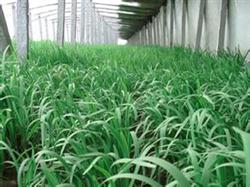
1. Temperature management. Chives prefer cool conditions, with an optimum growing temperature of 15-24°C, and should be ventilated appropriately during the day. To promote sprouting, after the greenhouse is covered, the daytime room temperature should be kept at 18-25°C, and after sprouting, the daytime room temperature should be controlled at 17-23°C. Before the first harvest of chives, the daytime temperature should be 15-22°C and the nighttime temperature 10-12°C. After each subsequent harvest, the temperature can be raised by 2-3°C, but must not exceed 30°C.
2. Fertilizer and water management. Chives require relatively low air humidity and relatively high soil moisture. The greenhouse air humidity should be kept at 60-70%, and the absolute soil water content should be kept at 13-15%. Generally, heavy clay soil that was watered with winter water before the greenhouse was covered does not need further watering. To promote the growth of the next crop of chives, a small watering can be given 5-7 days before the first harvest, applying 15-20 kg of ammonium nitrate dissolved in water along with the irrigation per 667 sq m (mu), and thereafter a watering and fertilizer application should be given 5-7 days before each chive harvest.
3. Foliar fertilization. During the growing period, spray potassium dihydrogen phosphate once every 7 days at a concentration of 300 times dilution; gibberellin can also be used at a concentration of about 40,000 times dilution. Spray when the plants grow to 15 cm, using 1 gram per 667 sq m, add 50 kg of water, and adding 0.5% ammonium nitrate gives better results. 4. Harvesting. The harvest period is generally before New Year's Day or the Spring Festival, and a yellow cut surface is more suitable, with an interval of about 35 days between two chive harvests.