-
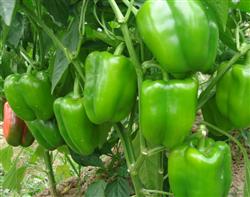
How to manage bell peppers during the color-changing stage? Key technical points explained in detail
How should bell peppers be managed during the color-changing stage? Please give guidance. Bell pepper management during the color-changing stage can refer to the following methods: First, pay attention to ensuring a reasonable temperature. Bell peppers have relatively strict temperature requirements during the color-changing stage. When the daytime greenhouse temperature is 28-30°C, it is most favorable for bell pepper color change. However, recently the temperature inside the greenhouse has often exceeded 40°C, causing bell...
-
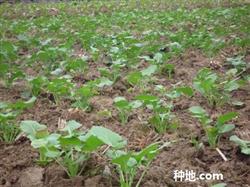
Key Technical Points for Spring Field Management of Rapeseed
How should rapeseed fields be managed in spring? Please advise. The bolting stage of rapeseed is a period of vigorous growth in both vegetative and reproductive development, known as "spring rapeseed fierce as a tiger." Due to the low temperatures and low rainfall in early spring this year, the growth and development of rapeseed has been slow, with weak growth vigor. To promote stable spring growth of rapeseed, coordinate vegetative growth and...
-
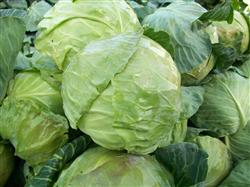
Key Technical Points for Head Cabbage Cultivation and Management
How do you manage head cabbage? Please provide guidance. For cultivating and managing head cabbage, you can refer to the following methods: 1. Irrigation. Cabbage is a vegetable that needs a lot of water, and it must be irrigated many times during cultivation. According to the different water needs at different growth stages, it can be divided into irrigation at the seedling stage, the rosette stage, and the heading stage. 1. Seedling...
-

How to Grow Pearl Zucchini: Planting Methods and Key Technical Points
How do you grow Pearl Zucchini? Here is a detailed introduction. Pearl Zucchini is an ultra-early-maturing first-generation hybrid, and was an award-winning variety in the 1997 All-America Selections. Its fruit is round and spherical, with dark green, glossy skin and grayish-green speckles. It is a new zucchini variety with great development potential. 1 Characteristics and traits. This variety is...
-
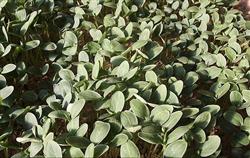
Detailed Explanation of Zucchini Seedling Raising Methods and Technical Points
How to raise zucchini seedlings? Please introduce the method. The seedling age for zucchini is best at around 45 days (5 true leaves). Sow at a plant and row spacing of 3.3 cm each, cover the seeds with about 3 cm of soil, and transplant at a plant and row spacing of about 10 cm each. For temperature control in the seedbed, from sowing to emergence, the daytime temperature should be 25-28°C and the nighttime temperature about 12-15°C.
-
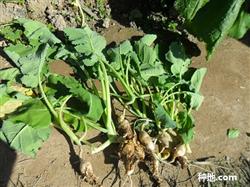
Control Methods and Technical Key Points for Clubroot of Rapeseed
How to control clubroot of rapeseed? Please explain. Clubroot of rapeseed occurs on the roots. The pathogen generally invades through root hairs or young roots, forming galls on the main root or lateral roots. It is commonly known as "big head disease." In the early stage, the surface is smooth and white; later it turns brown, rough and cracked. It is easily infected by other pathogens and rots...
-
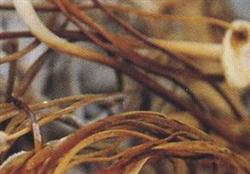
Control Methods and Technical Key Points for Enoki Mushroom Basal Rot
Symptoms: During the growth and development stage of the fruiting bodies, the base of the stipe turns dark brown to black and becomes rotten; after the base rots, the fruiting bodies topple over. Although young mushroom clusters affected by the disease do not topple over, they cannot continue to grow and develop upward; in severe cases, the needle-like young mushrooms turn black and rot in clusters. Pathogen: Penicillium claviforme, belonging to Deuteromycotina, ...
-
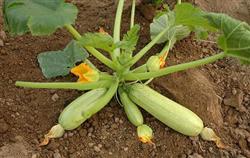
Zucchini Fall Planting Methods and Key Technical Points
How do you plant zucchini in fall? What does the planting process look like? For fall zucchini planting, you can refer to the following methods: Select good varieties Choose varieties such as Cuiying 101, Yinqing Yidai, Yuguan, Yuchun, Yunu, and others. Pre-sowing preparation Choose fertile vegetable garden soil for cultivation, with the previous crop preferably non-cucurbit crops such as corn or solanaceous vegetables...
-
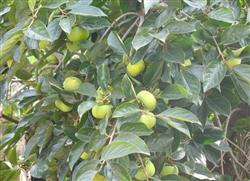
What are the key technical points for summer management of persimmon trees?
How should persimmon trees be managed in summer? Please provide guidance. The summer management methods for persimmon trees can refer to the following points: 1. Fruit thinning. For astringent persimmons, from mid-May to early June; for sweet persimmons, from early June to early July. After the physiological fruit drop ends, select and keep healthy young fruits free of pests and diseases at a ratio of 20-25 leaves to one fruit. What should be removed are deformed fruits, pest- and disease-damaged fruits, fruits set on branches less than 15 cm long or with fewer than 5 leaves, and fruits on the base and tips of bearing branches.
-
How to manage rapeseed cultivation? Key technical points explained in detail
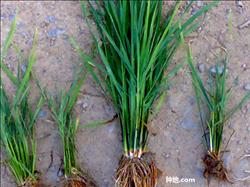
How to prevent and control rice "sitting stump" disease? Please help. Rice "sitting stump" disease, namely rice red blight, is a common physiological disease in rice production. It generally begins to develop about 15 days after transplanting. If a cold wave occurs after transplanting, in cold-waterlogged fields, muddy fields, deep-water fields, fields where undecomposed organic fertilizer has been applied, fields with one-sided application of single-element chemical fertilizers, or fields lacking potassium...
条件筛选