Bitter Melon Continuous Cropping: Planting Methods and Key Technical Points
How to grow bitter melon in continuous cropping? Please provide guidance on the methods. First, pay attention to timely pest and disease control. In the middle and late stages, bitter melon's stress resistance decreases, and the likelihood of pest and disease infection increases, so prevention should be carried out early. At present, the main disease harming bitter melon is powdery mildew, which can be controlled by spraying 12.5% myclobutanil emulsifiable concentrate at 2000 times dilution or 12.5% tebuconazole...
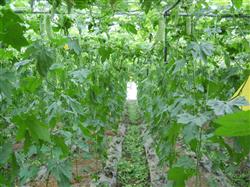
How to grow bitter melon in continuous cropping? Please provide guidance on the methods
First, pay attention to timely pest and disease control. In the middle and late stages, bitter melon's stress resistance decreases, and the likelihood of pest and disease infection increases, so prevention should be carried out early. At present, the main disease harming bitter melon is powdery mildew, which can be controlled by spraying 12.5% myclobutanil emulsifiable concentrate at 2000 times dilution, or 12.5% tebuconazole wettable powder at 1500 times dilution, or 62.25% Xiansheng wettable powder at 600 times dilution. As temperatures rise, viral diseases will also become a threat to bitter melon, so attention should be paid to adjusting the temperature well, doing good pest control work, and using Virus A at 500 times mixed with ningnanmycin at 300 times in advance for prevention.
Here, special mention should be made of yellowing leaves in bitter melon. Once yellowing leaves occur, bitter melon's fruit-setting ability becomes low, the fruits are small, and in severe cases it may stop setting fruit altogether, causing serious losses for vegetable growers. This is actually a physiological disease, mainly caused by factors such as continuous cropping, root damage, and variety degeneration. The solution is to do good preventive work in the early stage: First, before planting bitter melon, be sure to close the greenhouse and disinfect the entire greenhouse at high temperature, and deeply plow the soil. Second, vegetable growers are advised to buy hybrid varieties and no longer use their own saved seeds, because self-saved varieties have been grown for seven or eight years, and the varieties have already degenerated with reduced resistance. Third, vegetable growers with the means can graft bitter melon, so that the root system is more developed and the incidence of disease is reduced.
Second, water and fertilizer must be kept up. As temperatures rise, plant growth strengthens, which requires that fertilizer and water supply must be adequate. Bitter melon also likes a moist environment, so generally watering once every 7-10 days is sufficient, along with applying some high-grade fully water-soluble fertilizers with the water, such as Leba, Jialeduo, etc., using 5-10 kg per mu. This fertilizer not only supplies the nutrients needed for bitter melon growth, but also helps rooting and strengthening seedlings. Later, as temperatures rise again, evaporation inside the greenhouse increases, so the watering interval should also be appropriately shortened.
If the plant's yellowing leaves are severe, spray Fangrun foliar fertilizer at 500-800 times dilution once every 7-10 days, combined with irrigating Genjia at 500 times once, to promote root growth, supplement the nutrients needed for bitter melon growth, and effectively delay the aging of bitter melon plants.
Third, pay attention to removing excess branches and vines. In the middle and late stages of bitter melon growth, branches and vines become overgrown. If pruning and vine cutting are not done in time at this point, it not only consumes nutrients but also easily causes field closure, preventing nutrients from being supplied in a concentrated way, leading to poor bitter melon growth and reduced stress resistance.
Click to get more bitter melon growing techniques
Click to get more vegetable growing techniques