What are the key technical points for spring management of mulberry trees?
How should mulberry trees be planted to achieve high yields? Mulberry is a perennial woody plant. Mulberry leaves are the main nutritional organ of the mulberry tree and also the primary "food" for silkworms. Therefore, the amount of leaves produced by mulberry trees will directly affect the healthy growth of silkworms. High-yield cultivation techniques for mulberry leaves can be considered from the following aspects. 1...
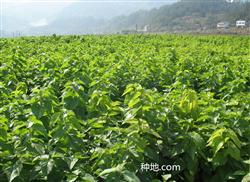 How should mulberry trees be managed in spring? Please teach me.
Spring returns to the earth, and all things revive. Mulberry orchard management is now on the production schedule of sericulture farmers. On March 8, sericulture experts in Haimen City pointed out in an interview with reporters that the current period is critical for mulberry orchard management, and key measures must be seized to manage mulberry orchards diligently.
Huang Jian, head of the Sericulture Station of the Haimen City Agriculture Bureau, believes that the quality of spring mulberry orchard management not only directly relates to the yield and quality of spring leaves, but also relates to the output rate of the mulberry orchard for the entire year, and has a great impact on the annual income of sericulture farmers. To strengthen spring management of mulberry orchards, ditches should be dredged early, ensuring that all ditches are interconnected, with clear level differences, and capable of both irrigation and drainage. For some low-lying areas and mulberry orchards with poor drainage, ditch repair should be strengthened so that no water accumulates in the mulberry orchard after rain, promoting the recovery of mulberry tree growth. Spring fertilizer should be applied sufficiently, preferably in two applications. The first application should be before the end of March, playing an important role in the overall annual fertilizer structure of the mulberry orchard. It is best to apply organic fertilizers such as decomposed human and livestock manure and compost that have undergone fermentation. The application rate per mu is 50 to 60 dan or 50 to 80 kg of ammonium bicarbonate; the second application should be in mid-April, with 10 to 15 kg of urea applied per mu. Cleaning the mulberry orchard is also essential at present. Once diseased plants with trunk blight or mulberry bacterial blight are found in the field, heavy pruning of branch tips should be carried out promptly; when egg masses of pests such as wild silkworms are found, they should be scraped off promptly; for mulberry trees affected by mulberry white scale and plaster disease, first manually scrape off their protective layer and then spray with a washing powder solution (mixing ratio: 1 kg washing powder added to 5 kg water), which can achieve good control effects. When mulberry buds begin to sprout, pest control for white-striped pests in the mulberry orchard should be carried out. Before April 8, Baosangling at 1500 times dilution can be selected for comprehensive spraying of the mulberry orchard.
Click to see more mulberry planting techniques