-
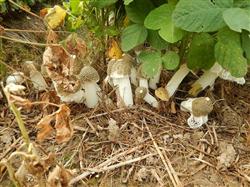
Methods and Key Technical Points for Growing Dictyophora (Bamboo Fungus) on Raw Substrate Without a Shed
How is Dictyophora grown on raw substrate without a shed? Please give an introduction. Dictyophora is known as the "Queen of Fungi" and is a precious edible mushroom in our country. Since the early 1990s, when Gutian County, Fujian Province, first succeeded in cultivating Dictyophora on raised beds under a shade shed in the field, inoculation in spring of the same year was achieved, and after mycelial growth and cultivation the harvest period began. The yield of dried Dictyophora per square meter reached 250-350 grams, with high yields reaching 500 grams. The production cycle was shortened by two thirds, and the yield per unit area increased 10-fold, an efficient result. In recent years, new breakthroughs have been made in cultivation techniques, adopting the "raw substrate, shed-free, multi-form cultivation method," which not only gives stable and high yields, saves labor and materials, and lowers costs, but also broadens the cultivation field and resolves the contradiction of "mushrooms competing with grain for land," bringing about another new leap in Dictyophora production.
-
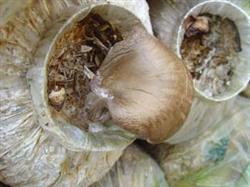
Spent oyster mushroom substrate can be reused, turning waste into treasure through secondary use
Experts point out that oyster mushroom soft rot is mainly manifested by the white mycelium of the oyster mushroom growing in a spider-web pattern on the surface of the bed, spreading rapidly, covering the bed surface, and surrounding the fruiting bodies. Once the base of the fruiting body is surrounded by mycelium, it becomes infected; the pathogen spreads upward along the stipe, ultimately resulting in the fruiting body stopping growth, with its color turning dark, and rapidly...
-
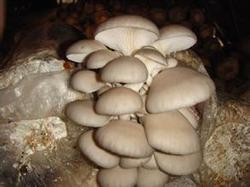
After harvesting oyster mushrooms for two flushes, the substrate surface needs to be scraped.
Growing oyster mushrooms on peanut shells can increase economic returns by 9.67%-21.82% compared with cultivation using rice straw. The following steps should be followed in the process. 1. Raw material processing and formula: crush the peanut shells into small particles and sun-dry them for 2-3 days before use. The formula is: peanut shells 90%, wheat bran or rice bran 8%, lime 3%, superphos...
-
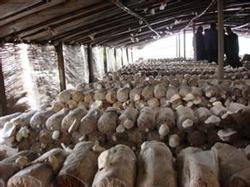
Detailed Explanation of Fermentation Methods for White Bailing Mushroom Cultivation Substrate
White bailing mushroom is a rare mushroom species developed in recent years. Its cultivation technology is becoming increasingly mature, and the marketability of its products is also getting higher and higher. It is believed that in the near future, white bailing mushroom will, like enoki mushroom and shaggy mane mushroom, become an ordinary member of the edible mushroom family and be commonly cultivated by the vast number of mushroom farmers. From the current situation, white bailing...
-
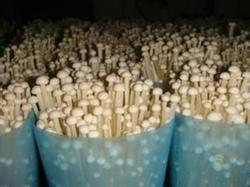
Technical method for cultivating straw mushrooms with spent golden needle mushroom substrate
In the cultivation management of golden needle mushrooms (Flammulina filiformis), because water should not be sprayed directly onto the fruiting bodies or into the substrate during the fruiting period, the substrate becomes severely short of water after the second flush is harvested, making it very difficult to produce more mushrooms. Growers therefore give up management, resulting in low yields, with the biological conversion rate generally reaching only about 130%. The amount of water content in the golden needle mushroom substrate is related to yield and quality...
-
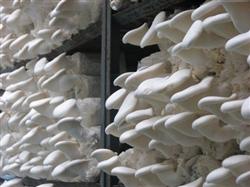
Technique for Reusing Pleurotus nebrodensis Spent Substrate to Cultivate Oyster Mushrooms
Pleurotus nebrodensis, also known as Ferula mushroom, Ferula pleurotus, or Ferula mushroom. Pleurotus nebrodensis has tender flesh and a delicious taste, with high edible value. Its cap is thick-fleshed, fine-textured, crisp and tender, with a delicious flavor resembling abalone. It does not fall apart even after long cooking and retains its unique flavor. It is known as the "porcini of the grasslands" and a pleurotus species, and is quite popular with consumers...
-
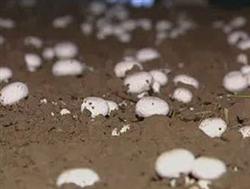
Methods for making organic fertilizer from spent mushroom substrate of button mushrooms, oyster mushrooms, and similar waste
Haidian District in Beijing has more than 80,000 mu of rice paddies. Aside from a portion of the rice straw that is used, most of it is burned, which both pollutes the environment and wastes resources. In light of this situation, we studied 9 mushroom species and ultimately determined that the straw-decomposing fungus button mushroom (Agaricus bisporus) is one of the ways to utilize rice straw. The key cultivation techniques for button mushrooms are as follows. 1. ...
-

What are the substrate formulas for growing succulents?
Text and images: Internet. For the substrate used to grow succulents, you must distinguish what species it is or what stage of growth it is in; you cannot generalize. Below are several substrate formulas for growing succulents, which I would like to share with everyone. Of course, different...
-
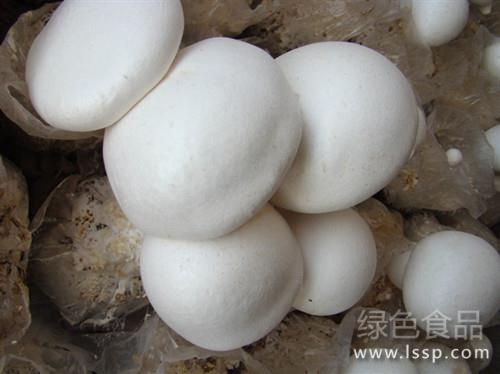
Relationship between nutrient ratios and yield: how to mix the nutrient substrate for white beech mushroom
Relationship between nutrient ratios and yield: how to mix the nutrient substrate for white beech mushroom
-

When to sow Gaillardia? Seed planting methods, substrate disinfection and seed priming
Among the propagation methods for Gaillardia, sowing is one of the more commonly used methods. This method has been tested by countless people and still has a very high survival rate. However, to succeed at sowing, there are many points we need to pay attention to. When to sow Gaillardia? And how exactly should Gaillardia seeds be planted?
条件筛选