Detailed Explanation of Fermentation Methods for White Bailing Mushroom Cultivation Substrate
White bailing mushroom is a rare mushroom species developed in recent years. Its cultivation technology is becoming increasingly mature, and the marketability of its products is also getting higher and higher. It is believed that in the near future, white bailing mushroom will, like enoki mushroom and shaggy mane mushroom, become an ordinary member of the edible mushroom family and be commonly cultivated by the vast number of mushroom farmers. From the current situation, white bailing...
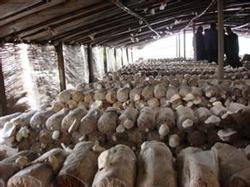 White bailing mushroom, also known as white oyster mushroom, has pure white fruiting bodies, thick and fleshy caps, delicate texture, and a crisp, tender, and delicious taste. It has high nutritional value, medicinal value, and economic value, and is a rare edible mushroom that has developed rapidly in northern China in recent years. However, many mushroom farmers, due to insufficient cultivation experience and poor mastery of technical essentials in the fermentation methods of cultivation substrate, have caused low yields and poor economic returns in bag-cultivated white bailing mushroom, which has affected the enthusiasm of mushroom farmers. Using corncobs and sawdust as cultivation substrate, the specific fermentation method is introduced as follows:
1. Formulas. ① Corncobs 80%, rice bran 12%, cornmeal 4%, gypsum 1%, superphosphate 1%, lime 2%. ② Corncobs 50%, broadleaf tree sawdust 30%, rice bran 10%, cornmeal 6%, gypsum 1%, superphosphate 1%, lime 2%. ③ In both of the above formulas, about 5% Jinbaobei fermentation agent needs to be added to improve fermentation quality.
2. Preparation and fermentation treatment. Select mold-free corncobs, crush them into the size of broad bean grains, weigh the required various raw materials according to the formula, mix them thoroughly, add water and stir evenly. The moisture content is 65%, that is, when the cultivation substrate is held in the hand and squeezed with moderate force, water appears between the fingers but does not drip down. After the materials fully absorb water, pile the prepared materials into a pile 1-1.2 m high and 1.5 m wide, with unlimited length. Use wooden sticks about 5 cm in diameter to make ventilation holes, with a hole spacing of 40 cm, reaching down to the bottom of the pile. Then cover the materials tightly with plastic sheeting, straw curtains, and other coverings. When the central material temperature in the pile reaches 60-70°C, turn the pile. After re-piling, continue fermentation. When the material temperature rises to 60-70°C, carry out the 2nd turning. Turn 3-4 times in total. When the materials appear brown, have a soft and elastic texture, and give off a special aroma, it indicates that the material has been fully fermented. Finally, replenish water to 65%, and it can be bagged.