When to sow Gaillardia? Seed planting methods, substrate disinfection and seed priming
Among the propagation methods for Gaillardia, sowing is one of the more commonly used methods. This method has been tested by countless people and still has a very high survival rate. However, to succeed at sowing, there are many points we need to pay attention to. When to sow Gaillardia? And how exactly should Gaillardia seeds be planted? Let's take a look below.
1. When to sow Gaillardia: sow in summer
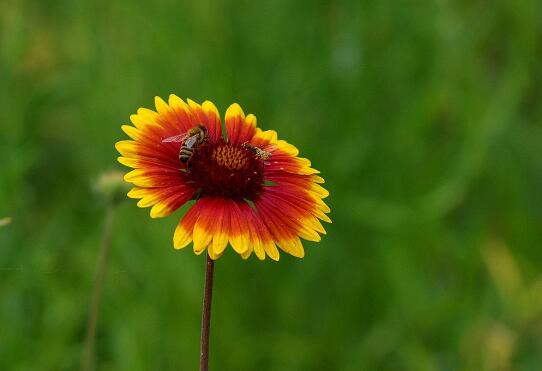
When it comes to when to sow Gaillardia, choosing the right time is very important. This plant prefers a high-temperature environment, so we can sow it in summer, because the climate in this season is more suitable for its growth, so the survival rate will relatively be somewhat higher.
2. How to plant Gaillardia seeds: be careful
As for how to plant Gaillardia seeds, there are many points we need to pay attention to, such as the selection and disinfection of the substrate, and the priming of the seeds, all of which are quite important. Of course, the most important thing is to be careful in the operation. As for the specific planting techniques, they are introduced in detail below, and those who are interested can take a look.
1. Substrate selection
Before planting Gaillardia, we first need to choose a substrate. This is the step of laying a good foundation, and it is very important. Generally, it is best to choose loose, fertile humus soil. This plant is rich in nutrients, and the soil has good drainage and aeration, which allows the plant to better absorb nutrients and makes water accumulation less likely.
2. Substrate disinfection
After choosing the soil, we also need to disinfect it, so that pests and diseases in it will not be transmitted to Gaillardia. When disinfecting, we can choose to break it up and spread it flat under the scorching sun for disinfection, or put it into a pot and stir-fry it over fire, so that if there are pests in the soil, they will also be killed.
3. Seed priming
Before planting Gaillardia seeds, we also need to prime the seeds. We can soak the harvested seeds in warm water for about 3-10 hours. When the seeds begin to absorb water and swell, we can take them out and sow them. This can increase the germination rate of the seeds.
4. Planting method
When planting Gaillardia, we first need to apply an appropriate amount of base fertilizer into the potting soil, then evenly scatter the seeds on the surface of the soil. After scattering, cover them with 1-2 cm of soil and then water. When watering, it is best to use the immersion method, because Gaillardia seeds are relatively small, and if watered directly, they are easily washed away.
How to plant Gaillardia seeds
Sowing time
This plant likes a high-temperature, dry environment, so it is generally best to plant it in summer, a period with sufficient light.
Early-stage treatment
1. Soak the seeds in warm water for seven to eight hours, allowing the seeds to fully absorb water and swell and become larger. Even after swelling, the particles are still very small.
2. Sterilize the prepared culture substrate. High-temperature sterilization can be used.
Sowing method
1. Choose a pot with relatively good aeration and drainage, and put the sterilized substrate into it. Because the seeds are already very small, when sowing you can press the seeds with your fingers or use tweezers to pick them up one by one and place them on the culture substrate. If using tweezers, be careful with the force and do not damage the seeds. After placing them, cover the surface with a layer of soil the same as the sowing substrate, about 1 cm thick.
2. Prepare a large basin, place the flower pot in the basin, and pour water into the large basin until the water level reaches two-thirds of the flower pot. Let it stand for a few minutes, and when the water in the large basin has soaked all the soil in the flower pot, it can be taken out.
3. If there are relatively large seeds, put them directly into the soil and sow them at a distance of 3 cm. After sowing, cover with soil, with the thickness controlled at two to three times that of the seeds. Water with a shower head or spray bottle to avoid washing the seeds away.
4. Pay attention to observing whether the soil is dry or wet, and replenish water in time once it looks dry, keeping it moist.
5. Cover the top with a layer of film to maintain moisture and temperature.
The above is an introduction to the question of sowing Gaillardia. Now let's take a look at how to care for Gaillardia after sowing so that it can grow healthily.
Gaillardia seed planting methods, suitable for sowing in summer
Gaillardia seed planting method 1. Planting timeThe planting time for Gaillardia seeds is generally better in summer.
2. Disinfect the substrateBefore sowing Gaillardia, the substrate used for sowing should be disinfected. The best method is to put it in a pot and heat it by stirring, so that any pests and diseases can be scalded to death.
3. Seed soakingSoak the seeds in warm water for 3-10 hours, until the seeds absorb water and swell. This is beneficial for seed germination.
4. Seed plantingFor tiny seeds that are difficult to pick up with hands or other tools, you can moisten one end of a toothpick with water and stick the seeds one by one onto the surface of the substrate, then cover with substrate 1 cm thick. After that, place the sowing flower pot into water, with the water depth at 1/2-2/3 of the height of the flower pot, and let the water slowly soak upward.
For larger seeds that can be picked up with hands or other tools, put the seeds directly into the substrate and sow them in spots at a spacing of 3×3 cm.
5. Cover the sown seedsAfter sowing, cover with substrate, with the covering thickness at 2-3 times that of the seeds. After sowing, use a sprayer or a fine-holed shower head to moisten the sowing substrate. Later, when the potting soil is slightly dry, sprinkle water again. Still be careful not to water too forcefully, so as not to wash the seeds up.
6. Later care and managementa. After sowing, once the seedlings emerge, remove the film in time, and let the seedlings receive sunlight before 9:30 every morning, or after 3:30 in the afternoon, otherwise the seedlings will grow very weak.
b. After most of the seeds have emerged, appropriate thinning is needed: pull out the diseased and unhealthy seedlings so that the remaining seedlings have a certain amount of space between them. When most of the seedlings have grown 3 or more leaves, they can be transplanted into pots.