-

Detailed Guide to Growing and Styling a Small-Leaf Privet (Ligustrum quihoui) Bonsai
Small-leaf privet, also known as Ligustrum quihoui, belongs to the Oleaceae family and the genus Ligustrum. It is an evergreen or semi-evergreen shrub that blooms with white flowers from June to July, and its fruit ripens from November to December, when it can be harvested for sowing. It has few pests and diseases, can reduce noise, and absorbs harmful gases such as sulfur dioxide. Because its leaves are small, its sprouting ability is strong, it tolerates pruning well, and it grows quickly.
-
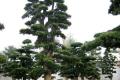
Podocarpus bonsai styling design methods and price reference
[Styled Podocarpus] Design methods and price reference for Podocarpus bonsai
-
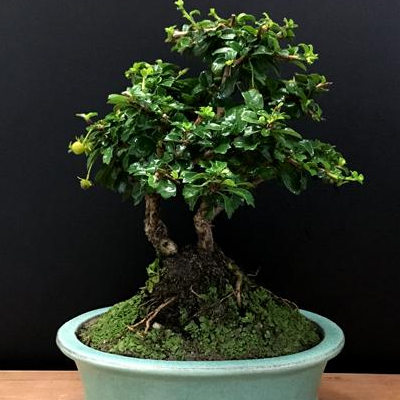
Fujian Tea Bonsai Styling Methods and Price Explained
Fujian tea bonsai: many people enjoy growing this type of bonsai. To grow a Fujian tea bonsai into a fixed shape requires styling. How do you style a Fujian tea bonsai? How much does a Fujian tea bonsai cost: How to style a Fujian tea bonsai: Making a Fujian tea bonsai
-
What are the key points to note in the styling of lingzhi (Ganoderma) bonsai?
1. Proceed step by step, and treat every bonsai as a masterpiece. In addition to the quick wit and clever ideas needed when cultivating and shaping lingzhi, the later assembly stage demands even more patience and care: the first step is to dry and tidy the shaped lingzhi, and to select the rocks, coarse sand grains, tree stumps, and sun-dried companion materials such as moss, branched ground cover and Selaginella (spikemoss), the raw gypsum powder used for fixing, and small accessories such as pavilions and towers; the second step is the actual shaping work, starting with the imagery of a single lingzhi such as "a single branch standing out in beauty", "auspicious herb bringing good fortune" and "good luck and happiness", then
-
New Method for Styling Nandina Bonsai
As early as the Ming and Qing dynasties, nandina (Nandina domestica) was listed as a garden plant for classical courtyards, and later introduced into bonsai, where it became deeply beloved in bonsai circles. However, this evergreen upright shrub has a tall trunk with few branches, grows extremely vigorously in spring, and is difficult to control in shape, which brings great disadvantages to bonsai styling. Through years of practice, the author has summarized three styling measures for the reference of bonsai enthusiasts. 1. Truncation. In late winter and early spring, take the collected raw stumps and, according to the design requirements, select dormant bud points of moderate height for truncation. Let it grow freely in the first year, and in the same period of the second year, most of the previous year's branch tips can be cut off, leaving only one to two branches at the lowest position, so that new buds sprout from the leaf axils. Repeat this method every year thereafter to avoid the trunk growing taller year by year. This practice is also beneficial to nandina fruiting.
-
Detailed Explanation of Artificial Aging and Ancient-Styling Techniques for Bonsai Trunks
Everyone knows that creating a highly artistic trunk bonsai often takes years or even decades to accomplish. How can one create a trunk bonsai with both excellent form and spirit in a relatively short time? Practice has proven that this goal can be achieved through artificial aging and ancient-styling techniques. The technical measures are as follows: 1. Material selection: Every winter and early spring, one can go to barren mountain ridges, cliff tops and wind gaps, precipitous cliffs, and other places to select plant materials suitable for bonsai. Due to poor growing conditions in these places, trees are mostly low and deformed. They easily form
-
Detailed Explanation of Ginkgo Bonsai Styling Methods and Techniques
The selection and styling of ginkgo bonsai material is mainly based on pruning. Observe the tree shape: potted ginkgo has relatively many leggy branches, but its trunk is more ornamental, so some leggy branches should be removed. When cutting leggy branches, first observe the position where the branches grow, then cut off overlapping branches, crossing branches, and so on. After cutting off excess branches during styling and pruning
-
Detailed Explanation of Styling Methods for Chinese Fringe Flower Bonsai
The artificial spherical bonsai style for Chinese fringe flower (Loropetalum chinense var. rubrum) involves shaping the plant into a spherical form. Chinese fringe flower is highly tolerant of pruning and can be trimmed and wired to be shaped into a ball. During the growing season of Chinese fringe flower, the mature leaves and shoot tips can be pruned.
-
Podocarpus bonsai styling pictures for you to enjoy, let's take a look
That's all for the Podocarpus bonsai pictures. Friends who like them can grow a Podocarpus at home and try making a beautiful bonsai out of it.
-
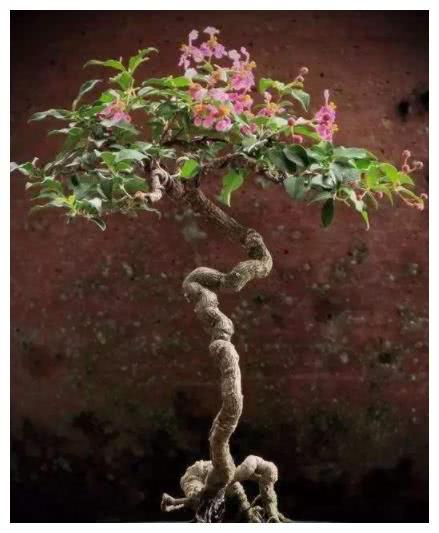
A detailed explanation of four bonsai root styling techniques, making styling methods easy to learn
No matter what kind of plant it is, if it has roots, the roots are the initial state of the plant's growth. They provide the plant with enough energy, and this part is also the main part that absorbs energy. This is because the plant's roots have some absorbing layers, and they also have filtering and protective...
条件筛选