-
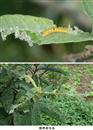
What are the methods for controlling pests and diseases of loquat?
What pests and diseases need to be controlled when growing loquat? Please provide an introduction and control methods. The pests and diseases that need to be controlled when growing loquat are: 1. Flower cluster rot. There are many causes of loquat flower cluster rot, but they are mainly due to two aspects: harmful organisms and climate. During the loquat flowering period (September-November), continuous autumn rain and high humidity accelerate the occurrence of flower cluster rot. Especially in the mid-to-late flowering period, the flower axis turns brown, soft and rotten, appearing mushy. When the diseased part is squeezed by hand, a viscous liquid flows out, and in the later stage the flower axis shrinks, dries up and appears wilted.
-
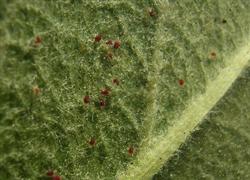
What are the methods for controlling summer mites on apple trees?
How to control mites on apple trees in summer? Please learn about the damage caused by summer mites on apple trees: I. Damage symptoms 1. Hawthorn spider mite. Also known as the hawthorn red spider, it mainly damages the leaves, tender buds and young fruit of apple trees. When leaves are damaged, the red spiders gather on the underside of the leaves, spin silk and form webs, with fine soil particles and eggs sticking to the webs, and many pale white spots appear on the upper surface of the leaves. When the damage is severe, rust-colored symptoms appear on the underside of the leaves, followed by dehydration and hardening, and the whole leaf turns yellow-brown and scorched, resembling being burned by fire. In severely affected orchards, most leaves may drop between June and July, causing a second round of flowering and budding, and severely damaged buds cannot continue to grow and die.
-
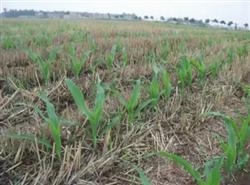
What are the methods for controlling pests and diseases in summer corn at the seedling stage
Which pests and diseases need to be controlled in summer corn at the seedling stage? Please introduce the control methods. The following pests and diseases need to be controlled in summer corn at the seedling stage: 1. Seedling-stage pest control. The main pests at the corn seedling stage are: armyworm, cotton bollworm, small brown planthopper, thrips, Swedish fly, etc. To control armyworm and cotton bollworm, 5% beta-cypermethrin or 2.5% cyhalothrin 50-75 g/mu can be used, sprayed with 30 kg of water. For the control of Swedish fly, when corn has just emerged (i.e. one leaf and one heart), spray 15% beta-cypermethrin·chlorpyrifos emulsifiable concentrate 50 mL per mu. If damaged plants appear in the field, those with severe damage should be pulled out promptly, and for lightly damaged ring-shaped plants, the tip of the plant should be cut off. To control the grain mealybug, use 50% phoxim emulsifiable concentrate 500-1000 mL/mu or 48% Lesiben emulsifiable concentrate 200-400 mL/mu for root drenching.
-
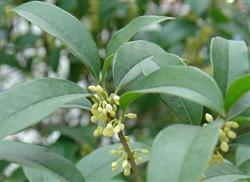
A Detailed Guide to Controlling Common Pests and Diseases of Osmanthus
How do you control common pests and diseases of osmanthus? Methods wanted. The pests and diseases of osmanthus trees include the following: 1. Leaf spot: it mainly damages the leaves, starting as small brown spots; the lesions are round or irregular, later gray to grayish white in the center with reddish-brown edges, and dark gray mold-like growth appears on the lesions. High temperature and high humidity are often the triggers, and it spreads through wind and rain, causing infection; after October the disease subsides. Control: 1) In winter, prune off diseased leaves and clear away fallen diseased leaves, and burn them in a centralized manner; 2) In early May, spray 1:2:100-200 Bordeaux mixture, after which you can spray 50% benomyl 1000 to 1500 times dilution or pyrazophos 500 times dilution or 70% thiophanate-methyl 1000 times dilution.
-
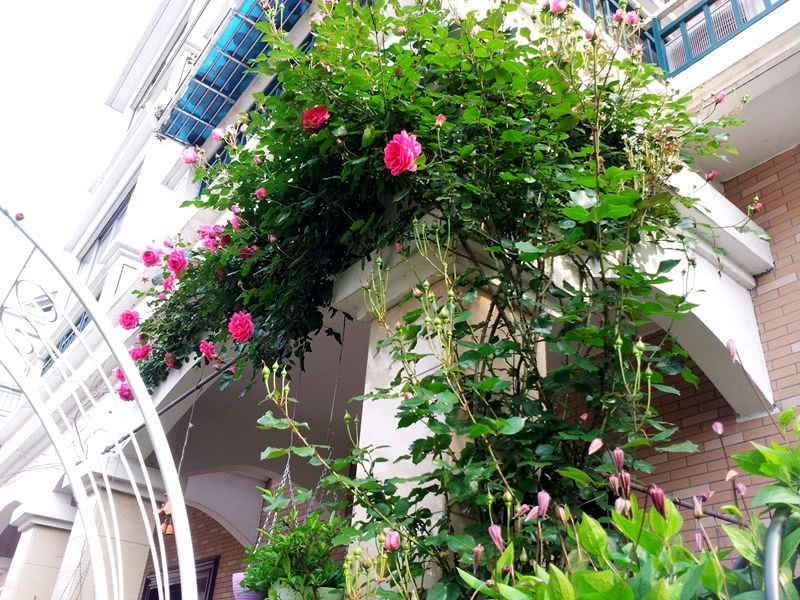
200 sq m courtyard garden photo sharing, bestie exclaimed it feels like strolling in a park
200 sq m "courtyard garden" photos, bestie: coming to your home is like visiting a park! Since childhood, the impression given is - quiet! Likes solitude, does not argue with others, does what she likes. Just like now, likes to write a little in spare time...
-
What are the methods for controlling chrysanthemum diseases?
How should chrysanthemums be managed in August? Please advise. The chrysanthemum, also known as jiuhua and huanghua, is a perennial herbaceous plant of the genus Chrysanthemum in the family Asteraceae. It is a traditional flower loved by the people of our country, one of the world's four major cut flowers, and also a commonly used traditional Chinese medicine, with the flowers used medicinally to improve eyesight and remove toxins, and to dispel wind and clear heat. It is cultivated throughout the country....
-
What are the methods for preventing and controlling pests and diseases of jujube trees in autumn and winter?
Please introduce the methods for preventing and controlling pests and diseases of jujube trees in autumn and winter? Detailed operation methods would be best. For the methods for preventing and controlling pests and diseases of jujube trees in autumn and winter, you can refer to the following methods: 1. Clean the orchard: Pests and diseases such as jujube rust, green plant bug, and jujube slug moth overwinter in fallen branches, leaves, or weeds under the trees. Therefore, after the jujube trees shed their leaves...
-
What are the methods for controlling red spider mites on chrysanthemums?
How should red spider mites on chrysanthemums be controlled? Here is an introduction to red spider mites: they damage leaves, initially causing small yellow spots; in severe cases the leaves curl, wither and drop, affecting growth and preventing flowering. Control methods: spray 20% dicofol emulsifiable concentrate at 800 times dilution or "Yaman Qisha" at 1000 times dilution, which also controls aphids; apply 2 to 3 times consecutively. Click...
-
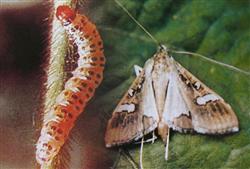
Growing Techniques for Controlling the Fruit-piercing Moth in Shatangju Mandarins
How do you control the fruit-piercing moth in Shatangju mandarins? What are the damage patterns of the fruit-piercing moth in Shatangju mandarins? Please provide an introduction. Adult fruit-piercing moths can be found in Shatangju mandarin fields from March to November, but they are more numerous in autumn. Eggs occur more frequently in the wild in early June, August, and early September, but because the egg hatching rate is low and larval mortality is high, the number of larvae occurring is not great...
-
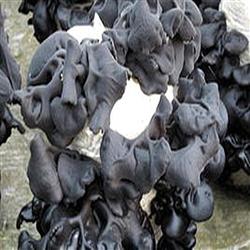
Methods for controlling contaminant fungi and pests in wood ear mushroom cultivation
How do you control contaminant fungi and pests when growing wood ear mushrooms? Please explain the methods. For growing wood ear mushrooms, you can refer to the following methods to control contaminant fungi and pests: 1. Cultivation site: choose a spot facing the sun, sheltered from the wind, with good ventilation and convenient drainage. The site should be cleaned and disinfected regularly; you can spray lime powder, 200x dichlorvos or trichlorfon...
条件筛选