A Detailed Guide to Controlling Common Pests and Diseases of Osmanthus
How do you control common pests and diseases of osmanthus? Methods wanted. The pests and diseases of osmanthus trees include the following: 1. Leaf spot: it mainly damages the leaves, starting as small brown spots; the lesions are round or irregular, later gray to grayish white in the center with reddish-brown edges, and dark gray mold-like growth appears on the lesions. High temperature and high humidity are often the triggers, and it spreads through wind and rain, causing infection; after October the disease subsides. Control: 1) In winter, prune off diseased leaves and clear away fallen diseased leaves, and burn them in a centralized manner; 2) In early May, spray 1:2:100-200 Bordeaux mixture, after which you can spray 50% benomyl 1000 to 1500 times dilution or pyrazophos 500 times dilution or 70% thiophanate-methyl 1000 times dilution.
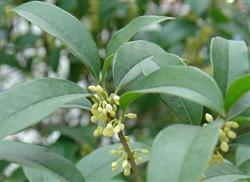
How do you control common pests and diseases of osmanthus? Methods wanted.
The pests and diseases of osmanthus trees include the following:
1. Leaf spot: it mainly damages the leaves, starting as small brown spots; the lesions are round or irregular, later gray to grayish white in the center with reddish-brown edges, and dark gray mold-like growth appears on the lesions. High temperature and high humidity are often the triggers, and it spreads through wind and rain, causing infection; after October the disease subsides. Control: 1) In winter, prune off diseased leaves and clear away fallen diseased leaves, and burn them in a centralized manner; 2) In early May, spray 1:2:100-200 Bordeaux mixture, after which you can spray 50% benomyl 1000 to 1500 times dilution or pyrazophos 500 times dilution or 70% thiophanate-methyl 1000 times dilution.
2. Blight spot: when leaves are affected, it mostly starts from the leaf tip and leaf margin, with small light brown spots that later expand into round or irregular shapes; the lesions can connect with each other and reach 1/3 to 1/2 of the leaf, are grayish brown with green edges, and later small black dots form on the lesions. When temperature and humidity are high, ventilation is poor, and plants grow weakly, the disease is more severe; it generally occurs from July to November and spreads through wind and rain. Control: 1) In the early stage of the disease, spray 65% zineb 500 times dilution or 1:2:200 Bordeaux mixture; 2) After that, spray 50% carbendazim wettable powder 800 to 1000 times dilution or 50% benomyl wettable powder 1000 to 1500 times dilution.
3. Slug moth: green or yellow-green, with a white dorsal line, it most easily occurs on the underside of leaves, feeding on the leaf mesophyll and leaving the epidermis. Before the larvae descend the tree to spin cocoons, loosen the soil around the trunk to lure the larvae to gather and spin cocoons, then collect and destroy them. Alternatively, spray Bt emulsion with a spore count of more than 10 billion/mL at 500 to 800 times dilution; in addition, you can also spray 2.5% deltamethrin emulsifiable concentrate or 20% fenvalerate emulsifiable concentrate at 3000 times dilution.
4. Scale insects: in the Yangtze River basin, 2 to 3 generations can occur, with severe damage from May to June and August to September; they like to gather on the shady side of main shoots and at branch forks, or on branches and leaves. Both adults and nymphs secrete honeydew, causing sooty mold on the flowers and trees. High temperature and high humidity favor their occurrence. When only a small number occur, you can gently brush them off with a soft-bristled brush, which works well. In summer, spraying 0.3 to 0.5 degrees Baume lime sulfur mixture is most beneficial, or 50% monocrotophos emulsifiable concentrate 1500 times dilution, used alone or mixed, spraying once every 7 to 10 days for 2 to 3 consecutive sprays.
5. Red spider mite: it often occurs under high temperature and drought conditions. Control methods: during dry weather, pay attention to irrigation and combine it with fertilization to promote robust plant growth and enhance insect resistance. When using chemical pesticides, pay attention to frequent rotation, because after the application of certain highly toxic pesticides, it will develop resistance. You can spray 40% fenpropathrin emulsifiable concentrate 2000 to 3000 times dilution or 40% dimethoate emulsifiable concentrate 1500 times dilution, with good control results.
Click to get more osmanthus cultivation techniques
Click to get more flower cultivation techniques