-
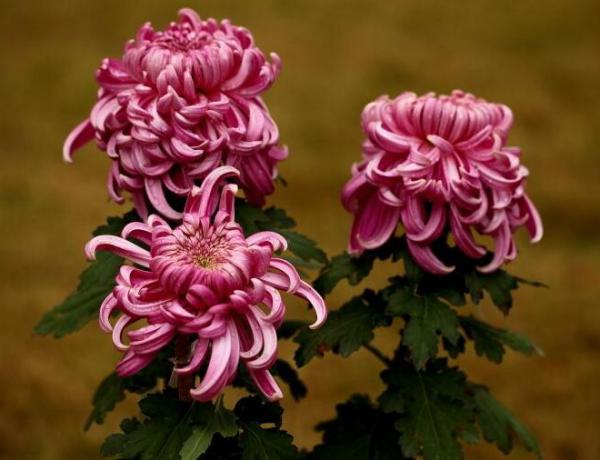
What are the methods for controlling pests and diseases in chrysanthemums?
Pest and disease control methods for chrysanthemums
-

What are the common methods for preventing and controlling cherry blossom pests and diseases?
There are many types of cherry blossom pests and diseases. The common ones are described below: Perforation-type brown spot disease occurs in May and June. Small purple-brown spots appear on the leaves, then gradually expand into circles. After the diseased spots dry and shrink, they become small holes. The pathogen mostly overwinters on diseased branches and leaves. The optimum temperature for its development is 25°C to 28°C. It spreads by wind, and rainy seasons favor infection and disease development. When the tree is weak, drainage is poor, and ventilation and light penetration are poor, the disease occurs severely. Control methods: (1) Strengthen cultivation management, prune and trim reasonably
-
What are the methods for controlling Phytophthora disease in carnations?
Symptoms The stems and roots are affected. When infected at the seedling stage, it causes root rot and the plants die. After planting out, the main stem and branches become infected; the affected areas appear water-soaked and turn grayish-white when dry, and the stems and leaves above the affected area wither. The pathogen Phytophthora nicotianae Breda is called tobacco Phytophthora and belongs to the fungal subdivision Mastigomycotina. The sporangiophores emerge from the stomata and measure 10-744 microns long; the sporangia are borne singly, long elliptical or oval, measuring 28.8-67.5 x 12.5-30 mic
-
A Detailed Guide to Controlling the 3 Major Diseases of Carnations
Leaf spot, Fusarium wilt and viral diseases are the main diseases that occur on carnations. The control methods are as follows: Leaf spot mainly infects the leaves, and the disease usually starts on the lower leaves. On severely affected plants the diseased parts are distorted, and the diseased leaves wither, droop and hang down over the stem, but do not fall off. Old leaves are affected more often and more severely, while new leaves are affected less, and the disease occurs more in open-field cultivation than in greenhouses. Control methods: start spraying regularly from the early stage of the disease; spray a fungicide immediately after disbudding and cutting flowers for protection. A 75% chlorothalonil wettable powder solution diluted 800 to 1000 times can be used for spraying
-
What are the methods for controlling pests and diseases of jasmine?
1. Diseases ① Brown spot: promptly prune away diseased leaves and diseased branches, and spray the foliage with 80% zineb wettable powder at 500-700 times dilution, or 80% mancozeb wettable powder at 400-600 times dilution, spraying once every 10-15 days, for 3-5 consecutive sprays. When spraying, the front and back of the leaves should be evenly covered. ② Southern blight: in the early stage of the disease, spray the base of the plant and the surrounding soil with 50% amobam aqueous solution at 1000 times dilution, and after 7-10 days, spray once more. After that, use 70% thiophanate
-
What are the methods for controlling pests and diseases of jasmine?
Diseases of jasmine during its growth period include: jasmine stem rot and southern blight; pests include: jasmine leaf borer, scale insects, and carmine spider mite. (1) Jasmine stem rot. This disease occurs at the base of the stem. In the early stage, the lesions are brown spots with a water-soaked appearance. The lesions extend longitudinally into streaks. The edges are dark brown, the interior grayish-brown; in the later stage, the lesion tissue rots and splits longitudinally, and black granular bodies appear. This disease occurs year-round during greenhouse maintenance, and is especially severe in early spring. It also occurs in August-September when plants are maintained outdoors. High temperature and humid conditions
-
Detailed Methods and Techniques for Preventing and Controlling Pests and Diseases of Mountain Lilies
Lily gray mold, anthracnose, and late blight are common diseases of plants in the Liliaceae family. If not controlled in time, they will cause reduced yields. (1) Lily gray mold, also known as leaf blight, belongs to the Deuteromycetes. It mainly occurs on stems, leaves, and flowers, and mostly damages the tips of young leaves, causing the stem growing points to soften and rot. When it occurs on leaves, it forms yellow or reddish-brown spots with water-soaked margins. In humid weather, gray mold-like substances are produced on the diseased parts. Control: In the early stage of disease, spray 1:1:150 Bordeaux mixture or mancozeb 600-800 times dilution, spraying 2-
-
Detailed Guide to Identifying and Controlling the Main Diseases of Lilies
Lilies belong to the genus Lilium in the family Liliaceae and are perennial herbaceous plants, also known as wild lilies and medicinal lilies. In recent years, lily cultivation has been seriously threatened by diseases, mainly lily leaf blight, phytophthora blight, bulb basal rot, and viral diseases. These diseases often occur together, worsening the damage. The usual incidence rate is 10%-15%, and in severe cases it can reach 20%-30%. 1. Several main diseases of lilies (1) Lily leaf blight, also known as lily gray mold, is a commonly occurring disease. It mainly damages leaves, but can also infect stems,
-
Detailed Guide to Controlling Leaf Spot Disease in Rhododendrons
Symptoms: It mainly infects the leaves. In the early stage of the disease, small reddish-brown spots appear on the leaves and gradually expand into lesions or irregular polygonal lesions that are dark brown. In the later stage, the tissue in the center of the lesions turns grayish-white. When the disease is severe, the lesions connect with one another, causing the leaves to turn yellow, wither, and drop early. Control methods: 1. In autumn, clear away and dispose of fallen leaves, and during the growing season promptly remove diseased leaves. 2. Planting or potted flower placement density should be appropriate to ensure ventilation and light penetration for the plants and reduce leaf surface humidity. In summer, place potted flowers in an outdoor shade shed to reduce sunscald and mechanical
-
Detailed Methods for Controlling Pests of Tropical Orchids (Part Two)
5. Whiteflies. Whiteflies are pests of the family Aleyrodidae in the order Homoptera. The insects are relatively small, with white powdery waxy material covering the whole body, and they usually cluster on orchid plants. They are prone to occur when ventilation in the orchid greenhouse is poor. They often damage the new shoots, tender leaves and flower buds of orchids. When causing damage, they insert their piercing-sucking mouthparts from the underside of the leaves, sucking the sap from the plant tissues, causing the leaves to turn yellow and withered, and they often excrete large amounts of honeydew at the wound sites, causing sooty mold and the occurrence of brown rot, and even causing the death of the entire plant. Because whiteflies have strong reproductive capacity, they can reproduce 9~10 generations within a year in a greenhouse, and can form a huge
条件筛选