-
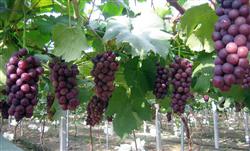
Grape Growing Techniques: How Should You Fertilize to Make Grapes Sweeter?
How should you fertilize to make grapes sweeter? Please explain the fertilization methods. To make grapes sweeter, you can refer to the following fertilization methods: 1. Focus on base fertilizer. Around October, that is, late autumn, is the best time to apply base fertilizer to grapes. When applying base fertilizer, pay attention to applying organic fertilizer together with microbial bacterial fertilizer, applying 4000 jin to 5000 jin of decomposed organic fertilizer per mu, and 2 to 3 kg of Jinbaobei microbial bacterial fertilizer; in addition, do not neglect the combination of chemical fertilizers (mainly nitrogen and phosphorus fertilizers), applying 15 to 20 kg of urea or 30 to 40 kg of ammonium sulfate per mu. The base fertilizer should be buried into the soil together with deep plowing. This fertilization method of organic fertilizer plus microbial bacterial fertilizer plus chemical fertilizer not only provides quick-acting nutrients to the grapes, but also improves the soil micro-ecological environment and plays a role in improving the soil. Reason: The beneficial microorganisms in Jinbaobei microbial bacterial fertilizer, through the secondary metabolites produced by their own life activities, activate the soil, increase the number of soil aggregates, enrich the soil, increase the absorption rate of grape roots, and make full preparations for the flowering and fruiting of grapes.
-
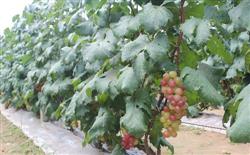
How to prune Fujiminori grapes in summer? Key points of grape growing techniques
How should Fujiminori grapes be pruned in summer? Please explain the methods. Summer pruning of Fujiminori grapes can be carried out by referring to the following methods: 1. Bud removal and shoot thinning. Bud removal is done after spring bud break, removing weak buds and useless latent buds or twin buds and triple buds. To avoid wasting nutrients, bud removal should be done as early as possible. When new shoots grow 1...
-
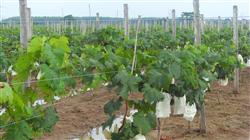
What diseases affect grapes in summer? Detailed planting techniques
What diseases affect grapes in summer? Please introduce them and explain the control methods. In summer, grape growing requires special attention to disease control, especially the control of black pox, white rot, anthracnose, and downy mildew. Focus on prevention, and spray promptly. For medicines with a residual effectiveness period of 17-21 days, generally spray once every 15 days...
-
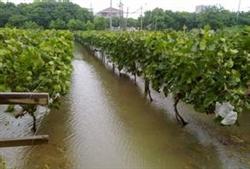
Why do grapes need flood prevention in summer? A detailed explanation of grape cultivation techniques
Why do grapes need flood prevention in summer? Please explain the reasons and how to prevent flooding. After grapes are submerged, yellowing leaves, leaf drop, fruit drop, and fruit cracking appear in the early stage; prolonged soaking of the root system in water causes leaf curling, winter bud sprouting, root asphyxiation leading to root rot, and the whole plant wilting and dying. I. Preventive measures...
-
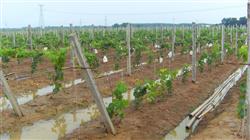
Grape Growing Techniques: How to Manage Well in Summer?
How to manage grapes well in summer? Please give guidance. For how to manage grapes in summer, you can refer to the following methods: I. Vine management. 1. Shoot removal. For grape seedlings grown from cuttings, the new shoots reach 40-50 cm in mid-July. Some seedlings have several new shoots or one new shoot with several secondary shoots, so shoots must be removed in time, leaving...
-
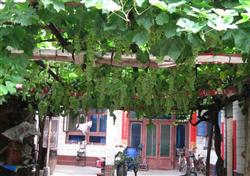
Grape Growing Video: Courtyard Grape Cultivation Techniques and Pictures
Using courtyards and the vacant land in front of and behind houses to cultivate grapes not only increases economic returns, but also relieves heat, provides shade and coolness, greens the courtyard, and beautifies the environment. Therefore, whether in urban or rural homes, factories, schools, or institutions, grapes can be planted in courtyards. It is a developmental form of production with very broad prospects...
-
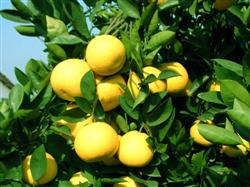
How do you harvest and store grapefruit (pomelo)?
What is the harvesting method for grapefruit (pomelo) and how do you store it well? Please give a detailed introduction. Grapefruit harvesting can refer to the following methods: Grapefruit harvesting can be based on fruit maturity to determine the suitable harvest time. Due to differences in climatic conditions among different cultivation regions, especially differences in temperature conditions, the fruit harvest period of grapefruit varies greatly...
-
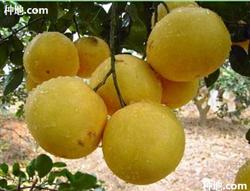
Grapefruit (Citrus paradisi) Planting Techniques and Management Methods (with pictures)
Grapefruit has a relatively high heat requirement and is suitable for planting in areas with an annual average temperature above 18°C. It can be planted where the annual accumulated temperature above 10°C is over 6000°C, and can produce high-quality fruit where it is above 7000°C. It is more cold-tolerant than lemon, withstanding extreme minimum temperatures of around -10°C. It cannot be planted in places where -8°C may occur. Therefore, choose...
-
What are the control methods for grape anthracnose?
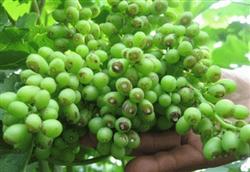
What harm does anthracnose do to grapes? How do you control grape anthracnose? We also ask netizens to help introduce it. Zhongdi Network has compiled the harm, causes and control methods of grape anthracnose, listed below for your reference. The harm of anthracnose to grapes: anthracnose mainly damages the fruit, while leaves, new...
-
What should be done when a large number of rotten berries appear during the grape ripening period?
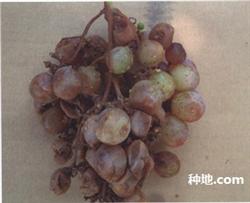
What should be done when there are a lot of rotten berries when grapes are ripening? For advice, the following methods can be used to prevent and control rotten berries during the grape ripening period: 1. Thoroughly remove sources of pathogens: after autumn, before the canes are taken down from the trellis, remove diseased and dead plant debris, and burn the removed diseased and dead plant debris in a centralized manner; in autumn before burying soil for cold protection and after emergence in spring, spray 50-100 times Solibar or 3-5 degrees lime sulfur mixture plus 300 times sodium pentachlorophenate to eliminate pathogen sources and reduce disease incidence; during the growing season, promptly remove diseased leaves, diseased berries, and diseased canes, and bury them deeply in a centralized manner.
条件筛选