-

What are the measures for overwintering rapeseed to prevent freezing and protect seedlings
Measures for preventing freezing and protecting seedlings in overwintering rapeseed
-

Nantou Shuili Grape Festival Purple Carnival Kicks Off in Lively Fashion
The annual Shuili Township grape feast is here! The Nantou County Government guided the Shuili Township Farmers' Association in holding the "Shuili Township Brand Grape and Young Farmers' Agricultural Specialty Products Marketing Event" on the 21st and 22nd at the Zhenmei Hall Plaza in Checheng, Shuili. On the 22nd, the venue featured a carefully arranged...
-
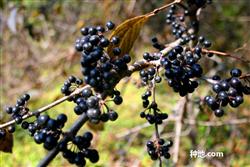
How to prevent grape berry cracking? A full breakdown of practical control methods
When is the best time to plant Vitis amurensis and how should it be planted? Is there a technical reference? Vitis amurensis can be planted according to the following techniques: 1. Planting period. Vitis amurensis is generally suitable for spring planting; seedlings can be planted once the soil layer deeper than 50 cm has thawed. 2. Planting techniques. (1) Soaking seedlings in water: before planting, soak the seedlings in clean water...
-
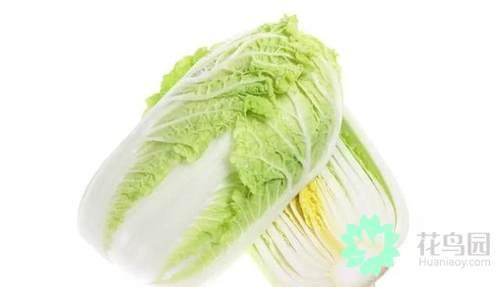
How exactly do you tell Shanghai bok choy, napa cabbage, and rapeseed apart?
Shanghai bok choy, napa cabbage, green vegetables, and rapeseed - these names are more like a north-south dispute, but they are actually the same thing. It started like this: someone told me to go get a so-called napa cabbage from his car, and I said, isn't the napa cabbage in the kitchen. Its...
-
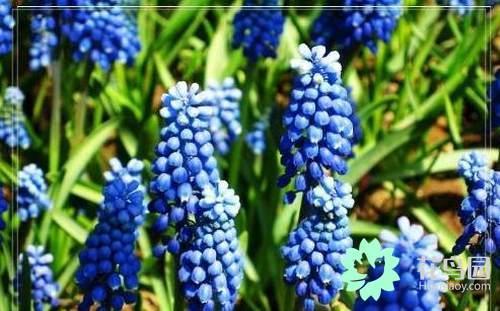
Grape hyacinth looks like grapes, do you know how to grow it?
Grape hyacinth is a perennial herbaceous flower that generally blooms in spring. Grape hyacinth is also a very ornamental flower, and grape hyacinth does not have high requirements for cultivation, so grape hyacinth is also very suitable for us to grow at home...
-
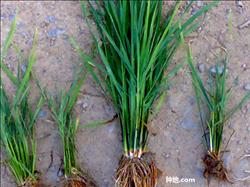
How to manage rapeseed cultivation? Key technical points explained in detail
How to prevent and control rice "sitting stump" disease? Please help. Rice "sitting stump" disease, namely rice red blight, is a common physiological disease in rice production. It generally begins to develop about 15 days after transplanting. If a cold wave occurs after transplanting, in cold-waterlogged fields, muddy fields, deep-water fields, fields where undecomposed organic fertilizer has been applied, fields with one-sided application of single-element chemical fertilizers, or fields lacking potassium...
-
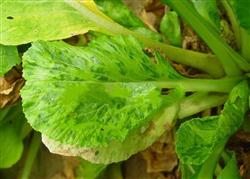
What are the control methods for rapeseed viral disease?
How to control rapeseed viral disease? Please advise. Rapeseed viral disease symptoms occur in all rapeseed production areas nationwide, with especially severe incidence in the winter rapeseed areas of North China, Southwest China, and Central China. The symptoms of this disease vary slightly depending on the type of rapeseed. Brassica rapa and Brassica juncea mainly develop chlorosis along both sides of the leaf veins, with leaves showing a yellow-green mosaic pattern, and the veins appearing translucent; in severe cases, the leaves shrink, curl, or become deformed, and diseased plants are markedly stunted, mostly dying before or at the bolting stage. Plants with mild infection and late onset may still bolt, but the flowering stems are curved or stunted, flowers and pods are densely packed, pods are shrunken and thin, and maturity is advanced. Brassica napus, by contrast, develops systemic necrotic spots, with symptoms appearing early and conspicuously on old leaves, then spreading to newly emerged leaves. At the initial stage of infection, needle-tip-sized transparent spots appear, which later expand into nearly round 2-4 mm yellow spots with dark brown necrotic centers, and the necrotic spots are surrounded by an oil-soaked appearance. On the stems and bolts, purplish-black spindle-shaped to elongated lesions appear, spreading from the middle-lower part toward the branches and fruit stalks; in the later stage, the stem lesions mostly split longitudinally or transversely, and the flowers and pods tend to wilt or die. The pods develop black necrotic spots and are mostly deformed.
-
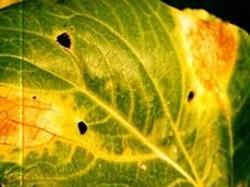
What are the key points to note in rapeseed cultivation and management?
How to prevent and control black rot in rapeseed? Please advise. The symptoms of black rot in rapeseed mainly affect leaves, stems and siliques. Both seedlings and mature plants can be affected. Infected leaves show yellow "V"-shaped spots, dark brown veins, and dark green water-soaked petioles, sometimes with yellow bacterial ooze, and the lesions expand until the leaves dry up. After bolting, the main axis...
-
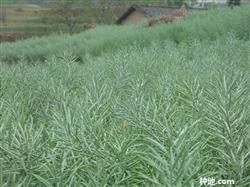
What are the key points of high-yield fertilization methods for rapeseed?
How should rapeseed be fertilized for high yield? Please introduce the following methods that can be referenced for fertilizing rapeseed: 1. Apply seedling fertilizer early. Seedling fertilizer should be applied appropriately early, and the application amount should account for 10%-15% of the total fertilization amount. Generally, apply 500 kg of decomposed human manure and urine per mu, plus 5-7 kg of urea or 10-15 kg of ammonium bicarbonate. When applying chemical fertilizer, it is best to dilute the fertilizer with clean water...
-
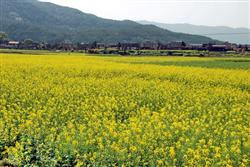
What should be paid attention to when growing rapeseed for high yield?
What should be paid attention to when growing rapeseed for high yield? Please explain seed treatment: choose excellent disease-resistant varieties, sow at the right time, dress seeds with New High Lipid Film (can be mixed with seed coating agents), which can repel underground pests and diseases, isolate virus infection, does not affect the germination and imbibition function, strengthens respiration intensity, and improves seed germination rate and seedling emergence rate....
条件筛选