What should be done when a large number of rotten berries appear during the grape ripening period?
What should be done when there are a lot of rotten berries when grapes are ripening? For advice, the following methods can be used to prevent and control rotten berries during the grape ripening period: 1. Thoroughly remove sources of pathogens: after autumn, before the canes are taken down from the trellis, remove diseased and dead plant debris, and burn the removed diseased and dead plant debris in a centralized manner; in autumn before burying soil for cold protection and after emergence in spring, spray 50-100 times Solibar or 3-5 degrees lime sulfur mixture plus 300 times sodium pentachlorophenate to eliminate pathogen sources and reduce disease incidence; during the growing season, promptly remove diseased leaves, diseased berries, and diseased canes, and bury them deeply in a centralized manner.
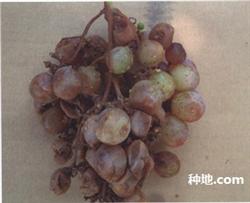
What should be done when there are a lot of rotten berries when grapes are ripening? For advice
The following methods can be used to prevent and control rotten berries during the grape ripening period:
1. Thoroughly remove sources of pathogens:
After autumn, before the canes are taken down from the trellis, remove diseased and dead plant debris, and burn the removed diseased and dead plant debris in a centralized manner; in autumn before burying soil for cold protection and after emergence in spring, spray 50-100 times Solibar or 3-5 degrees lime sulfur mixture plus 300 times sodium pentachlorophenate to eliminate pathogen sources and reduce disease incidence; during the growing season, promptly remove diseased leaves, diseased berries, and diseased canes, and bury them deeply in a centralized manner.
2. Strengthen routine management:
After rain, drain water and loosen the soil promptly; promptly tie the canes and pinch off growing tips to keep ventilation and light penetration inside the trellis; increase the application of potassium, calcium, and trace elements, and spray plant growth regulators (such as Lufeng 95, Biduoshou, Gaochangbao, etc.) to improve leaf function, strengthen the tree vigor, and enhance disease resistance; control yield and maintain a reasonable load. Determine the yield according to the growth condition of the plants. Generally, the yield per mu in mature orchards should be controlled at 2500 kg-3500 kg.
3. Apply pesticides in advance for prevention:
Spread chemicals on the ground to eliminate pathogen sources. For orchards with severe disease incidence in the previous year, before the disease occurs, spread lime on the ground; for soil with higher pH, chemicals can be spread on the ground: 1 part thiram, 1 part sulfur powder, and 2 parts lime, mix the three evenly, and spread on the ground at 1 kg-2 kg per mu; or spray 500-600 times thiram solution or 500-600 times 50% carbendazim solution under the trellis to control the primary infection sources overwintering from the soil.
Spray chemicals for protection. During the growing season, spray 1:0.5-0.7:200 Bordeaux mixture. Spray once every 10-15 days to protect leaves, canes, fruit clusters, etc., and reduce infection opportunities; for diseases, apply the right pesticide for the disease. Once diseases such as white rot and anthracnose occur, apply pesticides according to the disease, but note that pesticides should be used alternately, and a single pesticide should not be used continuously. After the fruit colors, to prevent pesticide contamination of the fruit clusters, 500 times 9281 or 12% green copper emulsifiable concentrate 600-800 times can be used.
Click to get more grape cultivation techniques
Click to get more fruit cultivation techniques