-

What are the precautions for growing pumpkins? Keep these points in mind
Precautions for growing pumpkins
-
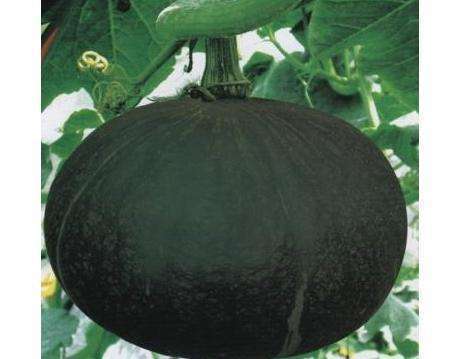
You can grow pumpkins at home too; they climb and flower, and the fruit they produce is especially delicious.
?Once the weather turns cool, even the things we eat start leaning toward the starchy and soft. Think about it: don't you like to cook a pot of piping hot porridge at dawn, grab a roasted sweet potato from a street stall on your way home from work to warm your hands, and even steam some...
-
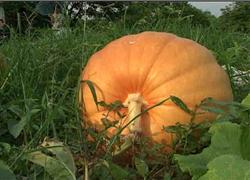
Detailed Explanation of Soil Cultivation Techniques for Giant Pumpkins
I. Seedling Cultivation: 1. Nutrient bag seedling cultivation: Seeds are sown in the greenhouse 6 weeks before planting. Step one: Put the seeds into 60°C hot water and stir for 15 minutes until the water temperature drops to 35°C, then stop and soak for 12 hours. Step two: Put the soaked seeds into a hotbed for germination, which takes 24 hours. During the 12 hours in between, wash the about-to-sprout seeds with 20°C warm water. After 24 hours, the seed coat splits open and a 1cm-long sprout grows. At this point, the nutrient bag seedling cultivation stage begins. To ensure seedling quality, organic fertilizer can be mixed with soil in proportion and placed into nutrient bags. Because the weather was very cold at the time and the temperature was low, 30°C warm water should be used when watering the base water. After the base water is fully watered, place the sprouted seeds into the nutrient bags, about 0.5CM into the soil, then cover with 2CM of fine soil, cover with plastic film, and emergence is expected in one week. By the fifth day, some had already emerged. At this time, the ones that emerged first and those that had not yet emerged should be cultivated separately to facilitate temperature control. Ten days after all seedlings have emerged, carry out low-temperature seedling hardening.
-
How to Water and Fertilize Pumpkins: A Detailed Guide to the Correct Method
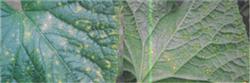
Symptoms: It damages leaves and flower stalks. Leaf spots are round to nearly round or irregular in shape. The leaf margins turn dark brown, and the junction between diseased and healthy tissue appears water-soaked. When humidity is high, tiny black dots densely cover the surface of the spots, and in severe cases the leaf spots merge, causing localized death of the leaf. Infected flower stalks or flowers appear black and water-soaked, or become dark brown and rotted. Pathogen: Pumpkin leaf...
-
What fungicides are effective for controlling flower rot in pumpkins?
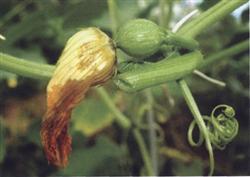
Symptoms: Also known as fruit rot. It commonly occurs in open fields and protected cultivation, and is especially severe in protected cultivation. In recent years, the damage has been on the rise, reducing yields by about 30%. When it attacks pumpkins, melons, and watermelons, it is called flower rot or fruit rot; when it attacks bottle gourd and zucchini, it is called brown rot, commonly known as rotten eggs. Flower rot attacks pumpkin flowers and young fruits, and diseased fruits become...
-
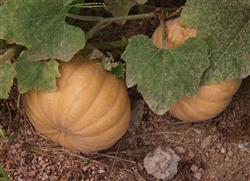
Techniques for Skillfully Trellising Pumpkins in Spring Polytunnel
Spring open-field cultivation techniques 1. Sowing and seedling raising: The pumpkin varieties introduced above belong to the Western pumpkin type, and for spring cultivation early sowing is suitable; the sowing date can be calculated back from the planting time. For example, in the Jianghuai region, planting can be done in mid-to-late April, and counting on a seedling age of 30 days, sowing should be done in mid-to-late March. If a specific time is needed...
-
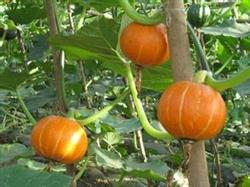
Detailed Key Points of Spring Cultivation Techniques for Mini Pumpkins
I. Timely Sowing: For greenhouse cultivation, sow in spring from mid-January to early February, with a seedling age of 20-25 days; for low-tunnel open-field cultivation, sow in mid-to-late February, with a seedling age of 20-25 days, and transplant into low tunnels in early-to-mid March. II. Seed Treatment and Sowing: Soak pumpkin seeds in clean water for 3-4 hours, then soak in a 500-fold dilution of 50% carbendazim...
-
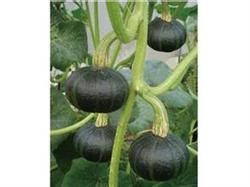
Detailed Explanation of Key Techniques for Spring Cultivation of Mini Pumpkins
Mini pumpkin is a first-generation hybrid bred by the Suzhou Vegetable Research Institute, a variety specifically for protected cultivation, with medium growth vigor, dark green leaves, vines 2.0-2.5m long, short internodes, medium branching, and both main and side vines can bear fruit. It has strong adaptability, fast growth, high yield, small individual size, golden yellow color, and good taste, suitable for long-distance...
-
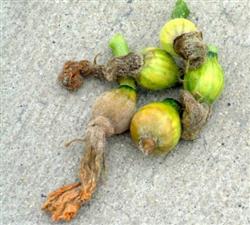
How to prevent and control gray mold in pumpkins? Practical methods explained clearly in one article
How is gray mold in pumpkins prevented and controlled? Why does gray mold occur? Please explain: gray mold in pumpkins mainly occurs on the fruit. Affected fruit usually begins to rot from spent flowers and grows a light grayish-brown mold layer, then spreads to the young fruit, first at the tip of the pumpkin and then upward, causing the young fruit to soften and rot. Affected...
-
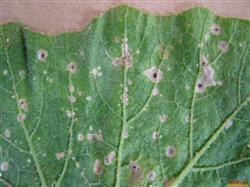
How to prevent and control pumpkin leaf spot disease when growing pumpkins?
What controls pumpkin leaf spot disease? What is pumpkin leaf spot disease? Please provide an introduction. Pumpkin leaf spot disease mainly damages the leaves and the flower axis. Leaf spots are circular to nearly circular or irregular in shape. The leaf margin is dark brown, the boundary between diseased and healthy tissue is distinct, and there are small black dots in the center of the lesion. In severe cases, the leaf spots merge, causing localized death of the leaves. The flower axis...
条件筛选