What fungicides are effective for controlling flower rot in pumpkins?
Symptoms: Also known as fruit rot. It commonly occurs in open fields and protected cultivation, and is especially severe in protected cultivation. In recent years, the damage has been on the rise, reducing yields by about 30%. When it attacks pumpkins, melons, and watermelons, it is called flower rot or fruit rot; when it attacks bottle gourd and zucchini, it is called brown rot, commonly known as rotten eggs. Flower rot attacks pumpkin flowers and young fruits, and diseased fruits become...
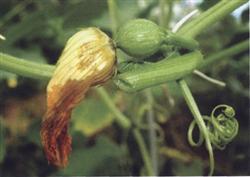
Symptoms: Also known as fruit rot. It commonly occurs in open fields and protected cultivation, and is especially severe in protected cultivation. In recent years, the damage has been on the rise, reducing yields by about 30%. When it attacks pumpkins, melons, and watermelons, it is called flower rot or fruit rot; when it attacks bottle gourd and zucchini, it is called brown rot, commonly known as rotten eggs. Flower rot attacks pumpkin flowers and young fruits; diseased fruits become water-soaked and soft-rotted, and diseased flowers turn brown and decay. The pathogen invades young fruits from the base of female flowers and spreads upward over the fruit, causing the exterior of the diseased fruit to gradually turn brown. On the surface of the diseased area, white downy growth appears, and sometimes grayish-brown or black pinhead-like structures can be seen, which distinguishes it from gray mold. After rain or under high-humidity conditions, the disease spreads very quickly, causing batch after batch of male flowers, female flowers, and young fruits to rot. When dry, half or the entire fruit turns brown, causing severe yield loss. This disease occurs within the plant canopy and is easily overlooked, but in fact it causes great damage. Pumpkins produce many flowers, yet sometimes set very few fruits; this is mainly caused by rotten flowers and rotten eggs from this disease. In production, attention should be paid to distinguishing it from gray mold and to its control.
Pathogens: Choanephora cucurbitarum; Choanephora mandshurica; Cunninghamella echinulata, all belonging to the phylum Zygomycota, fungi. Choanephora cucurbitarum has two types of sporangia: large sporangia with a diameter of 170 micrometers, and small sporangia containing only one spore, which function similarly to conidia. It attacks cucurbits, causing flowers and fruits to rot. Choanephora mandshurica causes pumpkin flower rot. Cunninghamella echinulata has sporangiophores that branch in a sympodial manner, appearing cymose or irregular; its small sporangia are spherical with long spines, and it parasitizes pumpkin flowers.
Transmission routes and disease conditions: The pathogen overwinters in the soil as mycelium with diseased residues or as zygospores. The following spring, it produces spores that infect flowers and young fruits. After onset, the diseased areas produce large numbers of spores, which spread via wind and rain or insects, invading flowers and fruits with weakened vitality through wounds or young epidermis. After onset, the diseased areas again produce large numbers of spores that spread via wind and rain for multiple secondary infections, causing batch after batch of flowers and fruits to become diseased and continuing to cause damage until the end of the growing season. Years with many rainy days have more severe disease.
Pollution-free control methods:
(1) Agricultural control: ① Implement crop rotation with non-cucurbit crops for more than 3 years. ② Use high beds or high ridges for cultivation and cover with plastic film. ③ Level the land, water reasonably, strictly prohibit flood irrigation, drain promptly after rain, and strictly prevent moisture from lingering. ④ After fruit set, promptly remove diseased flowers and diseased fruits and burn them in a centralized manner, continuing until the last batch of fruits can mature.
(2) Chemical control: From flowering to the young fruit stage, spray 78% mancozeb (Kebo) wettable powder at 600 times dilution, or 86.2% cuprous oxide (Copper Master) wettable powder at 1000 times dilution, or 47% copper hydroxide (Kasumin) wettable powder at 700 times dilution for prevention.
(3) At the early stage of disease, spray 72% mancozeb cymoxanil (Kelü, Shuangmeiyijing, Shuangkejun, Sailu, Shuanke, Fute, Kejunbao, Likehuang) wettable powder at 600 times dilution, or 69% mancozeb dimethomorph (Anke mancozeb) wettable powder at 700 times dilution, or 60% flumorph mancozeb (Mieke) wettable powder at 700-800 times dilution.
(4) For greenhouse protected cultivation, in addition to paying attention to ventilation and dehumidification, it is recommended to use chlorothalonil smoke agents, 250 g per 667 sq m; lighting them and fumigating for 1 night is effective.