How to Water and Fertilize Pumpkins: A Detailed Guide to the Correct Method
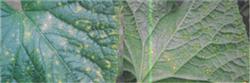
Symptoms: It damages leaves and flower stalks. Leaf spots are round to nearly round or irregular in shape. The leaf margins turn dark brown, and the junction between diseased and healthy tissue appears water-soaked. When humidity is high, tiny black dots densely cover the surface of the spots, and in severe cases the leaf spots merge, causing localized death of the leaf. Infected flower stalks or flowers appear black and water-soaked, or become dark brown and rotted. Pathogen: Pumpkin leaf...
 (1) Watering. Pumpkins have a strong root system with a relatively strong water-absorbing capacity and drought tolerance. Pumpkin leaves are large and numerous, and transpiration is vigorous, so timely irrigation is essential to achieve high yields.
(2) Fertilizing. This should be done according to the nutrient requirements of pumpkins. At different growth stages, pumpkins absorb different amounts of nutrients. During the seedling stage, pumpkin growth is very small and fertilizer needs are relatively low. Once the fruit-swelling stage begins, nitrogen uptake increases sharply, and the pattern of potassium uptake is basically consistent with that of nitrogen. Phosphorus uptake increases only slightly. According to research by the Miyazaki Agricultural Experiment Station in Japan, over the 137 days from transplanting to vine removal, nutrient uptake of nitrogen, phosphorus, potassium, calcium and magnesium increased slowly during the first 1/3 of the period, grew rapidly during the middle 1/3, and increased most markedly during the final 1/3. Throughout the entire growth period, pumpkins absorb the most potassium and nitrogen, followed by calcium, and absorb the least magnesium and phosphorus. To produce 4308 kg of pumpkins per 667 sq m, 20.5 kg of nitrogen, 6.9 kg of phosphorus pentoxide and 25.1 kg of potassium oxide must be absorbed. The specific fertilizing requirements are as follows.
① Base fertilizer. Mainly organic fertilizer, combined with a nitrogen, phosphorus and potassium compound fertilizer. Commonly used base fertilizers include barnyard manure, compost or green manure, applied in relatively large amounts, generally accounting for 1/3-1/2 of the total fertilizer applied, with 3000-4000 kg of organic fertilizer applied per 667 sq m. All or most of the phosphorus and potassium fertilizers are used as base fertilizer and mixed with the organic fertilizer before being worked into the soil. When organic fertilizer is insufficient, 15-20 kg of nitrogen, phosphorus and potassium compound fertilizer is additionally applied per 667 sq m. There are two methods of applying base fertilizer: broadcasting and concentrated application. Broadcasting is generally done together with deep plowing; after evenly spreading the organic fertilizer or compound fertilizer, a spiral plow is used to harrow back and forth twice so that the fertilizer is evenly mixed with the soil. When the amount of fertilizer is small, furrow application in concentrated bands is generally used, placing the fertilizer within the sowing rows.
② Topdressing. Topdressing is mainly quick-acting nitrogen fertilizer, combined with phosphorus and potassium fertilizer. The amount of topdressing generally accounts for 1/2-2/3 of the total fertilizer applied. Topdressing should be carried out in batches according to the different amounts of nitrogen, phosphorus and potassium required at different growth stages of the pumpkin. Topdressing at the seedling stage is mainly nitrogen fertilizer, with the aim of promoting vine growth of the seedlings. Generally, 5-8 kg of urea is applied per 667 sq m. During the fruiting stage, not only must sufficient nitrogen fertilizer be supplied, but phosphorus and potassium fertilizer must also be supplemented in a timely manner to ensure full expansion of the fruit. Generally, after fruit set, 10-15 kg of urea and 5-10 kg of potassium sulfate are applied per 667 sq m, with topdressing carried out 1-2 times in total. Attention should be paid to the placement of topdressing: at the seedling stage, topdressing should be applied close to the base of the plant; once the fruiting stage begins, the topdressing position should gradually be moved toward both sides of the bed, generally by band application. On calcareous soil, nitrogen fertilizer should follow the principle of deep application with soil covering; especially for ammonium bicarbonate, it must be applied deep at about 6 cm or more and covered with soil to avoid volatilization of the fertilizer and reduced fertilizer efficiency. Chemically stable nitrogen fertilizers such as ammonium sulfate and urea can be applied by broadcasting combined with irrigation as topdressing. In the middle and late stages of pumpkin growth, the root system's ability to absorb nutrients weakens; to ensure the needs of pumpkin growth and development, foliar feeding can be used to supplement nutrients. The fertilizers sprayed can include 0.2%-0.3% urea, 0.5%-1% chloride fertilizer, and 0.2%-0.3% potassium dihydrogen phosphate; generally spray once every 7-10 days, and several fertilizers can be applied alternately, for 2-3 consecutive sprays.