-
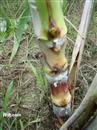
What are some good methods for controlling sugarcane pests? Introduction to practical control techniques
What are some good methods for controlling sugarcane pests? Please note that starting this year, China has completely banned the sale and use of five highly toxic pesticides: methamidophos, methyl parathion, parathion, monocrotophos and phosphamidon. Some formulations are introduced here that can effectively replace monocrotophos pesticide, for everyone's reference. 1. Using high-efficiency, low-toxicity, low-residue and...
-
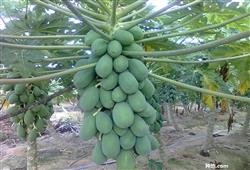
How to grow papaya for high yield? A detailed explanation of practical cultivation techniques
How can papaya be grown for high yield? Please advise. Papaya is a plant of the genus Chaenomeles in the Rosaceae family; its fruit is nutritious and has high medicinal value. The key points of high-yield papaya cultivation techniques in the field are described below: Papaya is suitable for close planting. On poor mountainous and hilly land, the plant spacing is generally 1.5-2 m x 3 m...
-
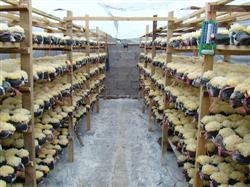
A Detailed Guide to Practical Multi-Tier Three-Dimensional Cultivation Techniques for White Wood Ear (Tremella fuciformis)
White wood ear, also known as white fungus, snow ear, or Sichuan ear, is a "prized fungus" used both as food and medicine, with broad market prospects. Artificial cultivation techniques for white wood ear are constantly being improved. Here we introduce the practical techniques for indoor multi-tier three-dimensional cultivation of white wood ear in Gutian County, Fujian Province, the "home of white wood ear": 1. Mushroom house setup: The specifications of a professional cultivation house or shed...
-
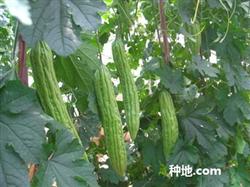
How to Grow Bitter Melon Efficiently? A Detailed Guide to Practical Cultivation Techniques
How to grow bitter melon efficiently? Please advise. Bitter melon, also known as balsam pear, is a cucurbitaceous vegetable plant that thrives in high temperatures, is relatively heat-tolerant and not cold-tolerant, and can be grown year-round in our county. In recent years, with the continuous adjustment and optimization of crop structures and the ongoing development and demand of the melon and vegetable consumer market, bitter melon has become one of our county's specialty vegetables for northbound transport and export...
-
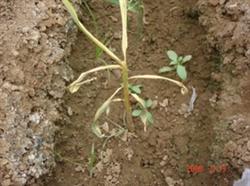
How to prevent and control ginger pests and diseases? A full analysis of practical techniques
(1) Ginger blast 1. Pathogen: a bacterial disease, Ralstonia solanacearum. 2. Symptoms of diseased plants: leaves first droop and lose their luster, then turn withered yellow from bottom to top, and finally die. The stem first becomes water-soaked at the base, turns yellow, dies, and breaks off at the base and falls over. The rhizome is water-soaked, turns brown and rots, and when squeezed a white juice flows out with a foul odor.
-
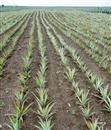
Detailed Explanation of Practical Experience in Off-Season High-Yield Cultivation Techniques for Pineapple
Pineapple planting methods include double-row, three-row and four-row. In the double-row system, the commonly used bed and furrow together are 150cm wide, with a single plant arranged in each of the two rows. Its advantages are: the bed furrow is relatively wide so the fibrous roots can spread outward, the plant and row spacing on the bed is relatively uniform, the stem bases press against each other, and the leaves spread out to form a hemispherical surface, which can fully utilize sunlight and easily form between-row...
-
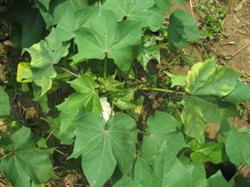
How to prevent and control cotton Verticillium wilt? A detailed guide to practical control techniques
The damage caused by cotton Verticillium wilt is mainly manifested in the middle and late stages of cotton growth. July and August, when the plant flowers and sets bolls, are the peak period of the disease. In summer, in years with high temperatures, drought and lack of rain, the disease is relatively mild. Verticillium wilt generally does not cause stunting, and the plant can still set a small number of cotton bolls. After a long drought during the flowering and boll-setting stage followed by torrential rain, the leaves suddenly wilt, take on a water-soaked appearance, and then drop off...
-
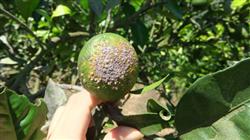
How to prevent heat damage in citrus? A detailed guide to practical control techniques
Citrus is a tropical and subtropical evergreen fruit tree (with the exception of trifoliate orange), preferring warm and humid conditions, but it is also sensitive to heat. If abnormally high temperatures of 30°C and above occur between the flowering stage and the fruit-setting stage of citrus, normal flowering and fruiting will be affected, and the earlier the high temperatures occur, the greater the damage. During this period, abnormal flower drop...
-
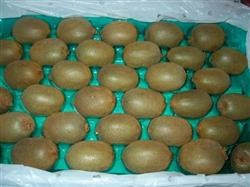
How to Store and Keep Kiwifruit Fresh? A Detailed Guide to Practical Techniques
I. Strengthen field management: Fruit quality is the key to kiwifruit storage and freshness. Strengthen soil management and apply balanced fertilization; scientifically thin flowers and fruits and establish a reasonable leaf-to-fruit ratio; protect natural enemies and strengthen pest and disease control; prune scientifically and do not use hormones such as Daguoling; ensure high quality first, then pursue high yield, ...
-

How to Divide and Propagate Orchids When They Outgrow Their Pot? A Detailed Guide to Practical Techniques
Growers who cultivate orchids know that after several years of growth, an orchid will inevitably become a large clump, and at that point it needs to be divided. The key to dividing is really the separation of offsets. So how do you divide a potted orchid?
条件筛选