-
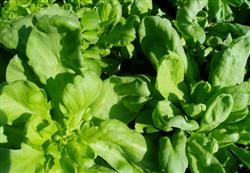
How to grow garland chrysanthemum for high yields? A detailed guide to practical techniques
How can you achieve high yields when growing garland chrysanthemum? What should you pay attention to? Experienced readers are also asked to share their advice. To get high yields from garland chrysanthemum, you need to understand its growth habits and strengthen management. Zhongdiwang has compiled four points to note when growing garland chrysanthemum, listed below for readers' reference. Note...
-
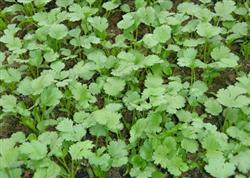
How to grow cilantro well in summer? A detailed guide to practical cultivation techniques
How to grow cilantro well in summer? Please give an introduction to the cultivation method. Cilantro likes a cool climate and cannot tolerate high temperatures; it stops growing when the temperature exceeds 30°C. So how can cilantro be grown well in the hot summer? You can refer to the following cultivation methods: 1. Variety selection: choose varieties that are heat-tolerant, bolt late, and grow fast...
-
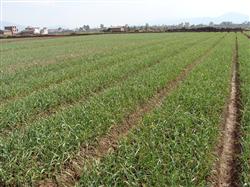
How to plant garlic well? A full breakdown of practical growing techniques
How to plant garlic well? A detailed guide to the method. For growing garlic, you can refer to the following growing methods: Variety selection. China has an extremely rich resource of garlic varieties, with famous specialty production areas in both the north and the south, forming many excellent local varieties, such as Chengdu Ershuizao, Cangshan garlic, Songcheng white-skin garlic, Sichuan bolting garlic, garlic sprout garlic, and so on.
-
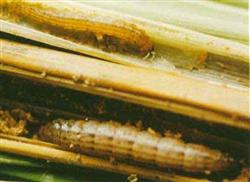
How to control rice stem borers? Practical methods and techniques explained
How to control rice stem borers? Please advise. Rice stem borers are commonly known as dead-heart borers, among which the most widespread and serious are the striped stem borer and the yellow stem borer, along with the rice skipper and the greater rice stem borer. The striped stem borer damages not only rice but also gramineous crops such as corn and wheat, while the yellow stem borer is a monophagous pest that attacks only rice. For...
-

How to Grow Eggplants for High Yield? A Detailed Guide to Practical Cultivation Techniques
Cultivation Techniques for High-Yielding Eggplants
-

How to fertilize chives for high yield? Key practical fertilization techniques
High-yield fertilization techniques for chives
-
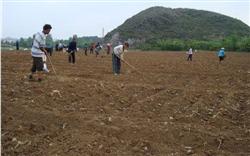
How to grow ginger for high yields? Practical cultivation techniques shared
Is there any way to increase ginger yield? We would also appreciate experienced readers sharing their methods. Everyone who grows ginger wants a good yield. Below, Zhongdi Web lists several key points for high ginger yields for readers' reference. Point one, choosing the ginger cultivation site: ginger likes a warm, moist climate, so it is best to choose soil...
-
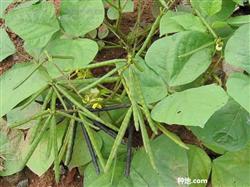
How to grow mung beans for high yields? Key practical cultivation techniques
How can mung beans be grown for high yields? Please advise. Mung beans are drought-tolerant, tolerant of poor soil, widely adaptable, and have a short growth period, generally only 60-120 days; their suitable sowing period is very long, and they can be sown from early to mid-April to early August. The cultivation points are as follows: 1. Land preparation. Mung beans are deep-rooted crops, and their cotyledons are plump, so they have relatively strict land preparation requirements...
-
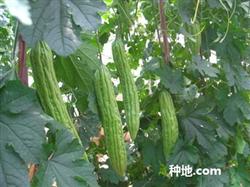
How to Grow Bitter Melon Efficiently? A Detailed Guide to Practical Cultivation Techniques
How to grow bitter melon efficiently? Please advise. Bitter melon, also known as balsam pear, is a cucurbitaceous vegetable plant that thrives in high temperatures, is relatively heat-tolerant and not cold-tolerant, and can be grown year-round in our county. In recent years, with the continuous adjustment and optimization of crop structures and the ongoing development and demand of the melon and vegetable consumer market, bitter melon has become one of our county's specialty vegetables for northbound transport and export...
-
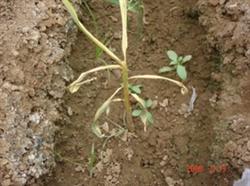
How to prevent and control ginger pests and diseases? A full analysis of practical techniques
(1) Ginger blast 1. Pathogen: a bacterial disease, Ralstonia solanacearum. 2. Symptoms of diseased plants: leaves first droop and lose their luster, then turn withered yellow from bottom to top, and finally die. The stem first becomes water-soaked at the base, turns yellow, dies, and breaks off at the base and falls over. The rhizome is water-soaked, turns brown and rots, and when squeezed a white juice flows out with a foul odor.
条件筛选