-
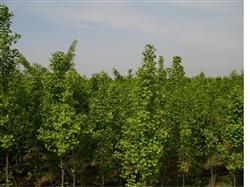
How to Fertilize Ginkgo Trees? A Full Guide to Practical Fertilization Techniques
1. Choose a suitable planting site. The plot for planting ginkgo must have deep, fertile soil, with a mature soil layer of no less than 30 cm, organic matter content greater than 1%, a year-round groundwater level below 2.5 m, and soil salt content no more than 0.05%. 2. Do not use fake grafted ginkgo seedlings. Ginkgo seedlings are divided into seedling-grown and grafted seedlings, ...
-
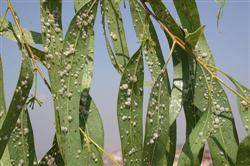
Eucalyptus Pest and Disease Control Methods and Key Practical Techniques
The main pests and diseases of eucalyptus include: bacterial wilt, leaf blight (commonly known as defoliation disease), eucalyptus seedling stem rot, eucalyptus leaf roller, termites, and scarab beetles, etc. (1) Bacterial wilt: When the bacterial wilt pathogen infects young trees in the forest, the above-ground symptoms can be divided into two types. The first is the acute type, in which the leaves of the diseased plant rapidly lose water and wilt, hanging on the branches without falling off, showing the typical "green wilt" symptom. For this type of diseased plant, the time from onset to the death of the whole plant is relatively short, generally only 2-3 weeks. The second is the chronic type, in which the diseased plant shows stunted growth, dwarfism, and the lower leaves first turn purplish-red, then gradually deepen and spread upward, and finally the leaves dry up and fall off. Some stems and side branches develop irregular dark brown necrotic spots, and in severe cases the entire plant dies. For this type, the time from onset to the death of the whole plant is relatively long, generally 3-6 months. Eucalyptus bacterial wilt is prone to epidemic outbreaks under high temperature and high humidity. Root collar injury, surface runoff, and root-to-root contact between plants are the main pathways for pathogen invasion and spread. Control measures: select disease-resistant strains; carry out quarantine of seedlings before leaving the nursery, and try to avoid bringing diseased seedlings to the plantation; also try to avoid establishing eucalyptus plantations on forest land that is likely to carry Pseudomonas solanacearum (soil where peanuts, tobacco, potatoes, tomatoes, mulberries, kapok, beefwood, and canna have been planted); do not apply undecomposed organic fertilizer; strengthen tending and management to improve tree disease resistance. After a plant becomes diseased, there is still no proven effective control method; once discovered, the only option is to immediately pull it out roots and all, spread lime on the soil in the planting hole for disinfection, and destroy the diseased plant.
-

How to breed earthworms? A detailed guide to practical farming methods and techniques
How to breed earthworms?
-
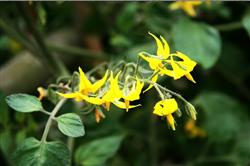
How to propagate cherry tomatoes by cuttings? A detailed guide to practical techniques
Cherry tomatoes produce a large number of flowers, and many vegetable growers use flower spraying to preserve flowers and fruit. To improve the rate of premium fruit, each truss is generally sprayed twice. But this means a large amount of spray, which easily leads to hormone poisoning. A single truss of flowers should be sprayed in two separate rounds. The first spraying is done when 3-4 flowers of the truss have opened; at this point spray...
-
How to prevent and control bacterial wilt in tomatoes? A detailed guide to practical techniques
Prevention and control techniques for tomato bacterial wilt
-
Practical Techniques for Fish Disease Prevention and Treatment and Scientific Medication Methods
Fish Disease Prevention and Treatment and Scientific Medication
-
-
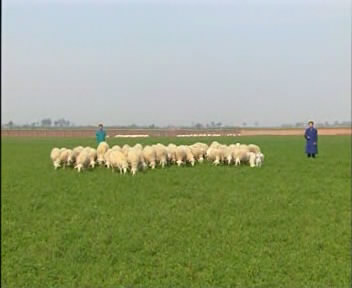
What are the new sheep-raising technologies? Detailed explanation of six practical techniques
Six new sheep-raising technologies
-
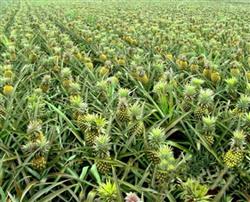
How to Grow Pineapple? A Detailed Guide to Practical Cultivation Techniques
Pineapple, also known as fengli, English name Pineapple, belongs to the family Bromeliaceae and the genus Ananas. It is a perennial monocotyledonous herbaceous plant that grows on the ground. The fruit is a collective fruit formed by the aggregation of many small fruits, generally weighing 1-1.5 kg. Pineapple is a tropical fruit native to Central and South America. The pineapple fruit is rich in nutrients, and the juice is not...
-

How to control the Japanese pine sawyer beetle? A detailed guide to practical control techniques
Control techniques for the Japanese pine sawyer beetle
条件筛选