How to prevent and control cotton Verticillium wilt? A detailed guide to practical control techniques
The damage caused by cotton Verticillium wilt is mainly manifested in the middle and late stages of cotton growth. July and August, when the plant flowers and sets bolls, are the peak period of the disease. In summer, in years with high temperatures, drought and lack of rain, the disease is relatively mild. Verticillium wilt generally does not cause stunting, and the plant can still set a small number of cotton bolls. After a long drought during the flowering and boll-setting stage followed by torrential rain, the leaves suddenly wilt, take on a water-soaked appearance, and then drop off...
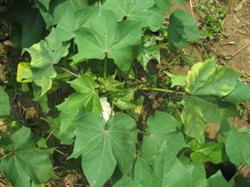
The damage caused by cotton Verticillium wilt is mainly manifested in the middle and late stages of cotton growth. July and August, when the plant flowers and sets bolls, are the peak period of the disease. In summer, in years with high temperatures, drought and lack of rain, the disease is relatively mild. Verticillium wilt generally does not cause stunting, and the plant can still set a small number of cotton bolls. After a long drought during the flowering and boll-setting stage followed by torrential rain, the leaves suddenly wilt, take on a water-soaked appearance, and then drop off, leaving bare stems.
Control methods: To control cotton Verticillium wilt, the policy of "prevention first, comprehensive control" must be carried out. 1. Use a 3-4 year rotation of cotton with gramineous crops. 2. Apply nitrogen fertilizer rationally, increase the application of organic fertilizer, plow deeply and cultivate carefully to enhance the disease resistance of the plants. 3. Improve the cotton field environment, drain standing water from the field, and promptly carry diseased plant residues outside the field to be burned; do not use them as composting material. 4. Chemical control: ① Spray a mixture of 50% carbendazim wettable powder at 1000 times dilution or 70% thiophanate-methyl at 800 times dilution plus humic acid foliar fertilizer to control the development of the disease. ② For scattered diseased plants, use 50% dazomet wettable powder diluted with water and poured to penetrate the soil, or use 12.5% quick-acting weilingling diluted 50 times with water for root drenching.