-
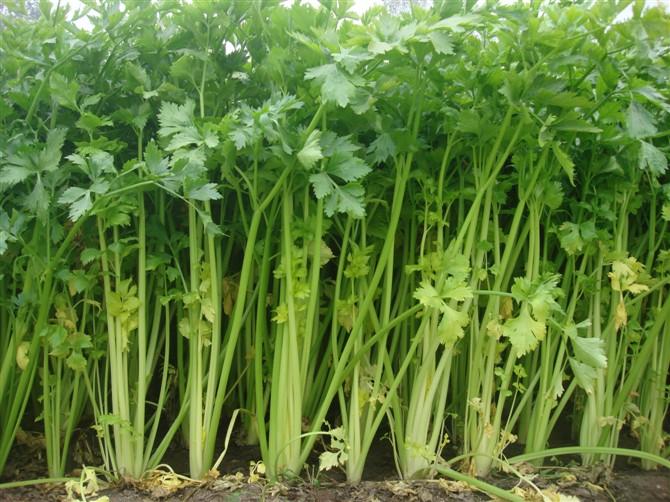
How to grow celery in summer? A full summary of practical growing techniques
Growing celery in summer: a big summary of practical techniques
-

A Detailed Guide to Practical Management Techniques for Bonsai Fruit Trees
As the saying goes, good seed gives good seedlings. Now that the seedlings are well chosen, how do you make them grow well? There is a lot of know-how involved here. For fruit trees in the open field, as long as you do a good job of water and fertilizer management and pest and disease control, you will certainly have a bumper harvest. But for bonsai fruit trees, you not only need them to bear more fruit and good fruit
-

How to Divide and Propagate Orchids When They Outgrow Their Pot? A Detailed Guide to Practical Techniques
Growers who cultivate orchids know that after several years of growth, an orchid will inevitably become a large clump, and at that point it needs to be divided. The key to dividing is really the separation of offsets. So how do you divide a potted orchid?
-

Practical Techniques for Hydroponic Flower Cultivation and Daily Care Management
How are hydroponic flowers cultivated? Hydroponic flowers are quite common in people's lives today, so below the editor will discuss with everyone the cultivation process and care management techniques for hydroponic flowers.
-
How to grow Ariocarpus fissuratus? A detailed guide to practical growing techniques
Sowing period The editor has gathered and consulted relevant materials and found that the most suitable temperature for the growth of Ariocarpus fissuratus is between 20 and 25 degrees, so when choosing a sowing time, the local temperature should preferably remain stable at around 25 degrees. In southern China, March to June is suitable for sowing. As for the north
-
How to propagate Phalaenopsis orchids? A detailed guide to practical propagation techniques
1. Flower stalk bud induction: After the flowers fade, small plantlets may very likely grow on its flower stalk. Cut off these plantlets and plant them, and they will grow into new plants. We can also induce budding on its flower stalk ourselves. First, we can remove the spent flowers from the flower stalk and disinfect it
-
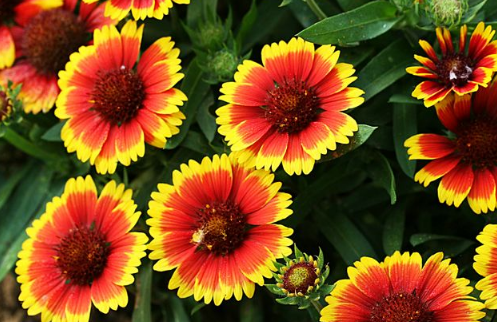
What are the propagation methods for Gaillardia? A detailed guide to practical propagation techniques
Cuttage propagation Cuttage propagation is also a relatively simple propagation method. The material to be selected for cuttage is called a cutting, and the cutting is usually the top shoot that grows well and is free of pests and diseases. The temperature during cuttage should be kept between 18°C-25°C. The cut end of the cutting should be disinfected; if the temperature is too high, it can also easily cause infection of the cut end
-

A Complete Guide to Practical Camellia Winter Care Techniques
Many camellia growers do not know how to care for camellias in winter. Camellias have a certain cold resistance; camellias planted in the ground in the difficult Yangtze River region can overwinter successfully, and as long as the roots are not damaged by freezing, growth in the second year is generally unaffected. When the temperature drops to 0 degrees Celsius
-
How to prevent and control excessive vegetative growth in cotton? A detailed guide to practical techniques
At present, cotton has entered the squaring stage, and preventing excessive vegetative growth in cotton must begin now. So-called excessive vegetative growth means the cotton has lost its normal reproductive function, that is, it only flowers without setting bolls, or it flowers heavily but sets few bolls. The causes are first climatic factors, second the blind and random introduction of cotton varieties, and third cultivation methods that do not match climate change. According to records, when the temperature exceeds 35°C, pollen development becomes abnormal and normal pollination cannot occur; while sustained drought intensifies the shedding of squares and bolls. In addition, in mid-August some cotton areas experience
-
Sharing of High-Yield Cotton Cultivation Experience and Practical Techniques
I. Pre-Sowing Preparation First, purchase high-quality cotton seed. It is recommended to change seed every year. Never be tempted by cheap prices to use second- or third-generation cotton seed, because saved seed reduces yield by about 10% each year. Use about 1.5 kg of seed per mu. Sun the seed before sowing for a cumulative total of no less than 30 hours, turning it constantly. Be careful not to spread it directly on concrete, brick, or metal surfaces. Before sowing, build up soil moisture in good time and preserve it, so that sowing is done with adequate soil moisture. II. Scientific Fertilization Apply ample basal fertilizer. Generally, apply 3-4
条件筛选