-
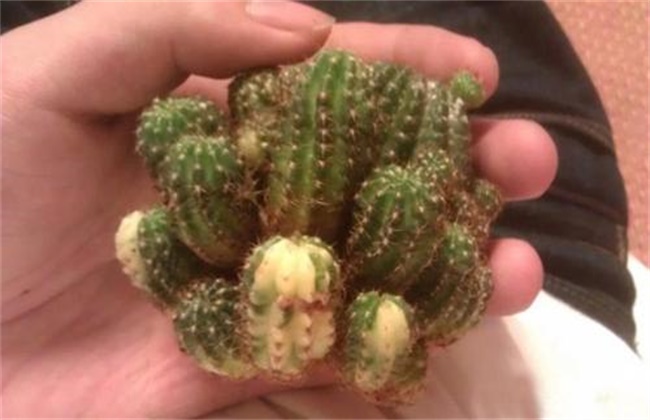
How to Propagate Cactus Balls by Cuttings? Master All the Practical Techniques
Cactus Ball Cutting Propagation Techniques
-

How to carve and strip trunk bonsai? Three practical techniques
The trunks of trunk bonsai mostly use the image of being ancient, old, diseased, and disabled to show their "vigorous and sturdy character" that has endured the vicissitudes of time, while some bonsai trees show the characteristics of being young, tender, smooth, and sleek. The carving and stripping technique for trunk bonsai is precisely based on the conditions of the trunk itself, through artificial artistic reconstruction, to make the trunk image conform to the requirements of bonsai artistic modeling and achieve the purpose of enriching the varied texture layers of the trunk. Now let us introduce three techniques of the carving and stripping method. Spiral trunk stripping. Make partial diagonal rotational carving and stripping modeling on the main trunk from bottom to top
-
A Detailed Guide to Practical Techniques for Cutting Propagation of Japanese Yew (Taxus cuspidata)
Japanese yew, also known as yew, red cypress pine, and vermilion tree, is a tree or large shrub of the Taxaceae family. Its bark is reddish-brown, thin, with shallow fissures. The leaves are arranged irregularly on two sides, slightly sickle-shaped, dark green on the surface, with two gray stomatal bands on the underside. One-year-old branches are smooth and hairless, dark green. It can reach a height of 20 m and a diameter at breast height of 1 m. The crown is ovate, broadly ovate, or triangular-ovate, with densely growing branches. The seeds are purplish-red, ovate, with a fleshy aril. The flowering period is May to June, the fruit ripening period is October, and the lifespan is 200 to
-
How to Grow Radicchio? A Detailed Guide to Practical Cultivation Techniques
Radicchio is a perennial herbaceous plant of the genus Cichorium in the Asteraceae family, originating from the coastal regions of the Mediterranean, Central Asia and North Africa. It is widely grown in European and American countries, with bright colors and rich nutrition, and its taste is much more bitter than that of blanched chicory. Radicchio is a semi-hardy vegetable that prefers a cool, humid climate. Its product is a red head of leaves. Radicchio generally yields 1000-2000 kg per mu, with a single head weighing 0.25-0.5 kg, up to a maximum of 2 kg. During the growing period of radicchio, from the seedling stage to the rosette stage, relatively high
-
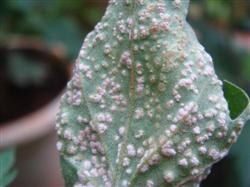
How to prevent and control chrysanthemum white rust? A detailed guide to practical control techniques
Chrysanthemums are loved for their elegant, bright colors and rich fragrance. Growing flowers can cultivate people's character, enrich cultural life, and improve physical and mental health. At the same time, some varieties of chrysanthemums grown can also be eaten or used as medicine, achieving two benefits at once. However, in the process of cultivating and propagating chrysanthemums, they often suffer from a variety of diseases...
-

How to control the flowering period of peonies? Practical measures and key techniques
Measures to control the flowering period of peonies
-
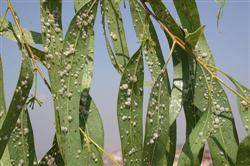
Eucalyptus Pest and Disease Control Methods and Key Practical Techniques
The main pests and diseases of eucalyptus include: bacterial wilt, leaf blight (commonly known as defoliation disease), eucalyptus seedling stem rot, eucalyptus leaf roller, termites, and scarab beetles, etc. (1) Bacterial wilt: When the bacterial wilt pathogen infects young trees in the forest, the above-ground symptoms can be divided into two types. The first is the acute type, in which the leaves of the diseased plant rapidly lose water and wilt, hanging on the branches without falling off, showing the typical "green wilt" symptom. For this type of diseased plant, the time from onset to the death of the whole plant is relatively short, generally only 2-3 weeks. The second is the chronic type, in which the diseased plant shows stunted growth, dwarfism, and the lower leaves first turn purplish-red, then gradually deepen and spread upward, and finally the leaves dry up and fall off. Some stems and side branches develop irregular dark brown necrotic spots, and in severe cases the entire plant dies. For this type, the time from onset to the death of the whole plant is relatively long, generally 3-6 months. Eucalyptus bacterial wilt is prone to epidemic outbreaks under high temperature and high humidity. Root collar injury, surface runoff, and root-to-root contact between plants are the main pathways for pathogen invasion and spread. Control measures: select disease-resistant strains; carry out quarantine of seedlings before leaving the nursery, and try to avoid bringing diseased seedlings to the plantation; also try to avoid establishing eucalyptus plantations on forest land that is likely to carry Pseudomonas solanacearum (soil where peanuts, tobacco, potatoes, tomatoes, mulberries, kapok, beefwood, and canna have been planted); do not apply undecomposed organic fertilizer; strengthen tending and management to improve tree disease resistance. After a plant becomes diseased, there is still no proven effective control method; once discovered, the only option is to immediately pull it out roots and all, spread lime on the soil in the planting hole for disinfection, and destroy the diseased plant.
-
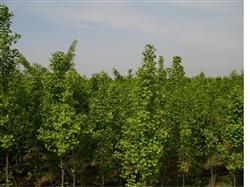
How to Fertilize Ginkgo Trees? A Full Guide to Practical Fertilization Techniques
1. Choose a suitable planting site. The plot for planting ginkgo must have deep, fertile soil, with a mature soil layer of no less than 30 cm, organic matter content greater than 1%, a year-round groundwater level below 2.5 m, and soil salt content no more than 0.05%. 2. Do not use fake grafted ginkgo seedlings. Ginkgo seedlings are divided into seedling-grown and grafted seedlings, ...
条件筛选