-

What should be noted when transplanting ginkgo trees? Detailed explanation of planting key points
What should be noted when transplanting ginkgo trees? Please guide. The points to note when transplanting ginkgo trees are divided into the following for reference: 1. Selection of ginkgo seedlings: The seedlings are required to be robust, with well-developed root systems, whitish xylem, and slightly reddish root bark that clings tightly to the xylem. If the root system turns black, the tree may already be dead even if the trunk still appears green. For...
-

Lily planting technique video, a detailed explanation of cultivation methods and key points
How to manage tea plants well in summer? Please give an introduction to the methods. After continuous picking, a large amount of nutrients in the tea plant's body are consumed. When summer high temperatures arrive, the soil becomes compacted, weeds grow densely, soil fertility declines, and there are many insect pests, affecting normal growth. Therefore, the main task of summer tea garden management is to restore the vitality of the tea plants,...
-
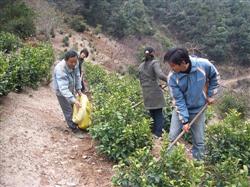
How to fertilize tea plants in summer? Key points of tea plant cultivation and fertilization techniques
How to fertilize tea plants in summer? Please allow the following introduction on how to apply summer fertilizer to tea plants for reference: After the spring tea is picked, the plant's nutrients are consumed in large amounts, the new shoots stop growing, and root growth intensifies, so fertilizer should be applied in time to replenish the plant's nutrients. According to experiments, generally for every 100 kg of dry tea harvested from a tea garden, ...
-
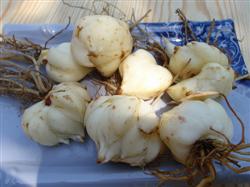
Detailed Explanation of Edible Lily Planting Methods and Technical Points
How do you plant edible lilies? How do you fertilize lilies and control pests and diseases? Please provide guidance. Edible lily planting can be carried out by referring to the following methods: 1. Site selection and land preparation: Choose fertile soil, high and well-drained terrain, and loose sandy loam for cultivation. While preparing the land, apply 2000 kg of organic fertilizer per mu plus Yangfeng...
-
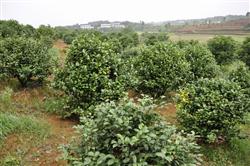
Camellia Cultivation Methods and Care Key Points
How are camellias cultivated? An introduction is given below. Camellias are semi-shade plants, suited to growing in diffused light and afraid of direct sunlight scorching, so seedlings need shading. However, long-term overly shady conditions are unfavorable for camellia growth, resulting in thin leaves and few flowers, which affects ornamental value. Mature plants need more light to promote flower bud formation and blooming...
-
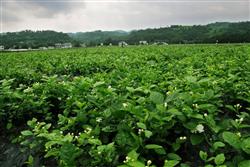
What are the key points for growing jasmine?
What should be noted when growing jasmine? Please note the following two points for growing jasmine: Watering is the key to success or failure in jasmine care and management, and the watering principle is "do not water if the soil is not dry; when watering, water thoroughly." Jasmine fears drought and dislikes waterlogging. To enhance jasmine's drought and waterlogging resistance, spraying "Xin Gao Zhi Mo" can effectively...
-

What are the key points of cherry blossom planting and management methods?
How should cherry blossoms be managed well when planted? Please provide guidance. Cherry blossoms are sun-loving flowering trees that like sunlight, tolerate cold and drought, and prefer well-drained sandy soil. They fear wind during the flowering period, so a sheltered spot should be chosen when planting; they are generally planted in mountain gullies, beside streams and in mixed forests. Cherry blossoms have a strong heliotropic tendency, so when transplanting, the original sun-facing side must still face the sun...
-
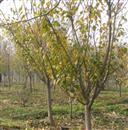
What are the key points of cherry blossom autumn management techniques?
How should cherry blossoms be managed in autumn? Please introduce the methods. Autumn tree management for cherry blossoms. 1. Disease prevention and leaf protection. Cherry blossom leaves are susceptible to infection by diseases such as powdery mildew, brown spot, and sooty mold. If not controlled in time, it can cause premature leaf drop, affecting nutrient accumulation, which is unfavorable for flowering next year. You can use 70% thiophanate-methyl 1000x solution, 65% zineb wettable powder 500x solution, sprayed once every 15 days. Try to avoid using dichlorvos to prevent leaf drop. Water appropriately, and increase foliar fertilizer spraying (0.3% to 0.5% urea, 0.3% potassium dihydrogen phosphate) to ensure the leaves remain intact, thick, and dark green.
-
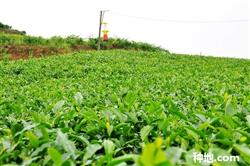
What are the key points of pollution-free tea cultivation techniques?
How is pollution-free tea cultivated? Please advise. People's demands for diversified, pollution-free and health-promoting tea are growing stronger. Pollution-free cultivation of tea can effectively control pesticide residues in tea, ensuring both tea exports and consumer health, while also improving producers' economic benefits. The pollution-free tea...
-
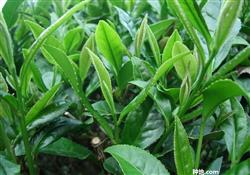
How are biological pesticides used on tea plants? Detailed explanation of methods and technical key points
How are biological pesticides used on tea plants? Please advise. The current tea market, especially tea exports, has very high requirements for tea quality and safety. Biological pesticides, including microbial pesticides and plant-derived pesticides, do not pollute tea or the environment, have very low toxicity to humans and livestock, and leave no toxic residues, so...
条件筛选