What are the key points of pollution-free tea cultivation techniques?
How is pollution-free tea cultivated? Please advise. People's demands for diversified, pollution-free and health-promoting tea are growing stronger. Pollution-free cultivation of tea can effectively control pesticide residues in tea, ensuring both tea exports and consumer health, while also improving producers' economic benefits. The pollution-free tea...
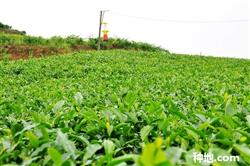
How is pollution-free tea cultivated? Please advise
People's demands for diversified, pollution-free and health-promoting tea are growing stronger. Pollution-free cultivation of tea can effectively control pesticide residues in tea, ensuring both tea exports and consumer health, while also improving producers' economic benefits. The key points of pollution-free tea cultivation are introduced as follows:
I. Variety selection. Choose varieties with strong adaptability and disease resistance.
II. Strict site selection. Choose areas where the soil, water sources and atmosphere are not polluted by industrial "three wastes" and radioactive substances as the production
base.
III. Soil management. 1. For conventionally planted 1-3 year old young tea gardens, plant leguminous green manure or fodder crops between the rows. 2.
Deep plow the soil, hoe weeds, and cover the soil surface with organic matter such as straw, grass fodder and farmyard manure, or apply it shallowly into the soil, to improve the soil's physical and chemical properties and the soil environment. 3. For tea gardens with fertile, loose soil, no weeds and a high canopy coverage rate, reduced tillage or no-tillage should be implemented. The use of organisms (such as earthworms) to improve soil structure and increase soil fertility is encouraged.
IV. Fertilization techniques. 1. Topdressing: human and livestock manure that has been composted at high temperature and harmlessly treated, applied in furrows in the tea garden. 2.
Base fertilizer: use fully decomposed organic fertilizers composted for 1-6 months produced by organic agricultural systems, including various pollution-free cake fertilizers, green manures, crop residues, peat, straw, seaweed, etc., as well as composted food and forestry by-products. Base fertilizer should be applied deeply in furrows. 3. Spray organic fertilizer on the leaves, for example, spray a 700-1000 times dilution of "Tianda 2116" once before and after leaf buds sprout and when young shoots unfold their leaves.
V. Pest and disease control. 1. Agricultural control. For example, timely picking and pruning of tea plants, and carrying diseased and pest-infested branches out of the tea garden; timely hoeing and cultivation. 2. Use natural enemies and biological pesticides. 3. After the tea season ends, use lime sulfur mixture to seal the garden to reduce the occurrence of pests and diseases the following year, but lime sulfur mixture must not be used during the tea harvest season, and its amount used must not cause the copper content of tea to exceed the standard.
VI. Water management. 1. Focus on water conservation. Generally, the relative water content of the plow layer soil is required to be 75%-90%, ensuring normal growth and development of the tea plants. Cover the tea garden soil with grass, build water storage ditches and ponds at roadside corners, plant trees and grass, increase vegetation coverage, etc., to reduce water evaporation and conserve water. 2. When drought is severe and the relative water content of the plow layer soil drops below 70%, water should be diverted for sprinkler irrigation in a timely manner, and its water quality is required to meet the national surface water environmental quality standards.
Click to get more tea cultivation techniques
Click to get more flower cultivation techniques
Click to return to Zhongdi Network