How are biological pesticides used on tea plants? Detailed explanation of methods and technical key points
How are biological pesticides used on tea plants? Please advise. The current tea market, especially tea exports, has very high requirements for tea quality and safety. Biological pesticides, including microbial pesticides and plant-derived pesticides, do not pollute tea or the environment, have very low toxicity to humans and livestock, and leave no toxic residues, so...
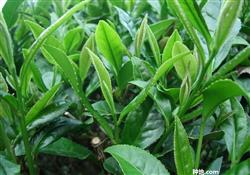
How are biological pesticides used on tea plants? Please advise
The current tea market, especially tea exports, has very high requirements for tea quality and safety. Biological pesticides, including microbial pesticides and plant-derived pesticides, do not pollute tea or the environment, have very low toxicity to humans and livestock, and leave no toxic residues, so they are suitable pesticides for producing green food tea. In the current production of Grade A green food tea, especially organic tea and AA-grade green food tea, the use of the following biological pesticides is worth promoting.
Rotenone. Also known as derris extract, it is a plant-derived insecticide with a long history of application. It decomposes easily in air, has low residual toxicity, and is environmentally friendly. It has contact and stomach poisoning effects on pests. It has a broad insecticidal spectrum and a short residual period, generally 5-6 days, and only 2-3 days under summer sunlight. It can be used in the production of Grade A green tea to control tea geometrid, tea tussock moth, tea caterpillar, leaf roller moths, bagworm moths, slug moths, smaller green leafhopper, black citrus whitefly, and tea aphid, using 2.5% rotenone EC 150-250 mL per 667 sq m, diluted with water to a 300-500 times solution for spraying. This pesticide must not be mixed with alkaline pesticides. Rotenone is highly toxic to fish, so pollution of fish ponds should be prevented during use.
Matrine. Also known as sophorine, it is an alkaloid preparation made by extracting the roots and fruits of the Chinese herbal medicine Sophora flavescens with organic solvents such as ethanol. It degrades easily in the environment and basically leaves no residue. To control tea black tussock moth and tea tussock moth, during the 1st and 2nd instar larval stages, or at the peak of egg hatching, use 0.2% matrine AS 50-75 mL per 667 sq m, add 50-75 L of water, dilute to a 1000-1500 times solution and spray. It can be used in organic tea gardens to control tea geometrid; before the 3rd instar larvae, use 3.2% Chongshajing EC (a mixture of matrine alcohol and cypermethrin) 40-50 mL per 667 sq m, add 75 kg of water, dilute to a 1500-2000 times solution and spray; it is suitable for low-residue tea gardens and green food tea gardens. In organic tea gardens, a pure matrine preparation containing no chemical pesticides can be used as an 800-1000 times solution for spraying. Matrine has a slow efficacy, so it should be applied 3-5 days in advance.
Bacillus thuringiensis. Its main effect on pests is stomach poisoning. After entering the digestive tract through insect feeding, it produces parasporal crystals (endotoxins) and exotoxins; the parasporal crystal is the main toxin. Generally, effects are seen only 2-5 days after application. It has good control effects on Lepidoptera larvae such as the tea tussock moth. To control Lepidoptera larvae such as tea tussock moth, tea black tussock moth, and tea slug moth, during the 1st or 2nd instar larval stage, use Bacillus thuringiensis WP with 10 billion viable spores/g per 667 sq m, or Bt EC with 10 billion spores/mL 75-150 g, add water to dilute to a 500-1000 times solution and spray. It is suitable for use in organic tea gardens.
Beauveria bassiana. Beauveria bassiana is a fungal insecticide. Its insecticidal action relies on spores contacting the insect body and, under suitable conditions (temperature 24°C-28°C, relative humidity 90%-95%, neutral or slightly acidic), germinating, infecting the insect body, multiplying in large numbers, secreting toxins, affecting the pest's blood circulation, and interfering with the pest's metabolism. After 3-7 days the insect body dies and is covered with white downy hyphae, hence the name "white muscardine insect." To control tea small leaf roller, tea tussock moth, and smaller green leafhopper, apply at the early stage of 1st and 2nd instar larvae (nymphs), using 0.5 kg of fungal powder containing 5-7 billion spores/g per 667 sq m, add 50 L of water, and spray; to control tea weevil, at the peak of pupation, use 1-2 kg per 667 sq m of Beauveria bassiana powder with a spore content of 5-7 billion spores per gram, mix into fine soil, and broadcast on the soil surface around the tea plant roots; or at the peak of adult occurrence, dilute the fungal powder with water and spray on the leaf surface on cloudy days, rainy days, or in the morning and evening when humidity is high.
Nuclear polyhedrosis virus. It is a type of viral insecticide. Nuclear polyhedrosis virus has no cellular structure and can only replicate and multiply within the host body, forming protein crystalline polyhedra. Insects become infected orally or through wounds. After the virus enters the insect body, it is digested by gastric juice, releasing rod-shaped virus particles, which enter the body cavity through midgut epithelial cells, invade blood cells, fat, and somatic cells, and become embedded in crystalline protein to form polyhedra, multiplying within the cell nucleus, then infecting healthy cells until the insect dies from septicemia. After the diseased insect's feces and cadaver epidermis rupture, polyhedra are released and spread widely through wind, rain, insects, and birds, causing viral disease to become epidemic in the pest population. It mainly parasitizes Lepidoptera larvae. Nuclear polyhedrosis virus has a slow efficacy, but its residual period lasts more than 2 years. To control tea geometrid, during the 1st and 2nd instar larval stages of the 1st, 5th, and 6th generations, when the pest density is below the control threshold, use 1.9-2 billion PIB (protein crystalline polyhedrosis virus) tea geometrid nuclear polyhedrosis virus AS 50 mL per 667 sq m, dilute 1000 times with water and spray. When the pest density exceeds the control threshold, you can use tea geometrid virus and chemical pesticide (such as phoxim WP synergistic type) 50 mL, add water to 1000 times
and spray; to control tea tussock moth, during the 1st and 2nd instar larval stages, use 1-2 billion PIB tea tussock moth nuclear polyhedrosis virus AS 50 mL per 667 sq m, add water to 1000 times and spray. Or use 25-30 insect cadavers per 667 sq m, mash them, add water, and spray.
Whitefly fungal preparation. It is a fungal insecticide and, under moist conditions, has good control effects on black citrus whitefly and similar pests. To control black citrus whitefly and scale insects, during the 1st and 2nd instar larval stages, under moist conditions, dilute fungal powder with water into a solution containing 10 million spores per mL and spray the leaves (for scale insects, branches must also be sprayed until wet). Because black citrus whitefly is mainly distributed on the underside of the middle and lower leaves of tea plants, the leaf undersides should be sprayed until wet during application. Under suitable conditions, the parasitism rate of whitefly fungi is above 70%, and the residual period is 2-3 years.
Click to get more tea cultivation techniques
Click to get more flower cultivation techniques
Click to return to Zhongdi Network